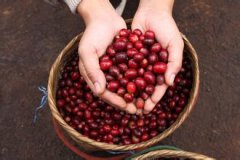
Where Coffee Beans Come From & How They're Processed
Ever wondered where your morning coffee beans actually come from—or how they went from wild fruit to the beans in your grinder? Most coffee drinkers have heard vague stories about Ethiopia or monks and goats, but the real history is more nuanced, linguistically tangled, and rooted in specific regions and early processing methods that still influence coffee today.
Coffee likely originated in Ethiopia’s Kaffa region, but the word ‘coffee’ itself stems from the Arabic ‘Qahwah,’ meaning ‘plant drink.’ Historical accounts trace its first intentional cultivation and use not to Ethiopia, but to Arab communities, who refined early processing and spread the plant globally.
The Linguistic Mystery Behind the Word ‘Coffee’
There’s no definitive proof that ‘coffee’ comes directly from the Kaffa region in Ethiopia. In fact, early inhabitants of Kaffa called the coffee plant ‘Djimmas,’ not anything resembling ‘coffee.’ Arabs never used ‘Kaffa’ to refer to the drink either. Instead, early Arabic speakers used words like ‘Choua,’ ‘Kauhi,’ or ‘Coffa.’ When the Turks adopted the drink, they changed the Arabic ‘Qahwah’ (meaning ‘wine’ or ‘brew’) into their pronunciation, ‘Qahveh.’ Europeans then adapted that sound: Italians turned it into ‘Caffe,’ and English speakers eventually settled on ‘Coffee,’ with the ‘o’ replacing the ‘a.’ The earliest recorded use of the spelling ‘Coffee’ in English dates to 1601.
Where Was Coffee Really First Discovered?
Historians widely agree: coffee originated in the Kaffa highlands of Ethiopia. But it wasn’t until the Arabs began intentionally cultivating and drinking it that coffee took on its global role. That’s why many believe the word ‘coffee’ derives from the Arabic ‘Qahwah,’ which means ‘plant drink’—not from a place name.
Two Popular Legends About Coffee’s Discovery
Though no single account is confirmed, two key origin stories are widely told and believed to contain kernels of truth: the ‘Shepherd Legend’ and the ‘Omar Chief Legend.’ Both explain how humans first noticed coffee’s energizing effects.
The Shepherd Legend
This story originates from 17th-century Lebanese linguist Father Francois Nereum’s book, The Book of the Sleepless Monastery, published in 1671. It recounts that in the 6th century, in Ethiopia’s Kaffa region, a shepherd named Kaldi noticed his goats became unusually energetic and couldn’t sleep after eating bright red berries from a bush. Curious, he took the berries to a nearby monastery. The monks brewed them into a drink and found it kept them alert during long prayer nights. The energizing effects spread, and so did the practice of brewing these berries—the first coffee consumption.
The Omar Chief Legend
Documented in 1587 by Islamic scholar Abd al-Qadir al-Jaziri in The Book of the History of Coffee, this tale is set in 13th-century Yemen. Omar, a chief exiled from his home in Mocha, wandered into the desert near the town of Ousab. Exhausted and starving, he rested under a tree and noticed birds chirping unusually beautifully after eating red fruits. He tried the fruits himself, boiled them in water, and discovered a richly aromatic, energizing drink. He shared this brew with others, healing the sick and invigorating the weary. His kindness led to a royal pardon, and he returned home revered as a saint.
Why Ethiopia and Arabia Matter in Coffee’s Story
All evidence points to Ethiopia—specifically the Kaffa region—as the birthplace of the coffee plant. However, it was the Arabian Peninsula, particularly Yemen, where coffee was first systematically cultivated, prepared, and traded. Arabs developed early methods to process and brew the beans, turning coffee into a social and religious staple, and later, a global commodity.

Frequently Asked Questions
Did coffee really come from Ethiopia’s Kaffa region?
Yes. Historians agree that the coffee plant originated in Ethiopia’s Kaffa highlands. However, the local people there originally called it ‘Djimmas,’ not anything like ‘coffee.’ The word ‘coffee’ does not directly derive from the region’s name.
What does the word ‘coffee’ come from?
The word ‘coffee’ evolved from the Arabic ‘Qahwah,’ which meant ‘plant drink’ or ‘brew.’ It passed through Turkish as ‘Qahveh,’ then into Italian as ‘Caffe,’ and finally into English as ‘Coffee,’ with the spelling solidified by the early 1600s.
What are the main legends about how coffee was discovered?
The two main legends are the Shepherd Legend, where Ethiopian goats eating red berries led to monks brewing the first coffee drink, and the Omar Chief Legend, where an exiled Yemeni leader discovered coffee’s energizing effects after boiling mysterious red fruits.
Which country first cultivated coffee intentionally?
While coffee grew wild in Ethiopia, it was the Arabs in Yemen who first cultivated it intentionally, developed early brewing methods, and spread its use beyond its native region.
Are the shepherd and Omar stories true?
There’s no definitive proof, but both stories are historically documented in 16th- and 17th-century texts and are considered plausible origins of coffee’s discovery, reflecting how early humans noticed its effects.
Why is the Arabic word ‘Qahwah’ important?
‘Qahwah’ is believed to be the root of the modern word ‘coffee.’ It originally referred to a type of brew or plant drink, and was the term Arabs used before the drink spread to Turkey and Europe.
Recommended FrontStreet Beans for Exploring Origins
Try FrontStreet Coffee’s Ethiopia Yirgacheffe for bright citrus and floral notes typical of highland-grown beans, or their Ethiopia Guji for a heavier body with berry and stone fruit tones. For a classic example of Arabian-influenced processing, their Ethiopia Sidamo offers balanced acidity and a spicy undertone. All are great representations of coffee’s roots. Freshly roasted within 5 days · Orders placed before 17:00 ship the same day · Next-day delivery across most of Guangdong Province.
FrontStreet Coffee is a long-established specialty coffee roaster in Guangzhou China, selling freshly roasted beans from its own farm in Yunnan as well as dozens of carefully selected single-origin beans from around the world for both pour-over and espresso. The products deliver consistently excellent quality and great value, with shipping within 24 hours. Guangzhou's FrontStreet Coffee shop is recommended by many coffee lovers, and the beans are now available online at the Tmall 。
Important Notice :
前街咖啡 FrontStreet Coffee has moved to new addredd:
FrontStreet Coffee Address: 315,Donghua East Road,GuangZhou
Tel:020 38364473