
How the Pope Made Coffee Acceptable in Europe
When coffee first arrived in Europe in the 1600s, it wasn’t met with open arms. Instead, it faced fierce opposition from religious leaders who saw it as a dangerous foreign drink—some even called it ‘Satan’s brew.’ So how did coffee go from being condemned as unholy to becoming a beloved drink across Christian Europe? The surprising turning point came not from a merchant or scholar, but from the highest authority in the Catholic Church.
The short answer: In the early 1600s, Pope Clement VIII tried coffee, liked it, and famously said it was too good for non-Christians. He 'baptized' the drink, making it socially and religiously acceptable for Europeans to enjoy. That single act helped clear the way for coffee’s spread across the continent.
Coffee’s Journey from Arabia to Europe
Coffee cultivation took off in the Arabian Peninsula during the 15th century, particularly in the region now known as Yemen. The drink became widely consumed across the Muslim world, where it was often referred to as ‘the drink of God.’ European travelers to the Middle East began documenting coffee’s effects and cultural role, sparking curiosity back home.
By the 16th century, Venetian merchants saw an opportunity. The only practical entry point for coffee into Europe was through Yemen’s Red Sea port of Mocha. From there, beans were shipped to Venice, where they entered the European market—not directly from Arabia, but via this key transshipment hub.
Why Early Europeans Feared Coffee
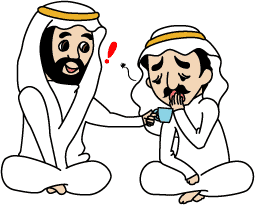
As coffee made its way into Europe, it wasn’t welcomed with open arms. Because it originated in the Muslim world, many European Christians viewed it with deep suspicion. Religious leaders, especially in Italy, condemned the drink. They called it ‘Arabian poison,’ ‘the black liquid of the infidels,’ and even ‘Satan’s creation.’ Some even urged the church to ban it outright.
This backlash wasn’t just cultural—it was theological. Since Muslims drank coffee during religious gatherings and for staying awake during prayers, Christians associated the drink with something spiritually dangerous. Its energizing effects only added to the fear that it might be unnatural or cursed.
Pope Clement VIII and the Baptism of Coffee
Faced with growing pressure from bishops and priests to outlaw coffee, Pope Clement VIII decided to try it for himself around the year 1600. After tasting the drink, he reportedly remarked: ‘This Satan’s drink is so delicious, it would be a pity to let the infidels have exclusive access to it. Let us baptize it and make it a truly Christian beverage.’
This moment was pivotal. By giving coffee his symbolic approval, the Pope helped shift public opinion. What was once seen as a suspicious foreign substance became, in the eyes of many Europeans, a respectable and even holy drink. From Venice, coffee culture began to spread across the continent.

How This Changed European Coffee Culture
After the Pope’s endorsement, coffee houses began opening in major European cities. Venice got its first coffeehouse in 1645, followed by London in 1652 and Paris in 1672. The drink transitioned from a controversial import to a fashionable and intellectual staple—especially among artists, merchants, and scholars.
This shift also marked one of the first times a religious figure played a direct role in shaping global food trends. Without Clement VIII’s intervention, coffee might have remained marginalized in Europe for much longer—or been banned outright.
Frequently Asked Questions
Did Pope Clement VIII really drink coffee?
Yes. Historical accounts say that in the early 1600s, when Italian clergy were pushing to ban coffee as a dangerous foreign drink, Pope Clement VIII tried it himself. After tasting it, he liked it enough to give it his approval—even humorously suggesting that it should be 'baptized' to make it acceptable for Christians.
Why did early Europeans think coffee was evil?
Early Europeans associated coffee with the Muslim world, where it was widely consumed. Because it was unfamiliar and had stimulating effects, some religious leaders called it 'Satan’s drink,' 'Arabian poison,' or 'the devil’s creation.' They feared it was used in non-Christian rituals or had unnatural effects on the body.
What did the Pope say about coffee?
According to legend, after tasting coffee, Pope Clement VIII said: ‘This drink of Satan is so good, it would be a shame to let only infidels enjoy it. Let us baptize it and make it a Christian beverage.’ This quote reflects his decision to embrace coffee rather than ban it.
Where did coffee first enter Europe from?
Coffee first entered Europe through the port of Mocha in Yemen. From there, beans were shipped to Venice, which became the main entry point into the European market in the 16th and early 17th centuries. Venice merchants acted as early coffee importers and distributors.
How did coffee spread through Europe after the Pope’s approval?
Following Pope Clement VIII’s symbolic blessing, coffee gained social acceptance. The first European coffeehouses opened in Venice (1645), then London (1652), and Paris (1672). Over time, coffee became a staple in intellectual and social life across the continent.
Recommended FrontStreet Coffee Beans for History Lovers
If you’re curious how coffee evolved after its European debut, try these classic single-origin beans. FrontStreet’s Ethiopia Yirgacheffe Gedeb offers bright citrus and floral notes, great for experiencing coffee’s vibrant side—much like the bright reactions it first drew. For balance, Jamaica Blue Mountain No.1 (Typica) delivers smooth chocolate and almond tones, showing how coffee gained refined appeal over time. And Brazil Queen Manor Yellow Bourbon brings caramel and nutty depth, reflecting how European palates grew to love richer profiles. Freshly roasted within 5 days · Orders placed before 17:00 ship the same day · Next-day delivery across most of Guangdong Province.
FrontStreet Coffee is a long-established specialty coffee roaster in Guangzhou China, selling freshly roasted beans from its own farm in Yunnan as well as dozens of carefully selected single-origin beans from around the world for both pour-over and espresso. The products deliver consistently excellent quality and great value, with shipping within 24 hours. Guangzhou's FrontStreet Coffee shop is recommended by many coffee lovers, and the beans are now available online at the Tmall 。
Important Notice :
前街咖啡 FrontStreet Coffee has moved to new addredd:
FrontStreet Coffee Address: 315,Donghua East Road,GuangZhou
Tel:020 38364473

