
Coffee Farm
Latest articles, industry insights and brewing guides
Flavor and taste of Ecuadorian boutique coffee beans A brief introduction to the characteristics of Hassanda Coffee Garden
Central mountain: after entering Ecuador from Colombia, the Andes is divided into the eastern and western Cordillera mountains, with a plateau high in the north and low in the south, averaging between 2500 and 3000 meters above sea level. The Andes run through the middle of the border. The ridges crisscross, dividing the plateau into more than ten intermountain basins. The most important are the Quito basin and the Cuenca basin in the south. Volcanic crowds in the territory
Ecuador Coffee Manor introduction to coffee producing area Hasunda Coffee Garden
Yaocote, a gourmet coffee from Puerto Rico, is grown only on three farms in the southwest of the island. It has a strong flavor and a long aftertaste. This kind of coffee is very expensive and its flavor is comparable to that of any other coffee variety in the world. In the Yauco area, the coffee is owned and operated by local planters. The mountain climate here is mild and the plants are long.

Balanced acidity of Ecuadorian coffee Hasunda coffee from Santa Cruz, Galapagos Islands
In 1535, Flatoma de Belanga and others of Spain stumbled upon the Galapagos Islands. Thomas was born in 1487 on the Duro River in the province of Soria, Spain. He was the fourth bishop of Panama at that time. He was ordered to go to Peru. When his ship set sail from Panama on February 23, under the impact of a strong current, they were taken to the unknown surface of the ocean.
An introduction to the Ecuadorian Coffee Hassanda Coffee Garden, known as the "Equatorial country".
Most countries in the world are rich in only one kind of coffee beans, while Ecuador is one of the few countries in the world that can produce both Arabica coffee beans and Robusta coffee beans. The Ecuadorian Coffee tasting, sponsored by the Consulate of Ecuador in Guangzhou, was recently held at the Art Cafe in the Guangdong Provincial Museum. Gaoshandou joining the rose is so amazing in 2014.

A brief introduction to the varieties describing the Flavor of Santa Cruz Manor coffee with fresh taste
Ecuador is the highest Arabian coffee plantation in the world. Since the coffee tree was first introduced into Ecuador in 1875, the quality of its coffee has remained unchanged for 100 years, especially the coffee harvested in early June every year, which is known as the best coffee in the world. Ecuadorian coffee beans are divided into Galapagos and Segante, both of which have large granules and large quantities.
A brief introduction to the flavor and taste characteristics of boutique coffee in Santa Cruz Manor, Ecuador
Central mountain: after entering Ecuador from Colombia, the Andes is divided into the eastern and western Cordillera mountains, with a plateau high in the north and low in the south, averaging between 2500 and 3000 meters above sea level. The Andes run through the middle of the border. The ridges crisscross, dividing the plateau into more than ten intermountain basins. The most important are the Quito basin and the Cuenca basin in the south. Volcanic crowds in the territory
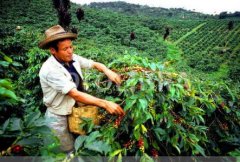
Balanced and refreshing Ecuadorian coffee beans Flavor Taste Manor Features
In 1875, 340 years after Frei Thomas de Berlanga discovered the island, an indigenous man named Cobos arrived on San Cristobal Island, where he established the Hassenda Coffee Plantation and planted about 100 hectares of Arabic bourbon trees. Because the plantation is located between 140 meters and 275 meters above sea level, the climate is equivalent to the climate between 915 meters and 1830 meters inland.
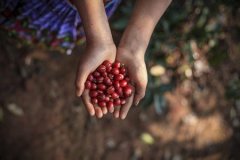
Brief introduction of Santa Cruz Manor in Ecuador
As coffee is consumed by people all over the world, the world coffee industry is also moving towards mass production, while St. Cristobal, a small and unreliable coffee industry, is in trouble and is likely to be forced to give up without profit. It wasn't until the early 1990s that the Gonzalez family bought Hasunda Coffee Park. Humboldt current (HumboldtCurr
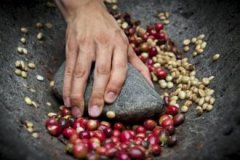
Brief introduction of Santa Cruz Manor Coffee Manor
In the mid-15th century, there were legends about enchanted mysterious islands among fishermen fishing in the western Pacific Ocean of South America. It is said that the islands can sometimes be seen clearly from a distance, but when the ship approaches, it disappears again; sometimes it looks like a galleon, sometimes it shows the shape of a witch. The fishermen called these islands Magic Island and thought it was there.

A brief introduction to the characteristics of Coffee Flavor description varieties in Mercedes Manor of El Salvador
The topography here is mainly mountainous and plateau, with many volcanoes. Savanna climate. The plain area belongs to the tropical rain forest climate and the mountain area belongs to the subtropical forest climate. The average annual temperature is 25-28 ℃, and the annual precipitation is more than 1800 mm in mountainous areas and about 1000 mm in coastal areas. It is rich in water resources, short and swift rivers and volcanic lakes. El Salvador's coffee accounts for 40% of the country's exports.
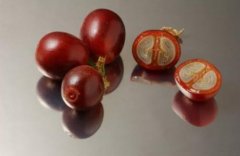
A brief introduction to Mercedes Manor in El Salvador Coffee Manor
Salvadoran coffee-Salvadoran coffee flavor: balanced taste, excellent texture suggested roasting method: medium to deep, there are many uses of quality beans: Salvadoran SHB taste characteristics: sour, bitter, sweet mild moderate. Salvadoran coffee ranks side by side with Mexico and Guatemala as the producers of Asa and Merdo, and is fighting for the first place in China and the United States with other countries.

A brief introduction to Mercedes Manor in El Salvador Coffee Flavor
Like Guatemala and Costa Rica, coffee in El Salvador is graded according to altitude, and the higher the altitude, the better the coffee. Coffee from El Salvador is a specialty of Central America, where it is light, fragrant, pure and slightly sour. The best brand is Pipil, which is what the Azbec AztecMayan called coffee, and it has been acquired.

A brief introduction to the taste characteristics of coffee flavor description of Mercedes Manor in El Salvador by Wen Runping
The topography here is mainly mountainous and plateau, with many volcanoes. Savanna climate. The plain area belongs to the tropical rain forest climate and the mountain area belongs to the subtropical forest climate. The average annual temperature is 25-28 ℃, and the annual precipitation is more than 1800 mm in mountainous areas and about 1000 mm in coastal areas. It is rich in water resources, short and swift rivers and volcanic lakes. The Republic of El Salvador is located in the north of Central America and is a Central American.
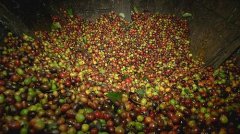
Taste of Salvadoran Coffee with full Flavor A brief introduction to the flavor of manor producing area
In 1990, Sociedad Cooperativa Ahuasanta, a cooperative, was willing to deal with all his Pacamara species and signed a contract with him. Great progress was made when Eduardo Francisco used his planting technology to harvest mature and consistent coffee cherries, coupled with careful post-harvest treatment to make the Pacamara species of Pacamaral Manor shine brilliantly. In 2003, it won 24.
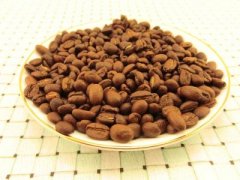
Fragrant and mellow Nicaraguan Coffee Flavor Taste Manor characteristics of Tianyi Manor
Nicaraguan coffee of high quality is in the forefront of coffee beans in the world and enjoys a good reputation. Its particles are moderate in size, mild in taste and very aromatic and mellow. Caffeine is Nicaragua's main export. According to the president of the Nicaraguan Coffee Farmers' Federation, due to the poor harvest of coffee in Nicaragua's Pacific region, the country's total coffee output in 1998 may be higher than that in 1997 and 1998.

Description of coffee flavor in Nicaraguan Tianyi Manor with mild taste A brief introduction to the taste of variety grindability
Nepalese coffee cultivation and production has a unique environment, the spread of fertile volcanic ash soil, coupled with shade planting methods, to establish a good production quality, Nepalese coffee has a rich mellow and fragrant taste, moderate acidity and a good sense of balance of bitter taste, which is regarded as top grade in the eyes of international coffee experts. Nicaragua is one of the major coffee producing countries.
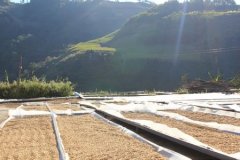
A brief introduction to the flavor and taste of Nicaraguan coffee Tianyi Manor coffee producing area
The coffee produced in Nicaragua's Madagelba, Sinodega and Segovia is highly respected by coffee lovers all over the world. In particular, the coffee produced in Madaguelba is very similar in taste to Kenyan AA coffee. The cultivation and production of coffee in Nepal has a unique environment, the fertile volcanic ash soil all over the place, and the shade planting mode, which has established a good production quality.

Brief introduction of Matagalpa production area of Nicaraguan Coffee Manor Tianyi Manor
The coffee farm that produces this variety is called lemon tree, which is El Limoncillo. Since it was tried to plant in 2001, it has been planted in five manors of the family because of its charming flavor, but the total output is still very small, and the best one is less than 100 bags per year. Name: El Limoncillo (Lemon Manor) producing area: Matagalpa (Mattapa) Town: Yasica Norte Manor.
Boutique Coffee Nicaragua Coffee Manor Tianyi Manor Matagalpa production area
With the addition of these new varieties and treatments, such as the combination of bean and Pacas Pacamara, or the long-grained java species Javanica successfully restored in Nicaragua, Nicaraguan coffee exudes a completely different charm from the past! Raw bean varieties and post-processing are different, general coffee raw beans in the treatment method can be divided into washing, sun, honey treatment. In terms of variety
Alida Manor Sun (Elida Natural) Pocket Alida Manor (Elida) introduction
These unique coffees are grown in nutritious and balanced land located in the Baru volcano region. The microclimate of the Panamanian highlands is the most important resource that makes Panamanian coffee unique. The most important resource that makes Panamanian coffee unique is its microclimate. The east-west environment of the Republic of Panama allows cold air to flow through the Central Mountains and converge in 6500.