
Specialty Coffee Beans
Latest articles, industry insights and brewing guides
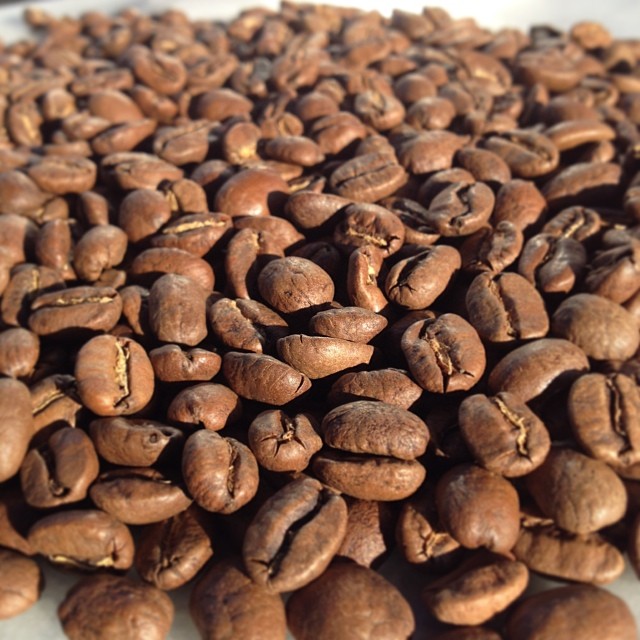
Panamanian coffee with special sweetness, jasmine, citrus, chocolate and other flavors
The microclimate of the Panamanian highlands is the most important resource that makes Panamanian coffee unique. The most important resource that makes Panamanian coffee unique is its microclimate. The east-west environment of the Republic of Panama allows cold air currents to flow through the central mountains and converge above 6500 feet, thus creating a variety of microclimates in the Boquete and Volcn Candela regions.

Unique taste of Puerto Rican coffee taste manor boutique coffee beans introduction
In 1898, the Spanish-American War broke out and Spain was defeated. According to the Treaty of Paris, Puerto Rico was ceded to the United States. The administrative jurisdiction of the United States over Puerto Rico first took the form of a military junta. During its two years of governance of the island, the junta established schools, roads, railways, hospitals and health facilities. In 1900, the United States Congress established civilian control over the island. The Governor, the Cabinet and
Costa Rican coffee flavor Costa Rican coffee producing area
The coffee beans produced in the high latitudes of Costa Rica are famous in the world, full-bodied, mild in taste, but extremely sour. The coffee beans here have been carefully processed, which is why there is high-quality coffee. Tarasu, located in the south of SanJos, the capital of Costa Rica, is one of the most valued coffee growers in the country. Tarasu (Tarrazu) in the world

Sumatra Lindong coffee beans
The beans in the GAYO Mountains are now the best in Sumatra, mostly grown in old trees, at high elevations, between 1500 and 2500. This producing area is located in ACEH, the place where the great tsunami occurred. I hope the export of coffee can help the people there after the tsunami. For coffee from GAYO producing areas, the Indonesian and international standard titles are Gayo Arabi.

Hawaiian coffee beans Hawaiian Kona coffee
Kona coffee is grown on the slopes of Mauna Roa volcano on the southwest coast of Hawaii. In terms of flavor, Kona beans are closer to Central American coffee than Indonesian coffee. Its average quality is very high, carefully handled, medium texture, good sour taste, very rich flavor, and fresh Kona coffee is extremely fragrant. If you think your coffee is too thick and African

Rwanda Coffee Flavor
Malaba Coffee (Rwandan: Ikawa ya Maraba, French: Caf de Maraba) is Fairtrade certified coffee grown in the Malaba area of southern Rwanda. Malaba's coffee crop is a bourbon of the Arabica species and is grown in fertile volcanic soil on high-altitude hills. The fruits of coffee trees are mainly picked manually during the rainy season from March to May.

Characteristics of Colombian coffee flavor of Colombian coffee
Colombian coffee (Cafe de Colombia), which originated in Colombia, is one of the few individual coffees sold in the world under the name of the country. In terms of quality, it has won praise unmatched by other coffee. Compared with other producing countries, Colombia is more concerned with developing products and promoting production. It is this, coupled with its superior geographical and climatic conditions, that makes Columbus

Kenyan coffee characteristics Kenyan coffee flavor
Kenyan Coffee-Flavor Kenyan Coffee is aromatic, full-bodied and fruity with a rich and perfect taste. Kenyan coffee has a wonderful fruit flavor, tastes like BlackBerry and grapefruit, and is a favorite of many coffee gluttons. This coffee has an excellent medium purity, crisp and refreshing taste. The flavor is fresh and most suitable for making ice coffee in summer.

Banqi Maggie Coffee Flavor Banqi Maggie Coffee characteristics
Banchimaji Bench Maji, located in southwestern Ethiopia and not far from neighboring Sudan, is easy to find using Google map. Although the flavor of Bancimaji Gesha Estate is different from that of Panamanian Geisha, it is still worth tasting. It is rare and changeable spice and fruit flavor in Ethiopia. This manor is

Brazilian coffee flavor Brazilian coffee characteristics
Brazilian coffee generally refers to coffee produced in Brazil. There are many kinds of coffee in Brazil. Like other Arabica coffee, Brazilian coffee is called Brazils to distinguish it from Milds coffee. The vast majority of Brazilian coffee is unwashed and sun-dried and is classified according to the name of the state of origin and port of transport. Brazil has 21 states and 17 states produce coffee, but four of them produce the most coffee.

Nicaraguan coffee
Nicaraguan coffee has a wide range of flavor properties. Some coffee has a high alcohol thickness like Mexican coffee, while others have bright acidity like African coffee. Most of the varieties used in Nicaraguan coffee are traditional Tibica, and a few varieties of bourbon and Kaddura are grown. Overall, Nicaraguan coffee is characterized by calmness but
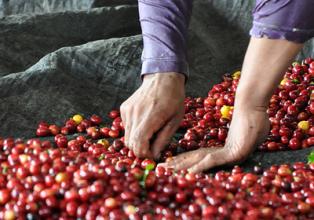
Sugar cane juice, red wine acid Kenyan Jinchugu coffee flavor, characteristics, taste and manor introduction
Enbu processing Plant (Embu Washing Station), which comes from Gichugu, adopts Kenyan double washing method and grows in Manyata-Enbu County on the eastern slope of the Kenyan Mountains from 1550 to 1750. The variety is Kenya's classic SL28,SL34, coupled with the large temperature difference between day and night in the deceived area, and the red phosphoric acid soil in Kenya, which makes the sour and sweet become the second order of this Kenyan branch.

Salvadoran coffee producing areas introduce Salvadoran coffee beans
In the early 1990s, guerrilla warfare greatly damaged the country's national economy, reducing coffee production from 3.5 million bags in the early 1970s to 2.5 million bags in 1990-1991. The eastern part of the country was most affected by guerrilla warfare, and many farmers and workers were forced to leave the manor. The shortage of funds has led to a sharp drop in coffee production, from 1200 kg per hectare in the past to no yield per hectare today.

Guatemala Antigua coffee with a very strong flavor
Between 1950 and 1954, when President Jacobo Árbenz was in power, land reform was implemented, and large landowners, who accounted for 2% of the country's population, occupied about 70% of the country's arable land.Árbenz wrote a check for agrarian reform, promising to buy up land held by large landowners and redistribute it to small farmers.Árbenz won the election, and the land reform program was immediately implemented. For land ownership greater than 223
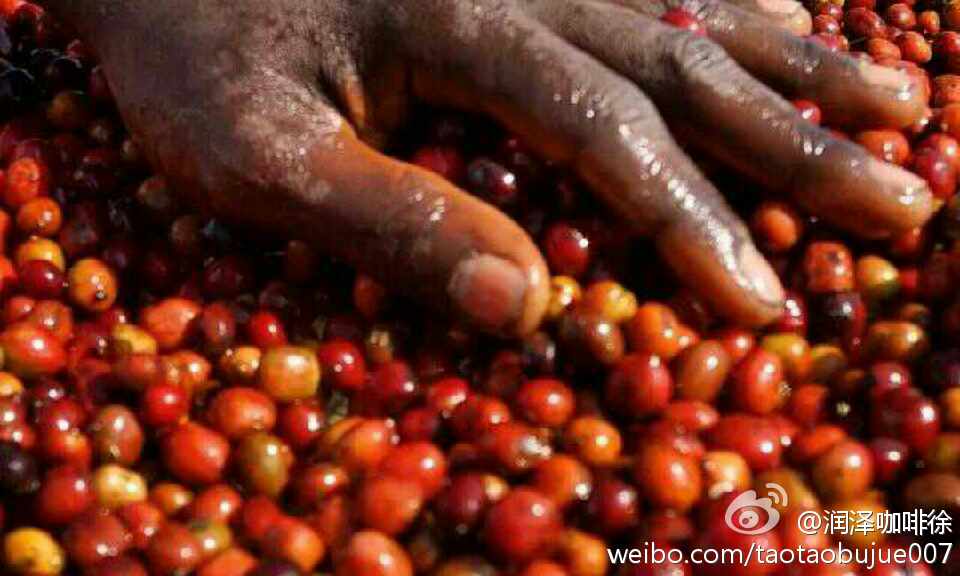
Multi-taste boutique 90 + coffee flavor, characteristics, taste and manor introduction
Juliet (Juliette H2): [Origin]: 90 + Panamanian geisha Manor, [season]: 2013 to 2014 [Variety]: geisha [Level]: 39 [altitude]: 1250m-1650m [treatment]: honey treatment [Flavor]: rich floral flavor on the basis of geisha seed flavor, the entrance taste will have the taste of orange peel, caramel and dried cashew fruit.

Cuban Crystal Mountain Coffee characteristics of Cuban Crystal Mountain Coffee
In 1748, coffee was introduced into Cuba from Domiga, and Cuba began to grow coffee ever since. With fertile land, humid climate and abundant Rain Water, Cuba can be called a natural treasure land for coffee cultivation. The suitable natural conditions provide a favorable natural environment for the growth of coffee trees, and coffee is well planted and developed here. In Cuba, the cultivation of coffee is regulated by the state. Cuba is the best
Rich taste, sour sweet Galapagos coffee flavor, characteristics, taste and estate introduction
In 1875, Manuel J. Cobos, an indigenous Ecuadorian, began growing arabic bourbon coffee trees on Hacienda El Cafetal in San Cristobal. Coffee growing in the Galapagos Islands: Coffee is grown in Saint Cristobal. Hacienda El Cafetal in San Cristobal

Characteristics of Peruvian coffee
As a rising star in the coffee industry, Peruvian coffee is gradually opening up its popularity and entering the international market. Peruvian coffee has always been used as one of the stable and mellow mixed beans of comprehensive coffee. Peruvian coffee has a mellow taste and the right acidity, and this lukewarm coffee attitude has made more and more people like it. Peru is located in western South America, with a coastline of 2254 kilometers. Andes

Introduction to the flavor and taste of the coffee producing area of Costa Rica's Saint Roman Coffee Manor
The topography of Costa Rica is that the coast is surrounded by plains, while the middle is cut off by rugged mountains. The country declared 200 nautical miles in its exclusive economic zone and 12 nautical miles in its territorial sea. The climate belongs to the tropics and subtropics, and some of them are new tropics. [2] the climate of Costa Rica is so different that it completely subverts the classification of the four seasons of the year. There are only two seasons, April to December.

The overall taste is rich and balanced, the aroma is rich and unique Bolivian coffee flavor, characteristics, taste and
Bolivia is a landlocked country in central South America, bounded by Brazil in the northeast, Paraguay in the southeast, Argentina in the south, Chile in the southwest and Peru in the west. The main topography is the plateau. Bolivia is the highest plateau country in the world, with an average elevation of more than 3000 meters. La Paz, the capital, is as high as 3660 meters above sea level, which is known as the highest capital in the world. Three points in Bolivia