
"Kent"
622 article(s) found
The influence of growth Environment on Coffee beans introduction to the pedigree and varieties of Coffee
The growing environment of coffee coffee trees are suitable for growing in tropical and subtropical climatic regions (between the Tropic of Cancer). Due to the cultivation in Asia, America and Africa, it forms a ring around the earth, so it is known as the "coffee belt" Coffee Belt. There is a lot of sandy soil in these areas; and with plenty of sunlight and plenty of rainfall, it is really suitable for growing coffee.

Knowledge about coffee beans in various producing areas of the world: description of the producing areas and flavors of fine coffee in the world
Rose summer variety (Geisha) Panama (Geisha): strawberry (strawberry), jasmine (jasmine floral), mint (bergamot), caramel (caramelly), chocolate (chocolate), grapefruit (grapefruity), plum (plum), citrus (citrus-orange) Costa Rica (Geisha): sweet flower (sweet floral), jasmine (ja)

Types and varieties of coffee
Coffee is a plant of the genus Coffea genus of Rubiaceae. According to the study of Chevalier,1947, there are 66 species in four groups, including 24 species in Eucoffea group, 18 species in Mascarocoffea group, 13 species in Paracoffea group and 11 species in Argocoffea group.

What's the price of Tibica coffee? how much is a cup of Yunnan specialty worth buying?
Professional coffee knowledge exchange more information on coffee beans Please follow the Coffee Workshop (official Wechat account cafe_style) Tiebika Coffee has at least 500 genera of Rubiaceae, which is an evergreen shrub. There are dozens of varieties in the genus Coffee, but most of them have no economic value, and only three species have economic value.
Types and varieties of coffee
Coffee is a plant belonging to the genus Coffea in the Rubiaceae family. According to Chevalier (1947), the genus Coffea is divided into four groups with 66 species, including 24 species in Eucoffea group, 18 species in Mascarocoffea group, 13 species in Paracoffea group and 11 species in Argocoffea group

Introduction of Papuan Paradise Bird Coffee Bean Variety _ relationship between Paradise Bird and Blue Mountain _ Paradise Bird Coffee Price
Professional coffee knowledge exchange more coffee bean information please follow the coffee workshop (Wechat official account cafe_style) Papua Paradise Bird coffee bean variety turned out to be the oldest and most classic tin card species, and Jamaica Blue Mountain Coffee and Hawaiian kona Coffee is actually the same variety! No wonder Bird of Paradise coffee is expensive, but except for a chain coffee shop, you can drink something new in Papua.
Timor (Tim)
Timor: a hybrid of Arabica and Robusta found in East Timor, but closer to Arabica because its chromosomes are 44 in Arabica rather than 22 in Robusta. Tim's sour taste is low, lack of characteristics, Taiwan is often used to make low-cost formula beans, but East Timor also has washed high-altitude purebred Tibica, which has entered the boutique market in the United States
Kenya [SL28] and [SL34]
Kenya [SL28] and [SL34]: French and British missionaries and researchers sifted in Kenya at the beginning of the 20th century
Geisha: Late bloomer variety
In 1931, it was exported from Geisha Mountain in southwestern Ethiopia to Kenya, Tanzania and Costa Rica. In the 1960s, it was transplanted to Panama. After nearly half a century, it was amazing. It defeated the ever-winning varieties such as Bourbon, Kadura, Kaduai and Tibika.
Ruyilu 11 (Ruiru 11)
Ruyilu 11 (Ruiru 11): another hybrid product that reproduces low quality. In 1985, the Ruilu Coffee Research Center in Kenya used Tim as a stallion to create a new variety of Arabica and Robusta, which aims to improve disease resistance and increase production capacity, but the flavor is not good. Kenyan enthusiasts are worried that the popularity of this hybrid may affect farmers' planting [SL28] and [SL34].
Pacas (Pacas)
Pacas (Pacas): a variety of bourbon found in El Salvador. In 1935, Salvadoran coffee farmer Pacas selected high-capacity varieties of San Ramon bourbon (San Ramon bourbon) to be planted on farms. In 1956, a friend found that the amount of bourbon in his farm was higher than that of the same kind of coffee tree, so he asked a professor from the University of Florida to identify it and confirm that the bourbon had a genetic mutation.
Species botany of coffee beans
Scientific taxonomy of coffee: Plantae phylum: embryonic phylum Spermatophyta (unclassified) true dicotyledons eudicots core true dicotyledons core eudicots class: angiosperms Angiosperma (ungraded) chrysanthemum asterids lip-shaped branches lamiids: Gentianales family: Rubiaceae Rubi
Characteristics of coffee beans in Tanzania
When Pangu opened, in 1898, bourbon coffee was introduced by Catholic priests to the Kilimanjaro region of Tanzania. Then Kent was introduced to Tanzania in 1920, with the excellent pedigree of the Middle Eastern non-washed bean family, bright acidity, rich and irritating flavor. Kenyan coffee is undoubtedly the leader in this family, but Tansan

Coffee Features Flavor Description Grind Scale Variety Introduction
In recent years, coffee producing countries no longer blindly pursue high yield and neglect quality practices, many countries began to introduce a new coffee evaluation system, in order to mobilize the enthusiasm of producers to promote the production of fine coffee. Brazil, for example, introduced the Cup of Excellence coffee rating in 1999
Arabica and Big Fruit Coffee Hybrid [S795] Place Name: Jember Renbo
Professional barista exchanges, please pay attention to coffee workshop (Weixin Official Accounts cafe_style ) interspecific hybrid variety Arabica and big fruit coffee hybrid variety [S795] local name: Jember Renbo This variety was bred by India in the 1940s with Kent (Typica selection, tall, high yield, extremely resistant to leaf rust) and Coffea Liberica. Printed in 1955

The pearl beans of Kilimanjaro volcano are treated by washing.
Follow the caf é (official Wechat account vdailycom) and find that the Beautiful Cafe has opened a small shop of its own Tanzania Kilimajaro Peaberry [country]: Tanzania [Grade]: PB [producing area]: northern Highland Kilimanjaro Volcano area [altitude]: 1300-2000m [treatment]: washing [varieties]: bourbon [producer]: local

Tanzanian coffee varieties Tanzania coffee beans how about Tanzanian coffee
Professional coffee knowledge exchange more coffee bean information Please follow the coffee workshop (Wechat official account cafe_style) the traditional varieties that are widely used are Typica, Bourbon (introduced by missionaries in the Kilimanjaro area in 1890), Blue Mountain and Kent, both of which are mutations of Typica. Takri (Tanzania Coffee Institute) has moved from the ancient tradition of bourbon

What brand of Indian coffee is good Indian coffee tastes good Indian coffee beans taste good
For more information on coffee beans, please follow the coffee workshop (Wechat official account cafe_style) S795, commonly known as Jember by Indonesians, also known as Selection 795, was selected by the Balehonnur Coffee Research Station in India. It is considered to be S288 (a natural hybrid between Liberia and Arabica) and an old Kent variety (a
Unique Monsoon treatment-the Story of Indian Monsoon Malaba Malabr
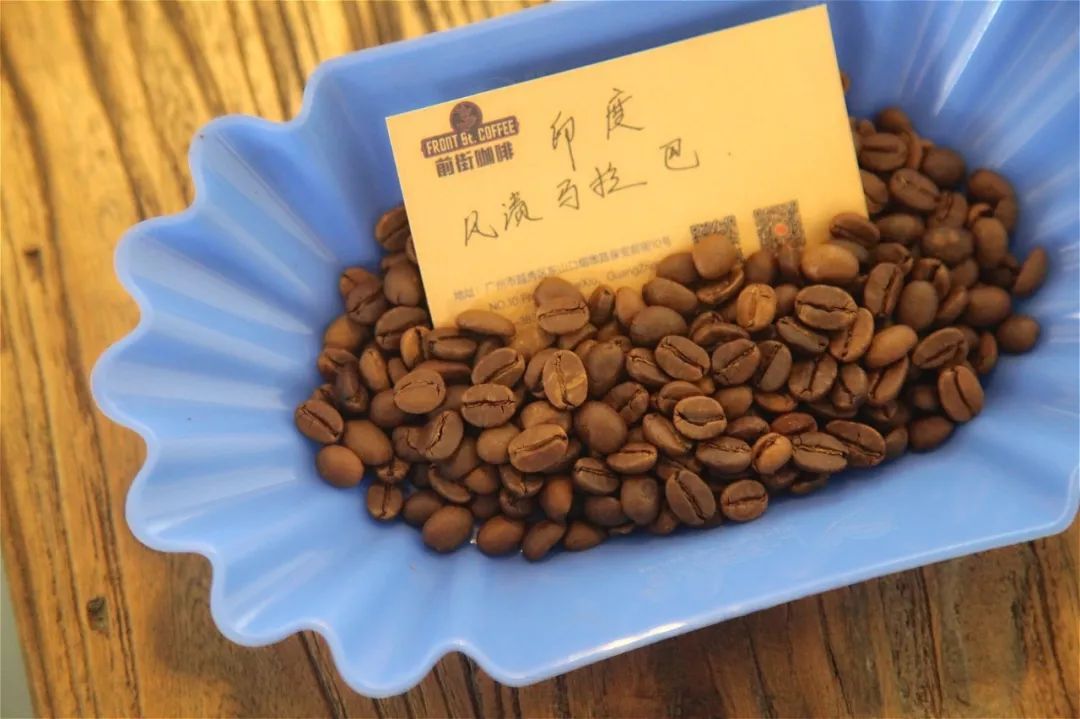
Professional coffee knowledge exchange more coffee bean information please follow the coffee workshop (Wechat official account cafe_style) [monsoon stains Malaba] India Monsooned Malabar country: southern India: Malaba coast in southern India altitude: 1100-1200 m varieties: Kents,S795,Catimor,selection 9 treatment method: wind stain sun treatment method 01
Yellow bourbon (Bourbon Amarello)
Yellow bourbon (Bourbon Amarello): the English name can also be written as [Yellow bourbon]. It is suitable for both shallow and deep baking. It is a bourbon variety of yellow skin peculiar to the state of Sao Paulo, Brazil. Generally speaking, the coffee fruit will turn red when it is ripe, but the bourbon will not turn red when it is ripe, so it gets its name from orange. Huang Boben has swept the Brazilian [COE] competition in the past two years, and almost all of the top three prizes were won by Huang Boben.