
"Robbas"
71 article(s) found

What's the difference between Arabica coffee beans and Roberta coffee beans? Arabica Coffee Tree Robbas
Different planting conditions [Elaraby Kadou] Arabica coffee has more stringent planting conditions, weak disease resistance, higher altitude requirements, slower growth, higher quality, and more refined processing of raw beans. Growing at colder altitudes in the tropics, it is an important kind of commercial coffee with a fruiting period of less than three years and a high-quality aroma and sour taste. Arabica coffee bean owner

Varieties of boutique coffee beans robastian coffee
Robastian coffee (Coffee. Robustra): more precisely, C. canephora Robustra can produce robastian beans. Because of its poor taste, it contains 2-3 times as much caffeine as Arabica coffee (C.Arabica). It is usually used for the production of instant coffee and Arabica coffee (C.A) in the large coffee industry.

What are the main producing places of Indonesian coffee beans? what kind of Indonesian coffee do you have?
Indonesia (Indonesia) is mainly produced in Sumatra, Guawa and Sulawesi. 90% of them are Robbas species, which can be rated as the first in the world in quality. Sumatra is best known for its rich, catchy and upscale Mantenin. In addition, Mount Jiayu is also produced in the north of the island, while Arabica in Guawa has a good sour taste, especially loved by the Dutch. Sulawesi Island Institute

Famous Coffee trees introduce Hainan Coffee Manor
Most Robastian coffee beans are small, of different shapes and sizes, and are not very good-looking. They are mainly produced in Uganda, Ivory Coast, Congo, say, Angola and other countries. Generally speaking, the coffee beans that everyone is most familiar with when drinking individual coffee in Taiwan cafes, such as the mountains of Brazil, Mantenin of Colombia, Yemenmoka, and the Blue Mountains of Jamaica, are all high-quality coffee beans grown by Elaraby. Robbas.

Sumatra Lasuna Coffee Flavor introduction how should I drink Lasuna coffee?
Professional coffee knowledge exchange more coffee bean information please follow the coffee workshop (Wechat official account cafe_style) Indonesia (Indonesia- Southeast Asia) the main producing areas are Sumatra, Java, Sulawesi Island. 90% of them are Robbas species, which can be rated as the best in the world. Sumatra is best known for its rich, catchy and upscale Mantenin. In addition, in the northern part of the island
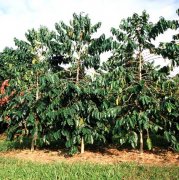
Coffee beans and coffee trees types of coffee trees
In general, coffee trees can grow to 4-5 meters high, and even 9-10 meters high. A single coffee tree but in places where coffee is artificially planted, people cut off the branches at the top of the coffee tree when it grows to three meters high, so that the coffee tree does not grow too high, so that it can be picked during harvest. According to the botanical classification, the coffee tree belongs to the domain: eukaryotic domain, Eukaryote realm:

Coffee beans can be planted there in China. Environmental characteristics, varieties and taste manor.
The main producing areas are Sumatra, Guawa and Sulawesi. 90% of them are Robbas species, which can be rated as the first in the world in quality. Sumatra is best known for its rich, catchy and upscale Mantenin. In addition, Mount Jiayu is also produced in the north of the island, while Arabica in Guawa has a good sour taste, especially loved by the Dutch. What Sulawesi produces is a large-grained Carlo.

Teach you how to appreciate coffee
The most commonly used descriptions of the characteristics and flavor of coffee in different places are as follows:
Boutique coffee bean Arabica VS Robasta (Robusta)
Arabica (Arabica): accounts for 3/4 of the world's output, good quality, because the coffee tree itself is very sensitive to heat and humidity, so its growth conditions are at least 900m higher than the sea level of the highland climate, the higher the height, the better the quality of coffee beans baked. This variety has a low caffeine content (1.1-1.7%). The color of coffee beans is green to light green, oval in shape and furrowed.

Boutique coffee beans robastian coffee (Coffee. Robusta)
More precisely, C. canephora Robustra can produce robasta coffee (C. robusta) beans. Because of its poor taste, it contains 2-3 times as much caffeine as Arabica coffee (C.Arabica). It is often used as a supplement to the production of instant coffee and Arabica coffee (C.Arabica) in the large coffee industry. Robasta Coffee (C. R

World Coffee Bean Classification: Robasta Coffee Bean Coffee. Robustra introduction
Robastian coffee (Coffee. Robustra): more precisely, C. canephora Robustra can produce robastian beans. Because of its poor taste, it contains 2-3 times as much caffeine as Arabica coffee (C.Arabica). It is usually used for the production of instant coffee and Arabica coffee (C.A) in the large coffee industry.
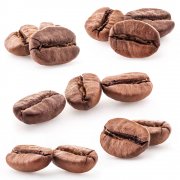
Output accounts for about 20% to 30% of the world's output. Robasta Coffee Tree Commercial Coffee
The bean shape of Robasta is larger, the front is gradually round, the back is round and convex, and the crack is straight. Robasta coffee trees are native to Madagascar in central and western Africa and Indonesia in Asia, and account for about 20% to 30% of the world's output. Robasta coffee tree is suitable for planting in the lowlands below 500 meters above sea level. It has strong adaptability to the environment and can resist bad conditions.
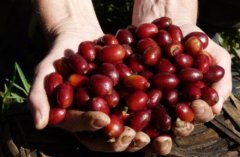
Coffee beans original Arabica, Robasta, Riperica, Exelsa
There are four original species of coffee: Arabica species in Ethiopia, Robasta and Riperica species in Congo, and Exelsa. The original species are used for breeding and research. So far, there are more than a hundred coffee varieties in the world, of which 76% are Arabica, and 24% are Robasta and Riperica. A: Arabica species (Arabica): at present

What is the Indian coffee that blows through the monsoon? How do you drink Indian coffee?
Professional coffee knowledge exchange more coffee bean information please follow the coffee workshop (Wechat official account cafe_style) INDIA Robasta Coffee after the monsoon blowing Master Origin India is a blend of Indian Arabica beans and coffee flavor showing a spicy, woody flavor and strong taste through the weathered Robasta coffee processing. Wind-soaked method is imprinted

Coffee theory study: coffee plant classification, cultivation and processing
Many people are familiar with coffee powder, but coffee powder is formed after coffee beans are ground. The coffee beans that ordinary customers get are fried (roasted) coffee beans, while coffee beans that have not been roasted are green coffee beans. If you dig deeper, coffee beans come from coffee berries on coffee trees, which are the seeds of coffee trees. So to understand coffee beans, first you have to understand coffee.

Can the coffee variety Robasta be roasted deeply?
Coffee varieties originated from Arabica coffee trees in Ethiopia, accounting for 70% of the world's coffee production, and almost all the world-famous coffee varieties are Arabica species. Arabica coffee trees are suitable for growing in high mountains with large temperature difference between day and night, as well as soils with low humidity and good drainage. The ideal altitude is 500m-2000 m. The higher the altitude, the better the quality, but because of disease resistance.

In the mystery of coffee, Peter sat on the throne of the guru.
Pitt disdains Robasta and shallow roasted coffee. He is good at interpreting the aroma of Arabica in European style, setting off a whirlwind in San Francisco, but Pitt understands the shortcomings of re-baked beans that are not easy to keep fresh, and insists on not opening chain stores on the ground. as a result, quality and goodwill are preserved. At that time, there were a lot of operators who were bent on imitating dogs and minks, and most of them missed the point, and it was hard to taste bitterness when baked.

What are the main varieties of coffee beans
The Robastian coffee tree, which originated in the Congo in Africa, accounts for about 20% to 30% of the world's production. Luoba Jinta coffee tree is suitable for planting in the lowlands below 500 meters above sea level, has a strong adaptability to the outside world, can resist bad weather, resist diseases and insect pests, and is in soil preparation. Weeding and pruning do not require much manual care, and can be allowed to grow in the wild, which is easy.

What are the types of coffee? what are the characteristics of coffee?
It accounts for 3/4 of the world's output and is of good quality. because the coffee tree itself is very sensitive to heat and humidity, its growth conditions are at least higher than the highland climate of 900m at sea level. the higher the height, the better the quality of coffee beans baked. This variety has a low caffeine content (1.1-1.7%). The color of coffee beans is green to light green, oval in shape and curved in grooves. Robbas.