
"icatu"
173 article(s) found

Geisha: Late bloomer variety
In 1931, it was exported from Geisha Mountain in southwestern Ethiopia to Kenya, Tanzania and Costa Rica. In the 1960s, it was transplanted to Panama. After nearly half a century, it was amazing. It defeated the ever-winning varieties such as Bourbon, Kadura, Kaduai and Tibika.
Ruyilu 11 (Ruiru 11)
Ruyilu 11 (Ruiru 11): another hybrid product that reproduces low quality. In 1985, the Ruilu Coffee Research Center in Kenya used Tim as a stallion to create a new variety of Arabica and Robusta, which aims to improve disease resistance and increase production capacity, but the flavor is not good. Kenyan enthusiasts are worried that the popularity of this hybrid may affect farmers' planting [SL28] and [SL34].
Pacas (Pacas)
Pacas (Pacas): a variety of bourbon found in El Salvador. In 1935, Salvadoran coffee farmer Pacas selected high-capacity varieties of San Ramon bourbon (San Ramon bourbon) to be planted on farms. In 1956, a friend found that the amount of bourbon in his farm was higher than that of the same kind of coffee tree, so he asked a professor from the University of Florida to identify it and confirm that the bourbon had a genetic mutation.
Vera Saatchi (Villa Sarchi)
Vera Saatchi (Villa Sarchi): the bourbon variant, which was first discovered in Costa Rica in the six ○'s, has often appeared on the list of winners in competitions in recent years. Common cultivated varieties of coffee, types of coffee beans: Typica (Bourbon bourbon) gene mutants: Kenya [SL28] and [SL34] (bourbon line) Rosa (Geisha geisha)
Species botany of coffee beans
Scientific taxonomy of coffee: Plantae phylum: embryonic phylum Spermatophyta (unclassified) true dicotyledons eudicots core true dicotyledons core eudicots class: angiosperms Angiosperma (ungraded) chrysanthemum asterids lip-shaped branches lamiids: Gentianales family: Rubiaceae Rubi
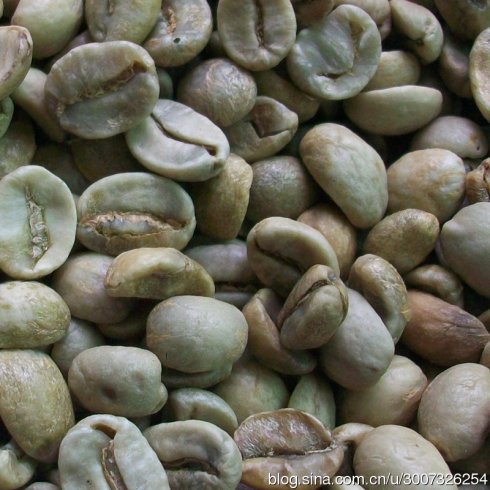
World Fine Coffee Bean Introduction: India Di Bika Hybrid Variety Kent
Kent: A hybrid variety of Tibica discovered in India with high yield and disease resistance, but has never won an international cup test. Common coffee cultivars, coffee bean types: Typica Bourbon Gene mutants: Kenya [SL28] and [SL34](Bourbon descent) Geisha
Arabica and Robusta hybrid coffee bean varieties
1. Timo: A hybrid of Arabica and Ba and Robasta found in East Timor. 2. Catimor: Major variety of commercial bean, East Timor, colonized by Portugal for 400 years. Brazilian bourbon variety Catimor was transplanted to East Timor by Portuguese in 1959. Mixed with Timo, coffee from 1970 to 1990

Common cultivated varieties of coffee, types of coffee beans
Typica bourbon (Bourbon bourbon) gene mutant: Kenya [SL28] and [SL34] Rosa (Geisha geisha coffee) yellow bourbon (Bourbon Amarello) Kaddura (Caturra) Pacas (Pacas) Vera Shaki (Villa Sarchi) elephant bean (Maragogype Malago Rippi) Arabica intraspecific hybridization (Intraspecific)

El COE San Amiro Chateau Chateau de la Chateau de la Chateau de San Amiro
Professional coffee knowledge exchange more coffee bean information please follow the coffee workshop (Wechat official account cafe_style) San Emilio El Salvador El Salvador COE washing bourbon countries: El El Salvador Farm: San Amiro Manor Finca San Emilio varieties: bourbon Bourbon treatment: washing altitude: 1000-1400m Flavor: spices
Yellow bourbon (Bourbon Amarello)
Yellow bourbon (Bourbon Amarello): the English name can also be written as [Yellow bourbon]. It is suitable for both shallow and deep baking. It is a bourbon variety of yellow skin peculiar to the state of Sao Paulo, Brazil. Generally speaking, the coffee fruit will turn red when it is ripe, but the bourbon will not turn red when it is ripe, so it gets its name from orange. Huang Boben has swept the Brazilian [COE] competition in the past two years, and almost all of the top three prizes were won by Huang Boben.

Varieties of coffee beans what are the varieties of coffee beans
Caturra is a naturally mutated Arabica variety found in Bourbon in Brazil in 1937. It has good potential to increase production, but it is not suitable for the growth conditions of Brazil. However, it thrives in Colombia and Central America, where quality increases at high altitudes, but production declines and requires a lot of care and fertilization. It has a strong fruit flavor. Caffeine without cause

Brazilian Daterra Dateira Manor Sunrise Sunrise Coffee beans Introduces Baking suggestions
Brazil Daterra (Dateira Manor) Sunrise (rising Sun) mentioned in the previous article Sweet collection that Daterra products are formula beans made from varieties in different areas of the park according to different proportions, with a total of 19 products Reserve, Reserve Peaberry, Reserve Vintage, Sweet Blue, Sweet Collection, Sweet Ye.
Elephant bean (Maragogype)
Elephant beans (Maragogype): beans are at least three times larger than the average Arabica, making it the largest in the world, hence the name. Elephant beans, the most well-known variety of beans in Tibica, were first discovered in the Maragogype region of Bahia in northeastern Brazil in ○ in 187. The high-quality bean industry is often called the birthplace of Malago Gibbs, commonly known as elephant beans.

Brazilian Fazenda Colina Manor Coffee Flavor characteristics Brazilian Coffee taste
Professional coffee knowledge exchange more coffee bean information please follow the coffee workshop (Wechat official account cafe_style) Mr. Fazenda Colina Hudson Vilela has many years of agricultural experience and has developed the vision of growing specialty coffee in Brazil. He likes to work with his sons and incorporate them into his plan. In 1999, Hudson Vilera bought Fazendarko.

What are the characteristics of coffee?
Abyssinia is also a variety introduced to Java in 1928. Indonesia has some cultivation. Acaia is mainly cultivated in Brazil. This is derived from a natural cross of the Sumatra bourbon variety. Arabica is a large coffee variety category, also coffee variety, about 75

Geisha (also known as geisha) Coffee beans Colombian flavor description manor area introduction
Geisha (also known as geisha) Coffee beans Colombian description of the manor region introduces the fragrance of flowers, tropical fruits and strong sweetness; these are the feelings that Rosa has always brought to us. Properly baked, they make you feel like sipping the fragrance of a bouquet of flowers. Maybe you don't know the story of Rose Summer, which is an ancient one from Ethiopia.

Brazilian Camo Town Peeled Sunburn Champion Batch Clear Spring Manor Brazilian Coffee Features
Professional coffee knowledge exchange More coffee bean information Please pay attention to coffee workshop (Weixin Official Accounts cafe_style) Country: Brazil Origin: South of Minas Gerais Manor: Qingquan Manor Raw bean processing method: pulsed natural PN method, namely Pulp Natural, refers to coffee cherries after harvest, first remove the peel, and then directly sun or dry the place

What kind of coffee is Brazilian hirado Baileys? How about the micro-batch volcano treatment of Shengye Manor?
Professional coffee knowledge exchange more coffee bean information please follow the coffee workshop (Wechat official account cafe_style) Brazilian coffee Hilado Brazil Cerrado, also known as Serrado, is the oldest coffee producing area in Brazil with the best climatic conditions. Its coffee is about 1000 meters above sea level, and its unique soil and rich groundwater are essential to Syrador.
Kaddura (Caturra)
Kaddura (Caturra): a single-gene variant of bourbon, discovered in Brazil in the ○'s. The production capacity and disease resistance are better than bourbon, but the trees are shorter and easy to harvest, but like bourbon, they all have periodic problems of production capacity fluctuation every two years. The flavor is comparable to or slightly worse than that of bourbon beans, but more importantly, it is super adaptable and does not need shade trees. It can also be full of vitality in direct exposure to the sun.

Flavor description of Brazilian Arabica Bourbon Coffee Bean
Arabica Bourbon Coffee Bean Flavor description treatment Arabica intraspecific Hybridization 1. New World (Mundo Novo): a natural hybrid of Bourbon and Sumatra iron pickup, first found in Brazil, is regarded as the new hope of the Brazilian coffee industry, so it is named the New World species. two。 Catuai: a hybrid of New World and Kaddura, bearing solid fruit