
"ninth"
433 article(s) found

Maybe you didn't drink a cappuccino at all? Do you really understand the meaning of cappuccino?
Professional coffee knowledge exchange more coffee bean information please follow the coffee workshop (Wechat official account cafe_style) what is the most important feature of cappuccino coffee? What if the cappuccino you drank this morning wasn't really a cappuccino? How awful. And even more frightening is: what if your little white coffee (flat white) is the authentic cappuccino?

What's so special about Antigua coffee beans in Guatemala? where can I get Antigua coffee beans?
Professional coffee knowledge exchange more coffee bean information please pay attention to the coffee workshop (Wechat official account cafe_style) Guatemala is located in the Central American isthmus, the territory of many volcanic mountains and plateaus, the production of high-quality Central American high-altitude very hard coffee beans, is the ninth largest producer of coffee beans in the world. The main coffee producing areas in Guatemala are Antigua, Huehuetenango and Atitl.

The story of coffee
Professional coffee knowledge exchange more coffee bean information please pay attention to the coffee workshop (Wechat official account cafe_style) the exact origin of coffee is impossible to verify, you can peep into the mystery of the origin from many legends. 1. "in the sixth century, Kaidi, a shepherd in Ethiopia, one day found his sheep eating a red fruit.

Maybe you're not drinking cappuccino at all (reprinted)
For the exchange of professional baristas, please follow the coffee workshop (Wechat official account cafe_style) [first let's take a look at the cappuccino written by others]. In fact, the seniors have their own ideas and observations about cappuccino, because I first learned cappuccino, about 13.14 years ago, when boutique coffee was brewing and quite chaotic, so various schools of cappuccino evolved.

Guatemala Coffee producing area-Vivette Nanguo introduces the production method of hand-made Guatemalan coffee
Professional coffee knowledge exchange more coffee bean information please follow coffee workshop (Wechat official account cafe_style) Guatemala coffee industry Guatemala coffee beans Guatemala coffee recommendation Guatemala Vivette Nan fruit region introduction: Guatemala is located in the Central American isthmus, many volcanoes formed high mountains and plateaus, Central America high altitude very hard coffee beans, the ninth largest in the world
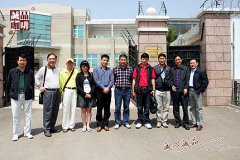
Ethiopia's admirable coffee country
In the world of coffee, there are countless stories and reports about Ethiopia: the birthplace of coffee, the story of shepherds, the thought-provoking documentary Black Gold, and so on. None of the above is an important reason for our visit. This time, we of Guangzhou Coffee Association (Lin Guangchao, Vice President Lin Yaohui, Vice President Xiao Fei, Vice President Tang Jinqing and Mr. Liang Rengming) are in Ethiopia.

Mexican coffee production falls to its lowest level in 45 years
Mexican coffee production has fallen for 15 consecutive years due to contagious leaf rust and a lack of policy support, reaching a 45-year low of 3.3 million bags in the 2014-2015 season, the Mexican financier reported. In the season of 1999-2000, the output of black coffee reached 6.2 million bags. At present, the yield of black coffee is 1.2 tons per hectare, which is also the lowest since records began. In the nineties

Coffee growth process and production process
The flowers of the coffee tree have a faint fragrance like jasmine. If the temperature difference between day and night and humidity are enough, there will be more flowers. The second and third months of the lunar calendar are its florescence, and its flowers are small white flowers. The flowers withered completely within two days to a week after flowering. As a result, the growth process of coffee will produce green fruit after the flowers fade.

Four cultivation systems of Ethiopian coffee
Ethiopia is located between three and fourteen degrees north latitude, and the planting area of coffee trees is nearly 600000 hectares. There are two rainy seasons a year in the south and east of the country, while there is only one rainy season in the west. The distribution of the rainy season is different, so coffee is harvested in Ethiopia all the year round. Coffee grows between 550 and 2750 meters above sea level. The soils in the west and south belong to volcanic rocks and are rich in minerals.

Four cultivation systems of Ethiopian coffee
Ethiopia is located between three and fourteen degrees north latitude, and the planting area of coffee trees is nearly 600000 hectares. There are two rainy seasons a year in the south and east of the country, while there is only one rainy season in the west. The distribution of the rainy season is different, so coffee is harvested in Ethiopia all the year round. Coffee grows between 550 and 2750 meters above sea level. The soils in the west and south belong to volcanic rocks and are rich in minerals.

Taste characteristics of Coffee Flavor description in Los Arboles Manor, Colombia
Professional coffee knowledge exchange more coffee bean information please follow the coffee workshop (Wechat official account cafe_style) Los Arboles Arley has been working in the coffee industry for 15 years. Eleven years ago, he started growing a small batch of coffee with 300 trees, and when he realized it might be a profitable business, he expanded his acreage and planted more coffee. Today, coffee
Coffee beans Malawian Malawi AA Plus Estate Panwamba
Africa-Malawi well-known representative coffee: Malawi Malawi is a small country in southeastern Africa, and it is also a landlocked country not near the sea. most of its coffee is grown in the northern plateau, but the yield is not large. But although it is not near the sea, you can see on the map that there is a very large lake in the northeast of it.
The historical origin of coffee? Do you know how many
Professional baristas Please follow the Coffee Workshop (official Wechat account cafe_style) at the beginning of the seventh century, in 575 AD, the Arab Karl was grazing in the Ethiopian steppes of Africa when he discovered a coffee tree. In the eighth century, Arabs used coffee as wine and medicine. In the ninth century, Arab Islam began to drink coffee by roasting and grinding raw beans. Arab merchants in the tenth century

The Coffee Kingdom of Laos-- the Borofen Plateau
The Boloven plateau, located in Chambasai province in southwestern Laos, is the coffee kingdom of Laos, where 95% of the country's coffee is produced.
About the history of coffee, what is the origin of coffee?
Professional baristas Please follow the Coffee Workshop (official Wechat account cafe_style) at the beginning of the seventh century, in 575 AD, the Arab Karl was grazing in the Ethiopian steppes of Africa when he discovered a coffee tree. In the eighth century, Arabs used coffee as wine and medicine. In the ninth century, Arab Islam began to drink coffee by roasting and grinding raw beans. Arab merchants in the tenth century
Coffee bean producing area-Africa-Malawi (Malawi)
Well-known representative coffee: Malawi is a small country in southeastern Africa and a landlocked country not near the sea. most of its coffee is grown in the northern plateau, but its production is not large. But although it is not near the sea, it can be seen on the map that there is a very large lake to the northeast of it. It is Lake Malawi, which is also the natural boundary between Malawi and its neighbors.

Coffee bean producing area-Africa-Malawi (Malawi)
Well-known representative coffee: Malawi is a small country in southeastern Africa and a landlocked country not near the sea. most of its coffee is grown in the northern plateau, but its production is not large. But although it is not near the sea, it can be seen on the map that there is a very large lake to the northeast of it. It is Lake Malawi, which is also the natural boundary between Malawi and its neighbors.
Coffee trees are usually bred by someone
1. Germinating coffee trees are usually bred by special personnel, and after growing into saplings, they are planted by individuals themselves, so the soil and climate of each place will affect the growth of coffee trees. 2. Growing coffee trees usually grow in the area between the Tropic of Capricorn and the Tropic of Capricorn. A coffee tree needs to grow for about three to five years before it can begin to bear fruit. 3. Coffee trees have flowers during flowering.

General knowledge of Coffee in four cultivation Systems of Ethiopian Coffee
Ethiopia is located between three and fourteen degrees north latitude, and the planting area of coffee trees is nearly 600000 hectares. There are two rainy seasons a year in the south and east of the country, while there is only one rainy season in the west. The distribution of the rainy season is different, so coffee is harvested in Ethiopia all the year round. Coffee grows between 550 and 2750 meters above sea level. The soils in the west and south belong to volcanic rocks and are rich in minerals.

Introduction to planting treatment of Coffee Manor in Antigua area
Located in the isthmus of Central America and with young geology, Guatemala has many high-altitude mountains such as mountains and plateaus formed by active volcanoes. Due to its cold climate and fertile volcanic ash soil often covered by volcanic eruptions, Guatemala is very suitable for producing high-quality coffee. As the ninth largest producer of coffee beans in the world, Guatemala coffee is mainly produced in Antigua and Weitenan.