What is the amount of information contained in the name of coffee? Classification and classification of coffee
For professional baristas, please follow the coffee workshop (Wechat official account cafe_style)
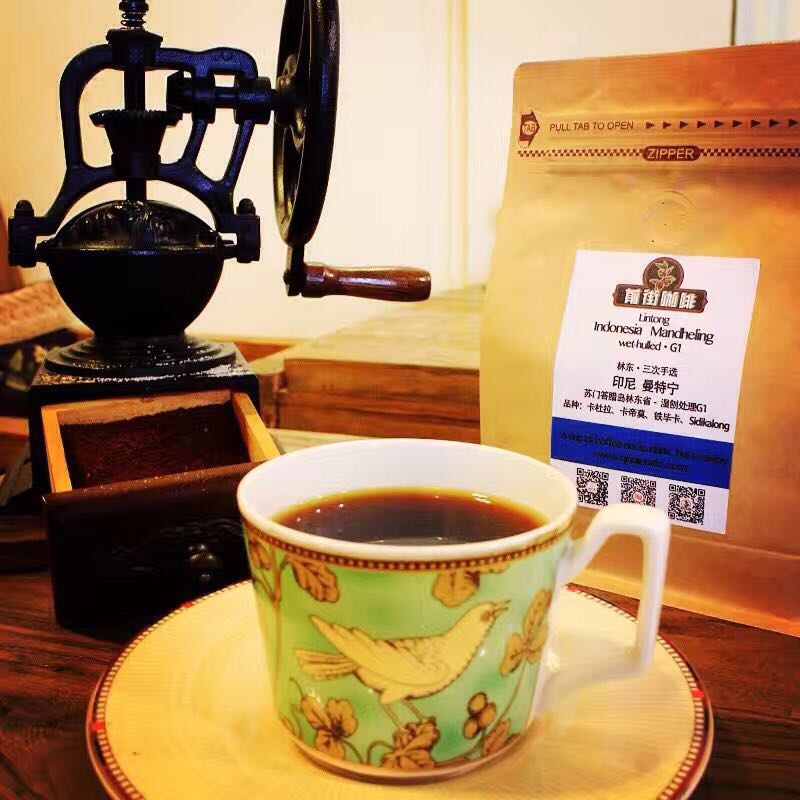
What is the amount of information contained in the name of coffee?
Take a chestnut.
Coffee name: Costa Rica Tarrazu SHB EP Red Honey
Country + producing area + graded name + treatment method
European ep standard red honey treatment of extremely hard beans in Tarazhu, Costa Rica
Classification and classification of coffee
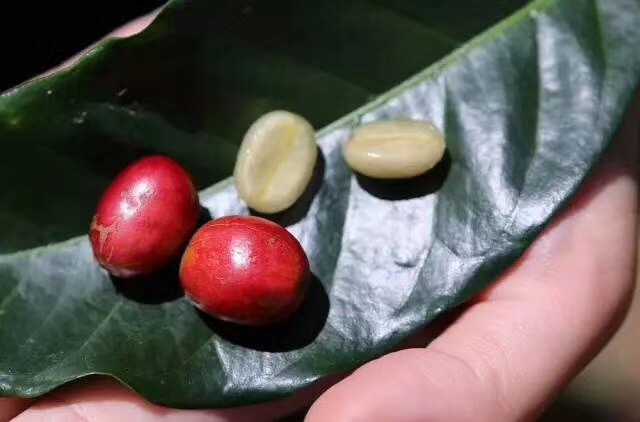
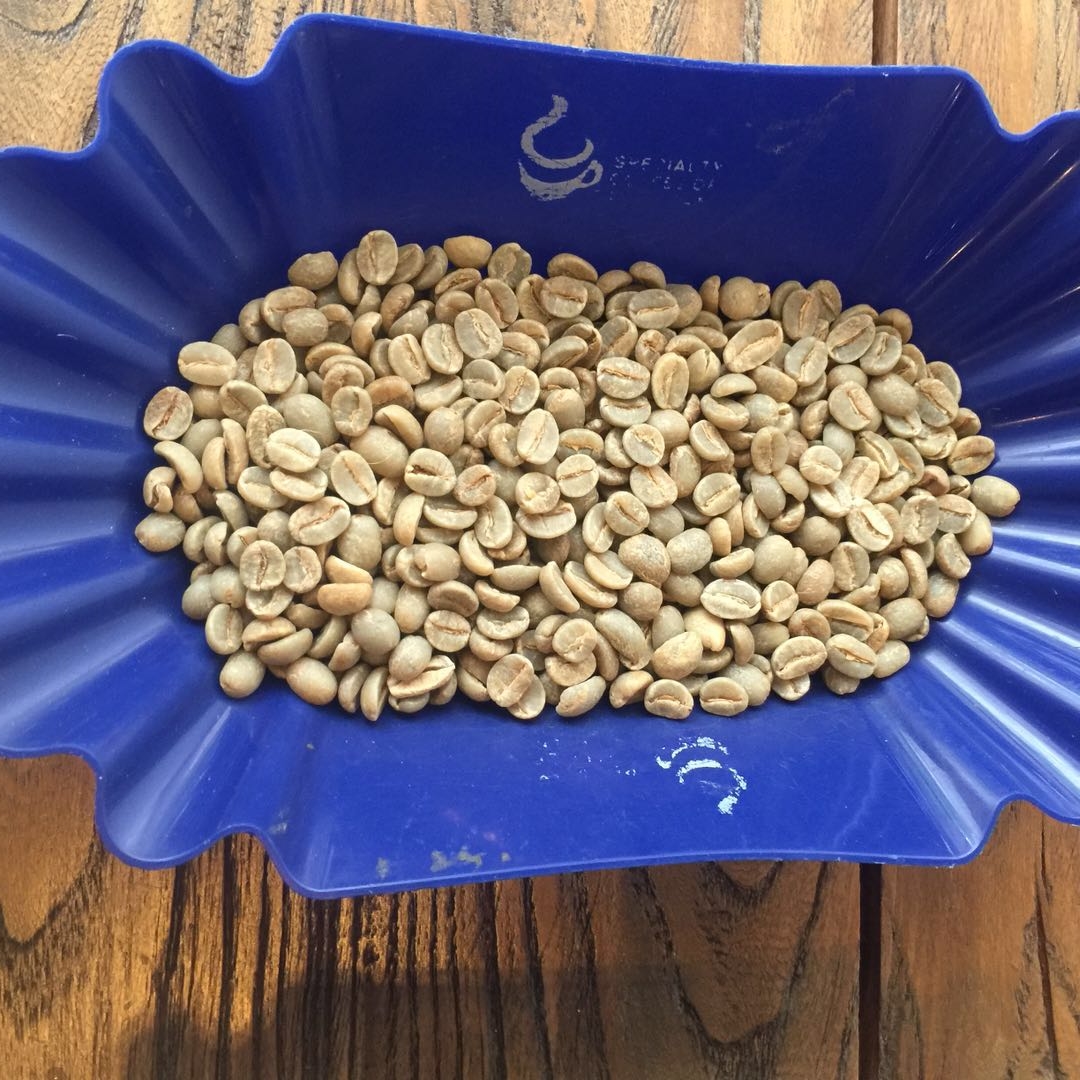
In order to distinguish between good quality coffee beans and poor quality coffee beans, we have to grade the coffee. Coffee grading is usually based on defect rate, bean size, altitude, raw bean density, treatment standards and so on, so it is more often described by a variety of standards.
There are two ways to classify raw coffee beans, one is the filter number, and the other is the elevation.
It is divided by the number of the filter screen, and the size is in the unit of the screen (size).
Round beans are generally smaller than flat beans, between 8-13 and 12-29.
8, 9, 10. 12, 13. 18. 29 = > small, medium, ordinary. Quasi-big. Big, extra large. The bigger the size, the bigger the beans. SC-19, for example, is the No. 19 bean.
Grade by level:
According to the elevation of the cultivated land, it can be divided into seven grades. Generally speaking, the quality of highland beans is better than that of lowland beans, and the price is higher because of the increase in freight.
Sequence number equal order abbreviated elevation
1 selected quality beans S.H.B 4500 ~
2 good coffee beans H.B 4000mm 4500
3 medium coffee beans S.H 3500 million 4000
4 super high-grade washed coffee beans E.P.W 30003500
5 first-class washed coffee beans P.W 250000 3000
6 special water washed coffee beans E.G.W 2000 2500
7 High quality washed coffee beans G.W ~ 2000
-grading according to defect rate
American standard USP
US preparation
European standard EP
Euro preparation
The best standard GP
Gourmet preparation
Many countries have USP, EP and GP standards, and USP\ EP is relatively more common. European and American standards are based on the specific requirements for the defects or items of raw beans, and sometimes there are other standards among them, which are not detailed because different national standards are different. Generally speaking, the EP standard is higher than the USP standard.
Screen diameter
The size of the international practice is 9: 22, and the number used represents the diameter of the screen, with this number as the numerator and 64 as the denominator, in inches. For example, 14 refers to raw coffee beans that can be sifted through a 14-inch screen with a diameter of 64 inches, and 19 + refers to raw coffee beans that can be sifted with a diameter of more than 64 inches with a 19-inch screen.
Grading standard and code name
The governments of each coffee-exporting country set their own grading standards and code names.
Common grading standards
African countries-Kenya kenya
PB: peaberry
AA Plus-plus:
AA plus
AA: Screen 17 and 18 (sieve: 17, 18 mesh = 7.2mm)
AB: screen 15 and 166.6 mm (sieve: 15,16 mesh = 6.6 mm)
C:
E:
TT: light beans screened by airflow from AA and AB levels

African countries-Ethiopia, the number of defective beans is graded
300 grams of raw beans as the basis for calculation
Grade11: 0-3 defects
Grade12: 4-12
Grade13: 13-25
Grade14: 20-45
Grade15: 46-100
Grade16: 101-153
Grade17: 154,340
Grade18: over 340 = substandard
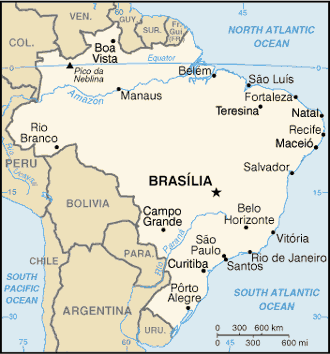
South America-Colombia
Maragogype: special trees Marago Rippi, elephant bean
Supremo: screen > 17
Excelso: screen 15-16.5
UGQ: Usual Good Quality: Screen 12-14
South America-Brazil
Type Defects (COB) (New York) (Le Havre)
2 4 6 8
2/3 8 9 12.5
3 12 13 17
3/4 19 21 23.5
4 26 30 30
4/5 36 45 58.5
5 46 60 87
5/6 64 123
6 86 158
Central America-Guatemala
Good Washed: altitude 700m (GW)
Extra Good Washed: 700Universe 850m (EGW)
Prime Washed: 850Universe 1000m (PW)
Extra Prime Washed: 1000Universe 1200m (EPW)
Semi Hard Bean: 1200Compact 1350m (SH)
Hard Bean: 1350max 1500m (HB)
Fancy Hard Bean: 1500Comp1600m (FHB)
Strict Hard Bean: 1600thumb 1700m (SHB)
Central America-El Salvador
Washed washing
Central Standard: 5000000m (CS)
High Grow: 9001,200m (HG)
Strictly High Grown: > 1200 m (SHG)
Natural sun exposure
Coriente
Superior
Caracoil
Hawaii, Kona.
Kona Extra Fancy: screen 19 maximum 10 defects
Kona Fancy: Screen 18 max. 16 defs.
Kona Prime: no size requirement max. 25 defs.
Kona Caracoli No.1: Screen 10 max. 20 defs.
Jamaica jamaica
Blue Mountain
High Mountain Supreme
Prime Washed Jamaica aica
Grade Grade
Grade I: screen 18
Grade II: screen 17
Grade III: screen 16
Peaberry
Indonesia is graded by the number of defective beans
300g raw beans are calculated based on Grade based on 300g.
Grade1: 11 defects
Grade2: 12-25
Grade3: 26-44
Grade4a: 45-60
Grade4b: 61-80
Grade5: 81-150
Grade6: 151225
FrontStreet Coffee is a long-established specialty coffee roaster in Guangzhou China, selling freshly roasted beans from its own farm in Yunnan as well as dozens of carefully selected single-origin beans from around the world for both pour-over and espresso. The products deliver consistently excellent quality and great value, with shipping within 24 hours. Guangzhou's FrontStreet Coffee shop is recommended by many coffee lovers, and the beans are now available online at the Tmall 。
Important Notice :
前街咖啡 FrontStreet Coffee has moved to new addredd:
FrontStreet Coffee Address: 315,Donghua East Road,GuangZhou
Tel:020 38364473