How to Make Better Coffee at Home
You love the rich aroma and smooth taste of café coffee—but at home or in the office, your brew often falls flat. Maybe it’s bitter, lacks crema, or just doesn’t excite your palate like it should. You’re not alone. Many coffee drinkers struggle to replicate café-quality results outside professional settings.
To make a better cup of coffee at home, start with freshly roasted, high-quality single-origin beans, grind them just before brewing, and control variables like grind size, water temperature, and technique. These five steps make all the difference.
1. Start with Fresh, High-Quality Coffee Beans
The foundation of great coffee is the bean. Cheap, low-grade beans—often sold for under $10 per 500g—lack complexity and aroma. Premium beans are typically priced per 227g (half-pound) and sourced from specific regions, not just broadly labeled 'Brazil' or 'Colombia'. Freshness matters enormously: once roasted, coffee beans begin losing aroma and flavor within two weeks due to oxidation. Always check the roast date on the bag, and opt for beans with traceable origin details.
2. Grind Your Coffee Just Before Brewing
Pre-ground coffee loses its aromatic compounds rapidly when exposed to air. To preserve maximum flavor, always grind your beans immediately before brewing. Invest in a reliable grinder—either electric or hand-cranked—and grind right before you brew. Many cafés offer grinding services for convenience, but bringing your own grinder ensures optimal freshness and allows you to adjust grind size based on your chosen brew method.
3. Choose the Right Grind Size for Your Brewing Method
Different brewing methods require different grind sizes. As a general guideline, grind fineness from finest to coarsest is: espresso machine or moka pot, pour-over (hand drip), drip coffee machine, siphon (vacuum pot), and French press. Using the wrong grind size can lead to over- or under-extraction, resulting in bitter or sour flavors. Match your grinder setting to your specific method for balanced extraction.
4. Control Water Temperature for Optimal Extraction
Water temperature dramatically affects flavor. Brewing with boiling water (100°C) extracts excessive bitterness, while water that’s too cool (below 85°C) leads to under-extraction and sourness. The ideal brewing temperature range is 85–93°C. Adjust within this range depending on your beans’ roast level and origin. Consistent temperature helps achieve a balanced cup with neither harsh bitterness nor sharp acidity.
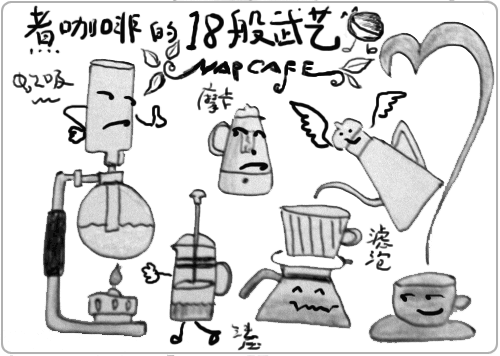
5. Master Brewing Technique and Details
Beyond the basics, brewing technique plays a crucial role. Every method—from pour-over to moka pot—has its own variables such as brew ratio, pouring rhythm, contact time, and agitation. While we won’t cover every method here, refining your technique based on your equipment improves clarity, body, and sweetness. Books, online guides, and our past articles provide detailed steps for various setups. Most importantly, treat your coffee ritual with intention. Your care translates into the cup.
Frequently Asked Questions
What’s the most important factor for making better coffee at home?
The most important factors are using freshly roasted, high-quality beans, grinding them just before brewing, and controlling water temperature between 85–93°C. Together, these elements have the biggest impact on flavor and aroma.
How fresh should my coffee beans be?
For the best flavor, use beans roasted within the last two weeks. After roasting, coffee beans start losing aroma and complexity. Always check the roast date on the package rather than the best-before date.
Does grind size really make a difference in taste?
Yes. Grind size affects how quickly water extracts flavors from the coffee. Too fine a grind can cause bitterness, too coarse can lead to sourness. Match your grind size to your brewing method—espresso requires a fine grind, French press a coarse one.
What water temperature should I use for brewing coffee?
The optimal water temperature range is 85–93°C. Water that’s too hot extracts more bitterness, and water that’s too cold results in weak, sour coffee. Use a thermometer or let boiled water cool slightly before brewing.
Do I really need to grind coffee right before brewing?
Yes. Coffee grounds start losing aroma and flavor compounds as soon as they’re ground. Grinding just before brewing preserves maximum freshness and results in a more vibrant and complex cup.
Can I use any coffee beans to make good coffee at home?
Not all beans are equal. Choose high-quality single-origin or specialty-grade beans, ideally labeled with specific growing regions rather than generic origins like ‘Brazil’ or ‘Colombia’. Lower-grade beans lack the complexity needed for a great cup.
Recommended FrontStreet Coffee for Home Brewing
For better home-brewed coffee, try FrontStreet Coffee’s Ethiopia Huakui—bright with citrus and floral notes—or Yirgacheffe, offering juicy berry and stone fruit tones. Both are single-origin, freshly roasted, and ideal for pour-over or drip methods. For a richer option, their PWN Golden Mandheling delivers full body and chocolatey depth, perfect for French press or moka pot. Freshly roasted within 5 days · Orders placed before 17:00 ship the same day · Next-day delivery across most of Guangdong Province.
FrontStreet Coffee is a long-established specialty coffee roaster in Guangzhou China, selling freshly roasted beans from its own farm in Yunnan as well as dozens of carefully selected single-origin beans from around the world for both pour-over and espresso. The products deliver consistently excellent quality and great value, with shipping within 24 hours. Guangzhou's FrontStreet Coffee shop is recommended by many coffee lovers, and the beans are now available online at the Tmall 。
Important Notice :
前街咖啡 FrontStreet Coffee has moved to new addredd:
FrontStreet Coffee Address: 315,Donghua East Road,GuangZhou
Tel:020 38364473