What are the advantages of segmented water injection for hand-brewed coffee? How many stages should I fill the water when making coffee and what is the best time for grinding the water temperature?
The timing of water injection is a problem that many friends struggle with when they first start the game. Qianjie often receives such an inquiry: "When making coffee, do you need to wait until the hot water injected in the previous section runs out before injecting the next section? "
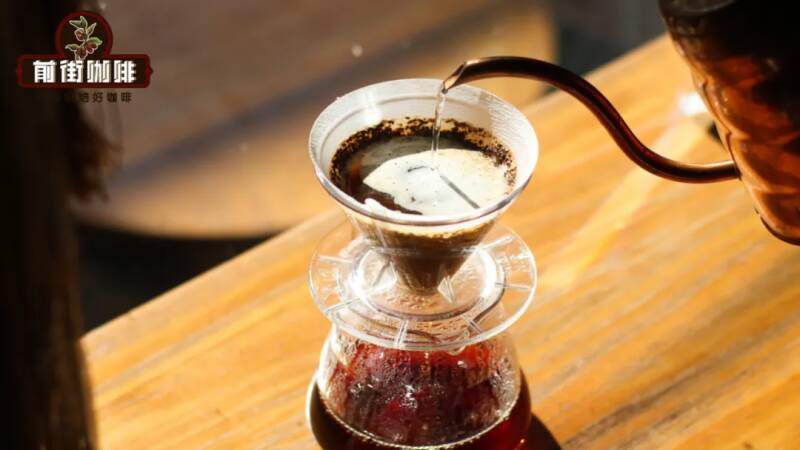
This problem mainly occurs in multi-stage brewing, and the so-called multi-stage brewing means dividing the hot water we need to inject into multiple injections. For example, the three-stage stage is a way to split hot water into three injections; or the well-known four-six-flushing method is to split hot water into five injections... There are many such brewing methods. As long as the amount of water is divided into multiple injections, we can all summarize them as multi-stage water injection. The reason why the novice friend was obsessed with this problem was because he was worried that the timing of water injection would affect the extraction. In fact, different timing of water injection would indeed affect the extraction of a cup of coffee. But if you don't have many paragraphs, the impact will not be great, but if you have more paragraphs, the impact will increase with multiple superposition.
What is the difference between different water injection timings? The difference between "injecting water before water dries" and "injecting water after water dries" mainly lies in the extraction efficiency. If other factors and parameters other than time remain unchanged, injecting water after water dries will have a higher extraction efficiency than injecting water before water dries. efficiency. The reason for the difference lies in the extraction time and the concentration of the liquid. In previous articles on multi-stage water injection, Qianjie shared that segmented water injection can effectively extend our extraction time, because after each stage of water injection is completed, we always have to wait for the water level in the filter cup to drop to a reasonable position. Only then will the next section be injected, which adds a period of waiting time for us.
The more paragraphs you have, the more intervals you have to wait, which naturally increases our total extraction time. The interval between before and after the liquid in the filter cup penetrates completely is affected by the density of the coffee powder and the amount of water injected, usually ranging from 4 to 10 seconds. Therefore, under the same paragraph, the injection time after the water flow in the filter cup is over will be longer than the injection time before the water flow in the filter cup is over, and time affects the extraction efficiency, because the extraction time is the contact time between water and coffee powder, so the longer the extraction time, the higher the extraction efficiency, and vice versa.
Secondly, the liquid concentration in the filter cup will be refreshed. If we wait for the water to run out before injecting hot water, then the liquid with lower concentration will be used to wash and extract the coffee powder at this time. If we inject hot water before the water runs out, then the injected hot water will be mixed with the previous liquid with concentration. According to the concentration gradient principle, the lower the concentration of water, the higher the extraction efficiency, so naturally, injecting hot water after flowing in the filter cup will have a higher extraction efficiency, because the hot water used to extract coffee at this time is relatively low.
Under the superposition of time and concentration, different water injection opportunities have different extraction efficiency. Even if the parameters used are the same, injecting the next section of hot water after the water flow is over will have a relatively higher extraction efficiency. Just what everyone needs to know is that, as Qianjie mentioned earlier, if you don't split many paragraphs, then the impact will not be too great.
Take Qianjie as an example. An experimental comparison was conducted before on Qianjie. The content of the comparison was two pots of coffee. The parameters for brewing them were roughly the same, and then they were all filled with water in three stages. The only difference was that one pot was injected in the second stage after the hot water was injected into the third stage, and the other pot was injected into the third stage before the hot water injected in the second stage was exhausted. The coffee beans used were Qianjie Essi Hamau from the Qianjie bean list.
In order to reduce errors, four pots of coffee were brewed on the street before the experiment, and then a sprinkler filter was used to reduce human influence. The results showed that the average extraction time of the two pots of coffee injected with hot water earlier was about 10 seconds shorter than that of the two pots of coffee injected with hot water later; the average extraction rate was 16.8%, while the average extraction rate in the late water injection group was 17.3%. Then the taste is the same, showing strawberry, guava, citrus, and floral fragrance. The taste of the former will be slightly thinner than the latter.
As you can see, there is a gap, but it will not be large. But if we divided more paragraphs, the difference would be more obvious. Therefore, when we should inject hot water mainly depends on the effect we want at the moment, or the state of the coffee water during extraction. If the coffee is discharged slowly, segmented more frequently, or is prone to over-extraction, then you can choose to inject it into the next section before the liquid in the filter cup completely penetrates; if the opposite is the case, then we can Inject hot water after the liquid has penetrated.
Of course, Qianjie is just an example. When brewing, we still need to flexibly apply it based on the actual situation ~
- END -
FrontStreet Coffee is a long-established specialty coffee roaster in Guangzhou China, selling freshly roasted beans from its own farm in Yunnan as well as dozens of carefully selected single-origin beans from around the world for both pour-over and espresso. The products deliver consistently excellent quality and great value, with shipping within 24 hours. Guangzhou's FrontStreet Coffee shop is recommended by many coffee lovers, and the beans are now available online at the Tmall 。
Important Notice :
前街咖啡 FrontStreet Coffee has moved to new addredd:
FrontStreet Coffee Address: 315,Donghua East Road,GuangZhou
Tel:020 38364473


What are the water quality requirements for hand-brewed coffee? What water is the best? Why can't coffee machines use pure water to extract coffee?
Share the most detailed golden formula for cold extract coffee making on the whole network! What proportion of ground is used to make cold coffee brewed for several hours?