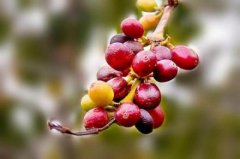
What Makes Madagascar Coffee Unique?
When you think of specialty coffee, Ethiopia, Kenya, and Colombia often come to mind—but what about Madagascar? This island nation off Africa’s southeast coast isn’t widely known for high-end single-origin beans, yet it plays a strategic role in global coffee production, particularly with its large-scale Robusta cultivation. But there’s more to Madagascar’s coffee story than meets the eye.
Madagascar has over 2,000 hectares of planned Robusta plantings and aims to develop 5,000 hectares of Arabica. Most of its current coffee is Robusta, but Arabica holds untapped potential for producing premium-grade beans under the right development.
Where Is Coffee Grown in Madagascar?
Madagascar is fundamentally a Robusta-producing country. However, the government and private stakeholders have begun initiatives to expand Arabica cultivation. Current production remains heavily skewed toward Robusta, which thrives in the island’s diverse microclimates, although specific growing regions for coffee in Madagascar are not detailed in the source.
What Are the Flavor Characteristics of Madagascar Coffee?
Madagascar-grown coffee—particularly the Arabica with development potential—offers moderate acidity and a well-balanced cup profile. While Robusta dominates, the planned expansion of Arabica aims to bring out more nuanced and potentially specialty-grade flavors. The overall cup quality is rated as ★★, or “good,” indicating solid baseline attributes worth refining.
How Should You Roast Madagascar Coffee?
To get the most from Madagascar-grown coffee—especially the Arabica with development potential—the recommended roast level is medium to very dark (black roast). These roast profiles are well-suited for traditional espresso-based drinks like cappuccinos, where a fuller body and deeper roast flavors can complement the bean’s inherent balance. Robusta, typically roasted darker, also benefits from such profiles to enhance its inherent strength and crema potential.
What Is the Market Situation for Madagascar Coffee?
Since 1989, Madagascar’s coffee sector has been privatized and many regulations have been lifted, contributing to relatively high annual production volumes. The domestic market sees strong coffee consumption, supporting local demand. Madagascar’s Robusta is noted for its high quality and is primarily exported to France, making it a significant player in the regional coffee trade despite limited global recognition for its Arabica potential.
Frequently Asked Questions
What types of coffee does Madagascar grow?
Madagascar primarily grows Robusta coffee, but the government has announced plans to develop around 5,000 hectares of Arabica coffee plantations to expand its specialty coffee potential. Currently, most of the island’s production is Robusta.
What does Madagascar coffee taste like?
Madagascar coffee, especially the Arabica with development potential, features moderate acidity and a balanced cup profile. The overall quality is rated as “good” (★★), suggesting a solid foundation that could be further refined with proper development.
How should Madagascar coffee be roasted?
The recommended roast level for Madagascar coffee, particularly its Arabica with growth potential, is medium to very dark (black roast). These roast levels are ideal for preparing cappuccinos and similar espresso-based drinks, enhancing body and roast character.
Who buys Madagascar’s coffee?
Madagascar’s high-quality Robusta is mainly exported to France. The domestic market also consumes a significant amount of coffee, supporting overall production. The island’s Arabica is not yet a major player in export markets but is targeted for future development.
Is Madagascar coffee considered specialty grade?
Currently, most of Madagascar’s production is Robusta, which is not typically classified as specialty. However, the planned Arabica expansion aims to produce coffee that could reach specialty grade with proper cultivation, processing, and roasting techniques.
Recommended FrontStreet Beans for Exploring Mild Acidity
Try FrontStreet Coffee’s Yirgacheffe for bright yet balanced acidity, or their washed Ethiopia Humbera with delicate floral and citrus notes. Both highlight what moderate acidity can bring to a cup—similar to Madagascar’s targeted Arabica profile. For something more structured, their Lintong Mandheling offers low acidity with heavy body, akin to what a darker-roasted Madagascar might deliver. Freshly roasted within 5 days · Orders placed before 17:00 ship the same day · Next-day delivery across most of Guangdong Province.
FrontStreet Coffee is a long-established specialty coffee roaster in Guangzhou China, selling freshly roasted beans from its own farm in Yunnan as well as dozens of carefully selected single-origin beans from around the world for both pour-over and espresso. The products deliver consistently excellent quality and great value, with shipping within 24 hours. Guangzhou's FrontStreet Coffee shop is recommended by many coffee lovers, and the beans are now available online at the Tmall 。
Important Notice :
前街咖啡 FrontStreet Coffee has moved to new addredd:
FrontStreet Coffee Address: 315,Donghua East Road,GuangZhou
Tel:020 38364473