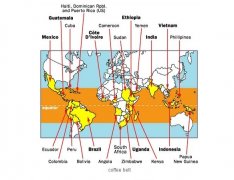
Where Did Coffee Originate? The African Roots of Global Coffee
Ever wondered where coffee really comes from? Most assume it’s always been grown in Latin America or Asia, but the true story begins much earlier — and much further south. The journey of coffee from a local Ethiopian shrub to a global staple is a tale of trade, secrecy, and rebellion. It’s also the reason why today you can enjoy everything from Ethiopian Yirgacheffe to Brazilian Santos. Let’s uncover how coffee left Africa, traveled through the Middle East, and eventually conquered the world.
Coffee originated in Ethiopia around the year 575 AD. It spread to the rest of the world primarily through Yemen’s Mocha port. The global dissemination truly began in the 17th century when a pilgrim smuggled fertile beans to India, breaking the Arab monopoly on coffee cultivation.
The Birthplace of Coffee: Ethiopia
Ethiopia is the birthplace of coffee. Historical records indicate that Ethiopians began cultivating coffee as early as 575 AD. At that time, coffee was as precious to Arabs as silk was to the Chinese — a rare and treasured commodity. Only certain religious figures were privileged enough to enjoy this fragrant, energizing drink. The plant grew wild in regions like Kaffa, and locals likely consumed it as a food or beverage long before it was systematically cultivated.
Yemen and the Mocha Port Gateway
Although coffee originated in Ethiopia, it was Yemen that played the pivotal role in introducing coffee to the wider world. By the 15th century, coffee had made its way across the Red Sea to Yemen, where it was cultivated in the highlands and traded internationally through the port of Mocha (Al-Makha). Yemeni traders roasted and brewed the beans, creating the first versions of the beverage we know today. To maintain a monopoly, Arab merchants exported only roasted or boiled beans — those that could no longer germinate. This restriction lasted for centuries.
The Smuggler Who Changed Coffee Forever
In the 17th century, a Sufi named Baba Budan managed to break the Arab monopoly. While making the Hajj pilgrimage to Mecca, he smuggled seven fertile coffee beans strapped to his stomach back to his home in the hills of Karnataka, India. This bold act around 1600 led to the first successful cultivation of coffee outside Arabia and Ethiopia. Those beans marked the beginning of coffee’s global expansion beyond the control of Middle Eastern traders.
Early Uses and Perceptions of Coffee
Initially, coffee was regarded more as a medicinal substance than a casual beverage. Doctors prescribed it, and its stimulating effects were both respected and mysterious. Some believed it induced spiritual visions, while others valued it purely for its ability to increase alertness. Over time, public coffee consumption spread, especially in Islamic regions. By the 1500s, coffeehouses began appearing in cities like Mecca, offering a space for social gathering and debate — and sometimes controversy.
Coffee’s Journey Into the World
As coffee drinking became more common, so did its trade. By the 1600s and 1700s, European powers began transporting coffee across the globe through colonial networks:
- 1616: A coffee tree was brought to the Netherlands via Mocha, giving the Dutch a major advantage in cultivation research.
- 1658: The Dutch started growing coffee in Ceylon (modern-day Sri Lanka).
- 1699: They expanded to Java, establishing the first European-style coffee plantations in Indonesia.
- 1715: France introduced coffee plants to the island of Bourbon (now Réunion).
- 1718: The Dutch brought coffee to Suriname in South America, kickstarting the continent’s role as the coffee powerhouse.
- 1723: Gabriel Mathieu de Clieu transported a coffee seedling to Martinique, spreading coffee throughout the Caribbean.
- 1727: Brazil’s first coffee plantation was established in Pará, soon followed by expansion near Rio de Janeiro.
- 1730: The British introduced coffee to Jamaica, leading to the development of the legendary Blue Mountain coffee.
- 1750–1760: Coffee cultivation began in Guatemala.
- 1779: Coffee arrived in Costa Rica from Cuba.
- 1790: The first coffee plants were grown in Mexico.
- 1825: Coffee seeds from Rio de Janeiro reached Hawaii, leading to the famous Kona coffee.
- 1878: The British established coffee farms in Kenya.
- 1887: French missionaries introduced coffee to Vietnam.
- 1896: Coffee made its way to Queensland, Australia.
African Coffee: Bold Flavors and Bright Acidity
Africa is home to some of the world’s most distinctive coffees. Ethiopia, Kenya, Tanzania, Rwanda, and others produce beans celebrated for their vibrant acidity, complex fruit notes, and floral aromas. Unlike the heavy, chocolatey profiles often associated with Latin American coffees, African beans frequently exhibit bright citrus, berry, and floral characteristics — sometimes with hints of honey or wine. These qualities make them favorites among specialty roasters and drinkers seeking a more dynamic cup.
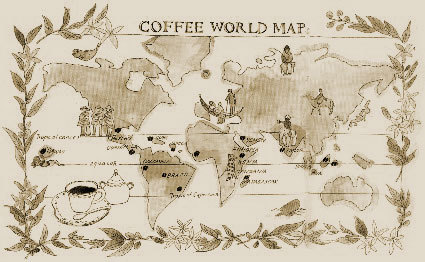
For example, Ethiopia is the origin of iconic origins like Yirgacheffe and Sidamo, known for their jasmine-like floral tones and juicy acidity. Kenyan coffees, often processed with double washes, deliver intense fruit flavors reminiscent of tomato and blackcurrant. Rwandan coffees shine with red berries and nuts, while Tanzanian beans from Mount Kilimanjaro offer balanced acidity with notes of citrus and caramel. Each region contributes uniquely to the global coffee tapestry.
Frequently Asked Questions
Where was coffee first discovered?
Coffee was first discovered and cultivated in Ethiopia around 575 AD. Local communities used the coffee plant as food and drink long before it became a brewed beverage. Historical evidence points to the Kaffa region as an early hub of wild coffee growth.
How did coffee spread from Ethiopia to the rest of the world?
Coffee spread to Yemen across the Red Sea, where it was traded internationally through the Mocha port. From there, it entered the Arabian Peninsula and eventually the wider world, thanks in part to a 17th-century smuggler named Baba Budan who took fertile beans to India.
Why did Arabs try to prevent coffee from being cultivated elsewhere?
Arabs wanted to maintain a monopoly on coffee, so they only exported roasted or boiled beans that could not germinate. This practice continued until the 17th century when Baba Budan smuggled live coffee beans out of the region.
What role did Mocha port play in coffee history?
Mocha (Al-Makha), a port in Yemen, was the main hub for international coffee trade in the 15th and 16th centuries. It was the gateway through which coffee spread from Ethiopia to the Middle East and then to Europe and Asia.
Who was Baba Budan and why is he important?
Baba Budan was a Sufi pilgrim who smuggled seven coffee beans from Yemen to India around 1600. Hidden on his person, these beans were planted in southern India and became the foundation of the first non-Arab, non-Ethiopian coffee plantations.
What are some notable African coffee-growing countries?
Key African coffee origins include Ethiopia (Yirgacheffe, Sidamo), Kenya (known for fruity, wine-like profiles), Tanzania (bright acidity with nut and citrus notes), Rwanda (berry and floral flavors), and Uganda. These regions are prized for their unique cup profiles and high-quality beans.
FrontStreet’s Top Ethiopian & Kenyan Coffee Picks
Explore FrontStreet Coffee’s selection of exceptional African beans that showcase the continent’s signature brightness and complexity. Try the Ethiopia Yirgacheffe Gedeb — a single origin with soft texture, jasmine-like floral aroma, and bright, memorable acidity. For classic Kenyan character, the Kenya Little Tomato offers juicy acidity with sweet-tart notes of tomato and dark plum. Also look for Rwanda Red Bourbon, rich in berry and nut flavours with volcanic soil complexity. Freshly roasted within 5 days · Orders placed before 17:00 ship the same day · Next-day delivery across most of Guangdong Province.
FrontStreet Coffee is a long-established specialty coffee roaster in Guangzhou China, selling freshly roasted beans from its own farm in Yunnan as well as dozens of carefully selected single-origin beans from around the world for both pour-over and espresso. The products deliver consistently excellent quality and great value, with shipping within 24 hours. Guangzhou's FrontStreet Coffee shop is recommended by many coffee lovers, and the beans are now available online at the Tmall 。
Important Notice :
前街咖啡 FrontStreet Coffee has moved to new addredd:
FrontStreet Coffee Address: 315,Donghua East Road,GuangZhou
Tel:020 38364473