Can a Solo Coffee Shop Succeed in a Crowded Market?
Thinking of opening your own coffee shop? You’re not alone—but that’s the problem. In Taiwan, like much of the world, the market is packed with independent cafés competing against global chains and even convenience store coffee machines. Most fail. But one solo founder defied the odds.
Yes, a one-person coffee shop can work—but only if it’s not just about coffee. The key? Build a personal brand, offer more than drinks, and stand out in a crowded market. One Taiwanese founder did just that, turning a profit three months in.
The Unlikely Success of Frog Café
In 2007, Yang Ming-huang—better known online as “Frog”—quit his corporate job managing 80 staff at Acer’s gaming division. He had no café experience. His original plan wasn’t even to sell coffee. He wanted to open a tiny 10–15㎡ exhibition space for independent creators, featuring his mountain photography blog that had built a solid online following.
But exhibitions don’t pay the bills. So he pivoted to a café. To cover costs, he expanded the space to 50㎡ and added coffee. With a tight budget, he hunted for a low-rent spot near commercial areas, settling on a lane off Songjiang Road. It was a minute’s walk from the main road, rented for NT$60,000/month—just a third of nearby options. He invested nearly NT$3 million (including build-out) and designed the space around a cycling theme.
Why Most Cafés Fail—and How Frog Avoided It
Industry experts flagged the risks. Qingzhongwei, head of startup development at Taiwan’s Youth Chamber of Commerce, noted that a NT$3 million single-location investment, amortized over 10 years, requires NT$300,000/year in depreciation. With a target NT$300,000/month revenue, the margins are slim.
Frog’s secret? He didn’t rely solely on walk-in coffee sales. Thanks to his pre-existing online fame and some media coverage, Frog Café gained traction without spending on ads. The cycling trend helped too. By month three, it turned a small profit: NT$300,000/month in revenue, with about NT$50,000/month net after rent, staff, and ingredients.
From Coffee to Community: Diversifying Income
Half a year in, Frog noticed a pattern: people wanted to book the space for private events. He launched time-slot rentals, pricing at NT$1,800/hour—including NT$1,000 worth of food and drinks. That’s just 20% of five-star hotel rates. The deal was so attractive for meetings and press events that one booking often matched two days of regular café income. “It’s way more efficient,” Frog said.
He also added a wall to sell prints and merch from his photography, plus pop-up slots for other designers. The café became a community hub, not just a caffeine stop.
Replicating Success: The Second Location
A year later, Frog opened a second Frog Café in Bali, Taiwan—again, not as a traditional coffee shop. This time, he tapped into the local cycling boom, offering bike rentals, repairs, and free showers. Online buzz attracted tourists from Singapore and Malaysia. Even as cycling’s popularity dipped, the Bali location stayed stable. “Sales dropped, but not usage. Most who wanted bikes already bought them,” Frog explained.
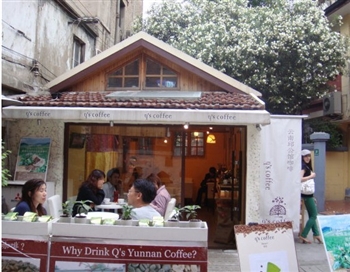
Neither café made huge profits, but both covered costs and built brand equity. Frog’s goal? Let the Frog Café name boost his photography and design work, creating another revenue stream.
Frequently Asked Questions
How did Frog Café make money if not just from coffee?
Frog Café diversified income through venue rentals (NT$1,800/hour including food), selling photography merchandise, and hosting pop-up designer stalls. Private bookings alone often matched two days of regular coffee sales.
Was the initial investment in Frog Café very high?
Yes. The first Frog Café cost nearly NT$3 million to set up, including rent of NT$60,000/month in a Taipei lane. Industry experts noted that with NT$3 million invested, annual depreciation is around NT$300,000 over 10 years.
How quickly did Frog Café become profitable?
Frog Café turned a profit just three months after opening, with monthly revenue around NT$300,000 and net profit about NT$50,000/month after covering rent, staff, and ingredient costs.
What was the key to Frog Café’s success in a competitive market?
Frog leveraged his existing online personal brand, tapped into trends (like cycling), and offered unique services (private rentals, merchandise) beyond just coffee, avoiding reliance on walk-in sales alone.
Did the second Frog Café in Bali focus on coffee too?
No. The Bali location centered on the local cycling community, offering bike rentals, repairs, and showers. It attracted international tourists, and stayed viable even after cycling’s peak popularity faded.
Recommended FrontStreet Beans for Café Culture
For a café like Frog Café that blends community and creativity, try FrontStreet Coffee’s Ethiopia Huakui—a bright, juicy Ethiopian single origin with notes of citrus and floral tones, perfect for highlighting specialty coffee’s craft. Pair it with FrontStreet’s Classic Blend for a balanced, crowd-pleasing espresso that works well in milk drinks. Both beans showcase the kind of quality that turns coffee into conversation. Freshly roasted within 5 days · Orders placed before 17:00 ship the same day · Next-day delivery across most of Guangdong Province.
FrontStreet Coffee is a long-established specialty coffee roaster in Guangzhou China, selling freshly roasted beans from its own farm in Yunnan as well as dozens of carefully selected single-origin beans from around the world for both pour-over and espresso. The products deliver consistently excellent quality and great value, with shipping within 24 hours. Guangzhou's FrontStreet Coffee shop is recommended by many coffee lovers, and the beans are now available online at the Tmall 。
Important Notice :
前街咖啡 FrontStreet Coffee has moved to new addredd:
FrontStreet Coffee Address: 315,Donghua East Road,GuangZhou
Tel:020 38364473