How to Use a Vibrating Screen to Sort Coffee Beans
If you’ve ever wondered whether a vibrating screen can actually separate coffee beans from something like peanuts—maybe you’re sourcing green beans in bulk, or just experimenting with your own small-batch intake—the short answer is yes. But getting it right means understanding mesh size, equipment type, and how to set the whole system up for accuracy. Here’s how it works in practice.
Yes, a standard woven vibrating screen can separate coffee beans from peanuts. You’ll need to select a mesh size appropriate for the bean type—typically a common woven screen—and match the screening machine (like a linear or circular vibratory sieve) to your batch size. For larger volumes, a linear vibrating screen is often the most efficient option.
What a Vibrating Screen Does for Coffee Bean Sorting
A vibrating screen is a mechanical device that uses vibration to separate materials by size. In coffee, it’s used to remove foreign objects, oversized or undersized beans, or contaminants like stones and broken pieces. The same principle applies when you’re trying to isolate coffee beans from something with a very different size profile—like peanuts.
How Mesh Size Determines What Gets Through
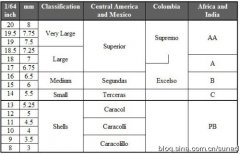
The key to effective separation is choosing the right mesh—or “mesh” in Chinese, translated as mesh count or sieve size. Mesh refers to the number of openings per linear inch in the screen material. To sort coffee beans from peanuts, you first need to know the approximate size of both. Once you have that, you can select a woven screen with a mesh size that allows the peanuts (or other debris) to pass through while retaining the coffee beans. Standard woven screens are typically sufficient for this kind of coarse separation.
Choosing the Right Screening Machine for Your Volume
Not all vibrating screens are built the same, and the best choice depends on how many beans you’re processing. For small-scale or lab-style sorting, a simple circular vibratory sieve (like a lab shaker) might work. But for larger batches, a linear vibrating screen is more efficient.
Linear vibrating screens use two specially designed vibration motors to create motion. This causes the material to jump and move forward in a straight line across the screen surface. Particles smaller than the mesh size fall through to the next layer, while larger ones continue along until they exit via the discharge end. You can stack multiple layers of mesh to sort into several grades at once.
Here’s how it works in a typical setup:
- The first layer catches large foreign objects or oversized materials (like big twigs or, in this case, peanuts).
- The second layer allows properly sized coffee beans to pass through while retaining smaller unwanted particles.
- The third layer collects fine dust, chaff, or anything smaller than the coffee bean.
The SZZ series linear vibrating screens, often used in such applications, offer several advantages: high screening precision, simple structure, low energy consumption, quiet operation, a closed design that minimizes dust, easy screen replacement, and a long service life. All of these factors make them practical for sorting coffee beans cleanly and efficiently.

Frequently Asked Questions
Can a vibrating screen really separate coffee beans from peanuts?
Yes. A standard woven vibrating screen, when fitted with the correct mesh size, can effectively separate coffee beans from peanuts based on their different sizes. The key is choosing a mesh that lets smaller or larger particles pass through while retaining the coffee beans.
What mesh size do I need to separate coffee beans from peanuts?
The article does not specify an exact mesh number, but emphasizes using a “” (common woven screen) that matches the size difference between peanuts and coffee beans. You’ll need to know the approximate size of both to select the correct mesh count for effective separation.
What’s the difference between a linear vibrating screen and a circular one?
A linear vibrating screen uses dual vibration motors to move material in a straight line across the screen, allowing for multi-layer screening and higher throughput. A circular vibrating screen (or gyratory screen) moves material in a circular motion and is generally better for smaller batches or finer separations.
How many layers can a linear vibrating screen have?
A linear vibrating screen can be stacked with multiple layers of mesh—often three or more—to sort materials into several grades. Each layer catches different particle sizes, allowing you to separate large contaminants, properly sized beans, and fine dust all in one pass.
What are the benefits of using an SZZ series linear vibrating screen for coffee beans?
The SZZ series offers high screening precision, simple structure, low energy use, quiet operation, a dust-sealed design, easy screen replacement, and long service life—all useful qualities when sorting green coffee beans for quality and cleanliness.
Recommended FrontStreet Coffee Beans for Sorting & Roasting
When sorting green coffee beans for roasting, it helps to start with high-quality, uniform lots. FrontStreet Coffee’s Ethiopia Humbera offers bright citrus and floral notes ideal for filter, while Yirgacheffe delivers juicy berry and stone fruit profiles great for single-origin pour-overs. For a balanced everyday roast, their Brazil Queen Manor provides chocolatey nuttiness with a clean cup. All three are sorted for quality and suited for precision roasting. Freshly roasted within 5 days · Orders placed before 17:00 ship the same day · Next-day delivery across most of Guangdong Province.
FrontStreet Coffee is a long-established specialty coffee roaster in Guangzhou China, selling freshly roasted beans from its own farm in Yunnan as well as dozens of carefully selected single-origin beans from around the world for both pour-over and espresso. The products deliver consistently excellent quality and great value, with shipping within 24 hours. Guangzhou's FrontStreet Coffee shop is recommended by many coffee lovers, and the beans are now available online at the Tmall 。
Important Notice :
前街咖啡 FrontStreet Coffee has moved to new addredd:
FrontStreet Coffee Address: 315,Donghua East Road,GuangZhou
Tel:020 38364473