Ancient Stone Roasting: Making Coffee in the Mountains
In the remote mountains of Beijing’s Mentougou District, a group of campers found themselves in an unusual dilemma—how to make coffee with almost nothing but wilderness around them. One camper had just 20 grams of green coffee beans. What followed was an extraordinary experiment in primitive coffee roasting using nothing but stones, fire, and ingenuity.
The answer is yes—you can roast and brew coffee outdoors with just 20 grams of green beans, a flat stone, fire, and some careful technique. This real account shows how a small group used ancient methods to roast coffee in the wild, producing surprisingly flavorful results.

How a Wild Camping Trip Led to Primitive Coffee Roasting

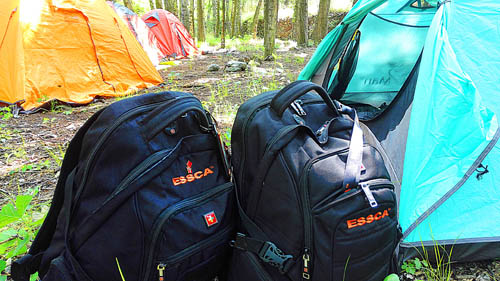
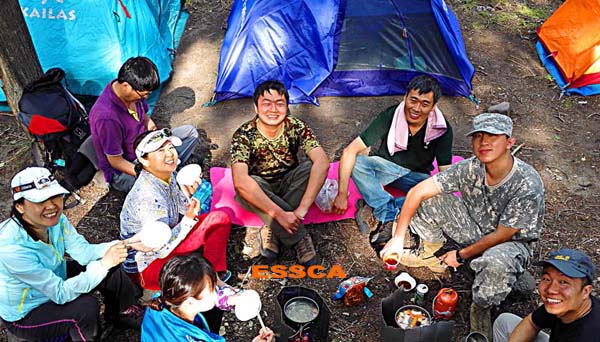
It started as a casual comment during a serious camping trip in the mountains near Beijing: “I wish I had a cup of coffee.” That simple remark sparked an unusual mission among the campers. Someone produced 20 grams of Brazilian Arabica green coffee beans. What followed was a full-scale attempt to roast and brew coffee using only natural materials found in the wild.
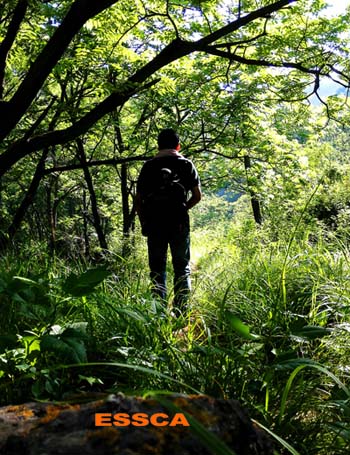
The beans were not just any beans—they were high-quality Arabica, grown under strict conditions: well-drained, slightly acidic soils, slopes under 30 degrees, proper altitude, and careful harvesting. Their journey from Brazil to this mountain camp was long, and now it was up to the team to bring out their flavor using the most basic tools imaginable.
The Tools of Primitive Roasting: Stone, Fire, and Skill
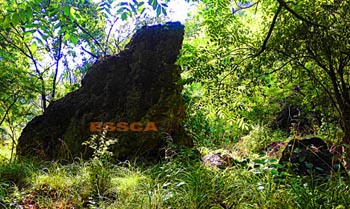
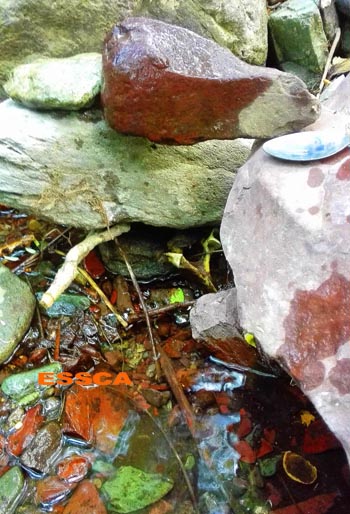
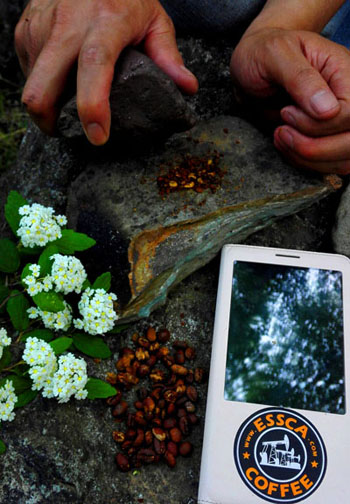
To roast the beans, the team turned to ancient techniques and natural materials. They found a large, naturally occurring limestone slab near a mountain spring in Xihulin, a historic village in Mentougou. This slab, roughly 9 x 26 x 37 cm, had the perfect thickness, shape, and slight concave surface to hold and evenly roast the beans.
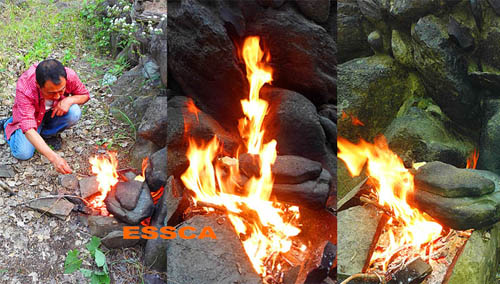
The stone’s natural groove allowed flames to move beneath it without direct contact, providing even heat and reducing smoke exposure to the beans. The team also used a stone pestle for grinding and built a makeshift hearth from surrounding rocks. Every element, from the stone’s origin to its shape, was chosen to replicate traditional roasting methods with maximum flavor impact.
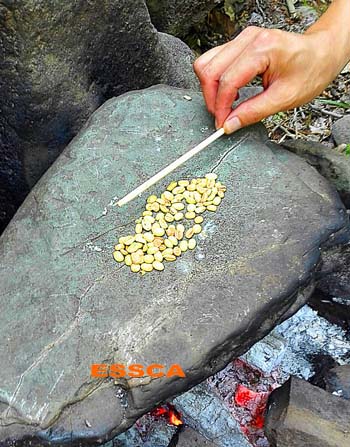
Step-by-Step: Roasting Coffee with Stone and Fire
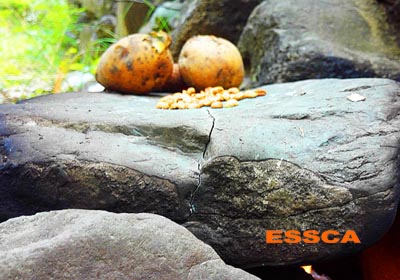
The roasting process happened in three phases, all done manually over an open flame:
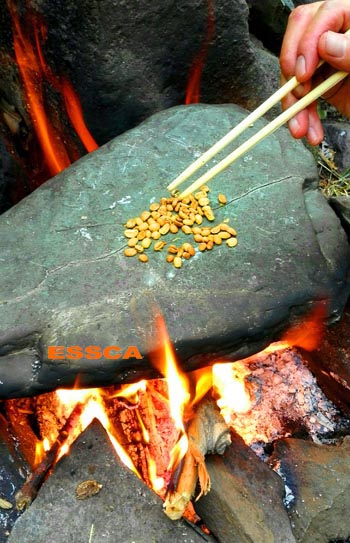
- First Roast : The green beans were spread on the heated stone and manually flipped for even roasting. The roaster closely monitored color changes to judge development.
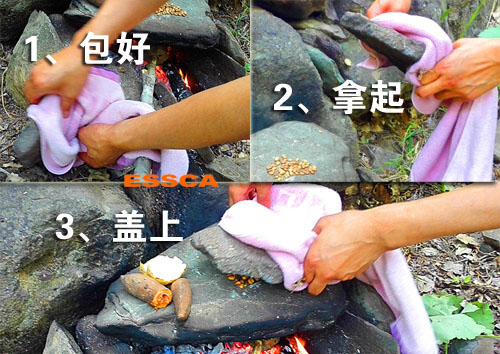
- Second Roast : Using a hot stone lid wrapped in a dry towel, the beans were subjected to intense heat. Local sweet potatoes and sweet potatoes were placed nearby to impart a subtle earthy note. Every 1 minute and 55 seconds, the team lifted the lid with wooden chopsticks and a steel spoon to check color and flip individual beans as needed.
- Third Roast : In the final stage, beans were further roasted to reach the desired level. Some were removed early to preserve variety in roast depth, enhancing complexity. The goal was not uniformity, but balance and depth.
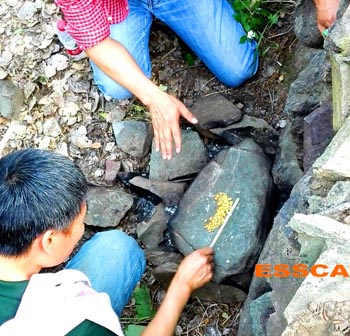
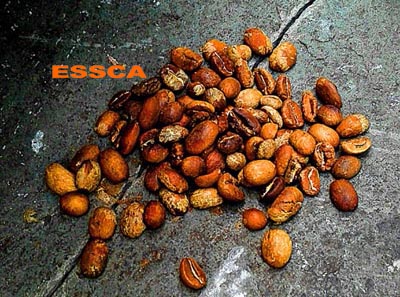
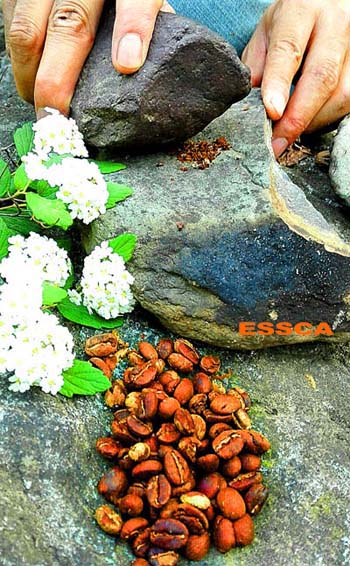
After about 90 minutes total, the beans reached a light roast level—similar to a city or cinnamon roast—and were immediately hand-ground using a stone pestle. Timing was critical: freshly roasted beans lose aroma quickly, so grinding and brewing happened without delay.
Brewing the Coffee: Wild Water, Iron Pot, and Cloth Filter
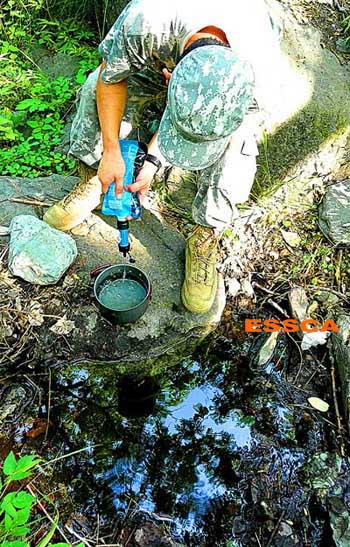
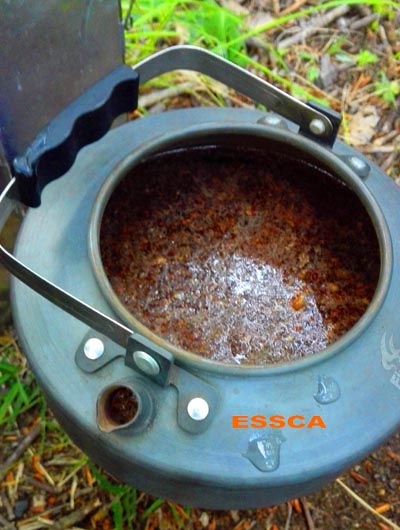
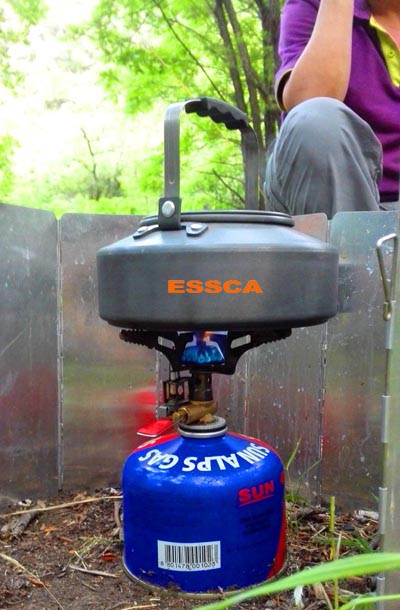
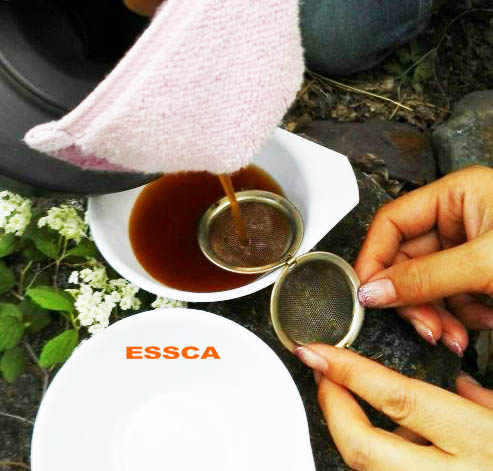
The ground coffee was brewed using a 16cm iron pot—a preferred tool for wild brewing due to its neutral impact on flavor. Natural spring water, collected carefully from a nearby stream, was heated over the fire. The team used a custom-made cloth filter, crafted by a local blacksmith, to ensure a clean extraction.
Coffee was brewed similarly to a flash brew or infusion method. Once the water boiled, the coffee was poured in, and the team waited for the brew to rise and extract. The final brew yielded just one and a half cups, but the aroma and flavor were intense. The coffee carried a wild, earthy character with clear notes of caramel and nuts—plus a hint of the roasted sweet potatoes from the second phase.
Frequently Asked Questions
Can you really roast coffee beans with just a stone and fire?
Yes. As shown in this account, green coffee beans can be effectively roasted using a flat stone heated by an open flame. The key is controlling the heat distribution by using stones of proper thickness and shape, and manually flipping the beans to ensure even roasting. This method requires skill and attention but can produce surprisingly good results.
What kind of coffee beans work best for primitive roasting?
High-quality Arabica beans with good density and even size work best. In this case, Brazilian Arabica beans were used. These beans benefit from careful roasting due to their inherent sweetness and acidity, which can be highlighted through manual control of the roast profile.
Why use a stone slab instead of a metal pan?

Stone slabs, especially dense limestone, provide slow and even heat conduction. The 9cm-thick stone used here transferred heat gradually, minimizing the risk of scorching while allowing the Maillard reactions to develop fully. The stone’s natural shape also helped contain the beans and control airflow.
How did they manage grinding without a coffee grinder?
The team used a stone pestle to manually grind the freshly roasted beans. While inefficient and time-sensitive due to rapidly dissipating aroma, this method—when done carefully with the right pressure—can produce a grind fine enough for immersion or flash brewing.
What’s the role of sweet potatoes in the roast?
Sweet potatoes were placed near the beans during the second roast phase to impart a subtle earthy, sweet note. This isn’t standard practice, but in this experimental wild roast, it contributed an additional layer of complexity to the flavor profile.
Is this method repeatable for home or camping use?
With the right materials—a thick stone slab, a heat source, and manual dexterity—it is repeatable. However, it requires practice to master the roasting timing, bean flipping, and cooling. The setup is more feasible for camping or experimental purposes than daily use.
FrontStreet Coffee Beans for Wild or Wild-Inspired Brewing
For adventurers or home roasters inspired by wild brewing, try FrontStreet Coffee’s Brazil Queen Manor—known for its sweet, nutty profile with chocolate undertones, ideal for light to medium roasts. Pair it with FrontStreet’s Ethiopia Humbera for bright, fruity complexity, or their Classic Blend for a balanced cup that works well in alternative brew methods. All beans are carefully sourced and roasted to highlight their origin characteristics. Freshly roasted within 5 days · Orders placed before 17:00 ship the same day · Next-day delivery across most of Guangdong Province.
FrontStreet Coffee is a long-established specialty coffee roaster in Guangzhou China, selling freshly roasted beans from its own farm in Yunnan as well as dozens of carefully selected single-origin beans from around the world for both pour-over and espresso. The products deliver consistently excellent quality and great value, with shipping within 24 hours. Guangzhou's FrontStreet Coffee shop is recommended by many coffee lovers, and the beans are now available online at the Tmall 。
Important Notice :
前街咖啡 FrontStreet Coffee has moved to new addredd:
FrontStreet Coffee Address: 315,Donghua East Road,GuangZhou
Tel:020 38364473