Why Grind Size and Freshness Matter for Great Coffee
You’ve got fresh beans, filtered water, maybe even a gooseneck kettle — but your coffee still tastes weak, bitter, or just 'meh.' Chances are, it’s not the beans’ fault. Two often overlooked factors determine whether your cup is balanced, bold, or burnt: how fresh your coffee is, and how finely (or coarsely) you grind those beans.
Freshness is the foundation of good coffee, and grind size is the second most critical factor. It directly controls how coffee extracts — determining strength, clarity, and bitterness. In short: wrong grind, wrong brew.
Grind Size Directly Controls Extraction and Flavor Strength
Coffee extraction works like this: the finer the grind, the longer the brew time, and the stronger (or more extracted) the flavor. Conversely, coarser grinds brew faster and produce lighter cups. Over-extract with too fine a grind over too long and you get bitter, harsh coffee. Under-extract with too coarse a grind too quickly, and you’ll taste sour, weak, and underdeveloped notes.
Here’s the rule: the longer the brew time, the coarser your grind should be to avoid over-extraction. The shorter the brew time, the finer the grind, to prevent under-extraction.
Brew Method Guide: Match Grind Size to Brewing Time
Different brewing devices require different grind sizes based on how long water interacts with coffee grounds. Here’s how it breaks down in practice:
- French Press: 3–4 minute brew time. Use a coarse grind. With a hand grinder (like a screw-type or blade-style ‘chopper’), grind for about 7–10 seconds. Too fine, and you’ll get sludge, grit, and burnt flavors.
- Pour-Over, Siphon, or Paper Filter Methods: Around 1–2 minutes extraction. Grind slightly finer than French Press, around 10–15 seconds in a hand grinder. A proper burr grinder is strongly recommended.
- Moka Pot: More complex. Brew time is shorter than French Press but longer than espresso. Grind size should be finer than French Press, but coarser than espresso. On a hand grinder, aim for around 15–20 seconds. Adjust based on heat: coarser for high heat (like gas), finer for controlled heat (electric or alcohol stove). Moka Pot is pressure-brewed (around 1.5 bar), so it sits between espresso and filter in grind requirements.
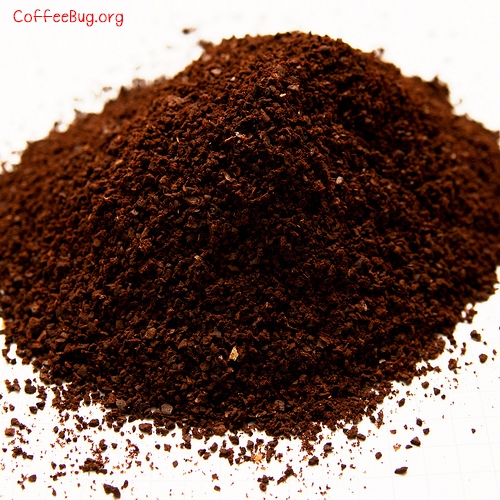
Espresso Needs Precision: Use a Proper Burr Grinder
Standard blade or screw grinders can’t produce the consistent, fine grind needed for espresso. They create uneven particle sizes, leading to channeling, under- or over-extraction, and bad shots. Don’t assume buying an espresso machine alone will get you great espresso — the secret is in the grinder.
For espresso, you need a double gear burr grinder (also called a dual-wheel or professional grinder). These grinders have two interlocking burrs: the bottom one is motor-driven at high speed, while the top adjusts via a calibrated dial. Turning the setting counterclockwise moves the burrs closer together for a finer grind; turning clockwise widens the gap for a coarser grind.
The distance between the burrs dictates the grind size. This level of control is essential for creating the tight, even particle distribution needed to produce rich, balanced espresso extractions with proper body and crema.
How to Visually Judge a Good Espresso Shot (With Caveats)
You can’t trust just time, color, or flow rate to judge espresso quality — those methods are only about 51% accurate. The only true test is taste. But as a visual guide, here’s what experienced baristas look for:
| Factor | Under-Extracted | Ideal | Over-Extracted |
|---|---|---|---|
| Brew Time | 4–19 seconds | 20–25 seconds | 26–45 seconds |
| Stream | Thin, splitty | Thick, slow, 'mouse tail' | Drippy, watery |
| Crema Color | Pale yellow | Golden to reddish brown | Dark brown to black |
| Crema Thickness | Very thin | 1/3 of shot or more | Very thin or none |
| Crema Stability | Easily breaks | Firm, cohesive | Easily breaks |
| Flavor | Flat, sour | Rich, complex | Sour, bitter, burnt |
Note: These are visual indicators only. Taste is the final judge.
Frequently Asked Questions
What’s the most important factor in brewing good coffee?
The two most critical factors are coffee freshness and grind size. Freshness ensures optimal flavor compounds are present, while grind size determines how well those compounds extract during brewing. Without fresh beans or the right grind, your brewing method won’t matter much.
How fine should my coffee grind be for different brewing methods?
Use a coarse grind (7–10 sec in a hand grinder) for French Press (3–4 min brew), a medium-fine grind (10–15 sec) for pour-over or siphon (1–2 min), and a medium-fine to fine grind (15–20 sec) for Moka Pot. For espresso, use a proper double gear burr grinder and adjust the burr gap to produce a very fine, even particle size.
Can I use a regular blade grinder for espresso?
No. Blade grinders create inconsistent grind sizes, which leads to poor extraction, channeling, and bad-tasting espresso. Espresso requires a precise, uniform fine grind that only a double gear burr grinder or high-quality espresso-specific burr grinder can produce.
Why does my Moka Pot coffee taste bitter or weak?
Bitter coffee usually means the grind is too fine or the heat too high, causing over-extraction. Weak or thin coffee suggests the grind is too coarse or the heat too low, leading to under-extraction. Adjust grind size and stove heat to find balance — finer for lower heat, coarser for higher heat.
How does brew time affect coffee flavor?
Longer brew time extracts more solids from the coffee, increasing strength and body but risking bitterness if overdone. Shorter brew time extracts less, resulting in a lighter cup that may taste sour or underdeveloped if extraction is insufficient. Grind size must match brew time to hit the sweet spot.
What’s the role of a double gear burr grinder in espresso?
A double gear burr grinder allows precise control over grind size by adjusting the distance between two burrs. This precision is essential for making espresso, where coffee must extract quickly under pressure. Finer grinds increase extraction; coarser grinds reduce it. The ability to fine-tune this gap is what makes professional grinders necessary for quality espresso.
Recommended FrontStreet Beans for Moka & Espresso
For Moka Pot, try FrontStreet’s Classic Blend — balanced with chocolate and nutty notes, ideal for the 1.5-bar pressure. For brighter, fruitier cups, the Strawberry Candy Espresso (SOE) brings out lively acidity and floral tones. Both work best with a medium-fine grind around 15–20 seconds in a hand grinder, adjusted for your heat source. Freshly roasted within 5 days · Orders placed before 17:00 ship the same day · Next-day delivery across most of Guangdong Province.
FrontStreet Coffee is a long-established specialty coffee roaster in Guangzhou China, selling freshly roasted beans from its own farm in Yunnan as well as dozens of carefully selected single-origin beans from around the world for both pour-over and espresso. The products deliver consistently excellent quality and great value, with shipping within 24 hours. Guangzhou's FrontStreet Coffee shop is recommended by many coffee lovers, and the beans are now available online at the Tmall 。
Important Notice :
前街咖啡 FrontStreet Coffee has moved to new addredd:
FrontStreet Coffee Address: 315,Donghua East Road,GuangZhou
Tel:020 38364473