Indonesian Coffee Varieties and Mandheling Flavor Guide
If you’ve ever sipped a dark, earthy, spice-laced cup and wondered where that bold flavor comes from, chances are it’s Indonesian coffee—most likely Mandheling from Sumatra. But how did Indonesia become a coffee giant, what makes its beans so distinctive, and why do some cost more than others? This guide breaks down the islands, processing methods, and grading system that define Indonesia’s signature profiles.
To answer the big question: Indonesia’s top-grade arabica is classified as G1, requiring over 18 mesh size and fewer than 3 defects per 300g. The legendary PWN Golden Mandheling adheres to this standard and undergoes triple hand-sorting to ensure exceptional cleanliness and sweetness. That’s why it stands apart.
Indonesia’s Coffee Origins and Historical Journey
The story begins in 1696, when the Dutch governor of Malabar sent coffee seedlings to Batavia (modern Jakarta). The first batch was destroyed by floods, but a second shipment in 1699 survived, leading to Indonesia’s first harvest in 1701. By 1711, Indonesian coffee reached Europe, making it the first major producer outside Africa and Arabia. At its 18th-century peak, Indonesia was the world’s largest coffee exporter, famous for Java coffee. However, leaf rust disease devastated arabica plantations in the late 1700s, shifting production to the eastern islands—particularly Sumatra, where robust, unique flavors endured.
Indonesia’s Main Coffee-Growing Regions
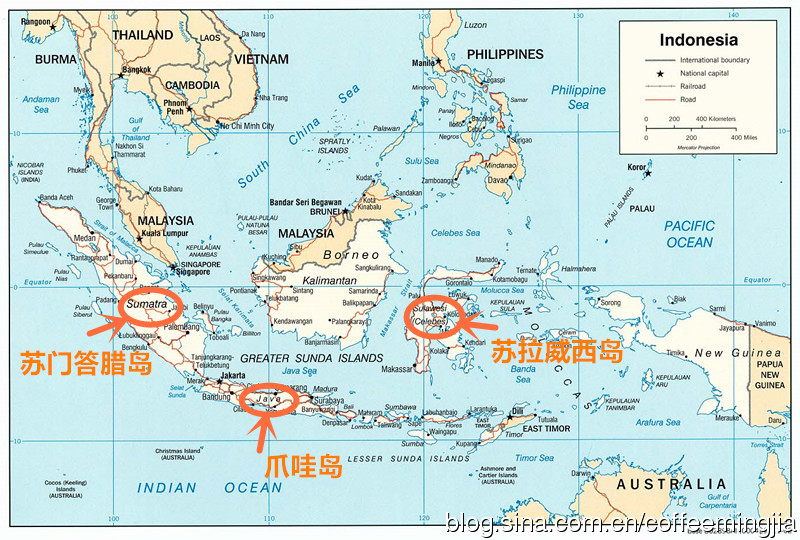
Today, Indonesia’s coffee comes from several key islands, each with distinct characteristics:
- Java: The birthplace of Indonesian coffee fame. Still respected for high-quality beans and traditional aged or monsooned coffee, which develops mellow, woody tones through prolonged storage in humid conditions.
- Sumatra: Home to the most legendary Indonesian profiles, especially Mandheling, Lintong, and Gayo Mountain coffees. These are known for full body, low acidity, and deep spices like clove and cedar.
- Sulawesi: Produces Toraja coffee, recognized for its balanced cup and earthy complexity.
- Bali, Flores, and Timor: Smaller but notable regions. Flores and Timor still grow coffee from pre-rust era trees, with some plants tracing back to the 1600s.
Sumatran Processing: Wet Hulling (Giling Basah)
Because Sumatra’s frequent rains overlap with harvest season, traditional sun drying isn’t always feasible. That led to the development of wet hulling (known locally as giling basah). Here’s how it works:
- Coffee cherries are depulped and briefly washed.
- The beans, still in their mucilage and at high moisture, are partially dried to a semi-wet state.
- Before fully drying, the outer parchment layer is removed while the beans are still moist, exposing them to rapid air-drying.
This method results in the trademark heavy body, low acidity, and earthy, herbal, or spicy flavors typical of Sumatran coffees—including the bold Mandheling profile.
Understanding Indonesian Coffee Grades: What Is G1?
Indonesia grades its arabica coffee by bean size and defect count. The top tier is G1:
- Beans must be 18 mesh size or larger.
- Maximum of 3 defects per 300 grams of green coffee.
Only beans meeting these strict criteria can be labeled G1. Most specialty-grade Mandheling falls into this classification, including the renowned PWN Golden Mandheling, which goes further with triple manual selection to remove all flaws and enhance cup clarity.
What Makes Mandheling Coffee Unique?
Mandheling coffee, grown primarily in North Sumatra’s Aceh region (especially around Lake Tawar) and North Sumatra’s Lintong area near Lake Toba, is celebrated for its full body, low acidity, and complex spice and wood notes. The traditional Lintong style, processed with wet hulling, yields a cup that’s intensely bold—think cloves, dark chocolate, herbs, and a lingering sweet finish. Meanwhile, newer areas like Aceh’s Gayo Mountain offer a brighter, more aromatic take on the Mandheling profile.
Frequently Asked Questions
What does G1 mean in Indonesian coffee?
G1 is the highest grade of Indonesian arabica coffee, requiring beans to be 18 mesh size or larger and contain no more than 3 defects per 300 grams. It ensures a cleaner, higher-quality cup and is the grade used for premium Mandheling beans.
What is special about Mandheling coffee?
Mandheling coffee, grown in Sumatra’s Aceh and North Sumatra regions, is known for its full body, low acidity, and rich flavors of clove, wood, herbs, and dark chocolate. It is processed mostly using the wet hulling method, which contributes to its heavy mouthfeel and earthy profile.
Where is Mandheling coffee actually grown?
Although called Mandheling, the coffee is grown in the Aceh region (around Lake Tawar) and North Sumatra (near Lake Toba, especially in Lintong). The name comes from the Mandailing people, not a specific place.
What is wet hulling and why is it used in Sumatra?
Wet hulling, or giling basah, is a processing method where coffee beans are hulled at a higher moisture content due to Sumatra’s rainy climate. It involves partial drying, then removing the parchment layer early to speed up drying, resulting in Sumatra’s signature heavy body and earthy flavors.
What is PWN Golden Mandheling?
PWN Golden Mandheling is a top-tier Mandheling coffee produced by Indonesia’s PWN cooperative. It meets G1 standards with over 18 mesh beans and fewer than 3 defects per 300g, and is hand-sorted three times for exceptional cleanliness and sweetness, often exported to Japan and the US.
Why is Indonesian coffee so earthy?
Indonesian coffee, especially Sumatran beans, often tastes earthy due to the wet hulling process, local fermentation, and the high humidity during drying. These factors emphasize deep, soil-like, spicy, or woody notes in the cup.
Top FrontStreet Coffees for Exploring Indonesian Profiles
For the true Indonesian experience, try FrontStreet Coffee’s Lintong Mandheling: full-bodied, low-acid, and layered with clove, wood, and herbal notes, showcasing classic Sumatran character. For a rarer, brighter highland expression, their Aceh Gayo Mandheling offers floral and citrus highlights over a dense body. Both highlight the impact of wet hulling and high-altitude growing. Freshly roasted within 5 days · Orders placed before 17:00 ship the same day · Next-day delivery across most of Guangdong Province.
FrontStreet Coffee is a long-established specialty coffee roaster in Guangzhou China, selling freshly roasted beans from its own farm in Yunnan as well as dozens of carefully selected single-origin beans from around the world for both pour-over and espresso. The products deliver consistently excellent quality and great value, with shipping within 24 hours. Guangzhou's FrontStreet Coffee shop is recommended by many coffee lovers, and the beans are now available online at the Tmall 。
Important Notice :
前街咖啡 FrontStreet Coffee has moved to new addredd:
FrontStreet Coffee Address: 315,Donghua East Road,GuangZhou
Tel:020 38364473