Colombia's Hope Estate Honey-Processed Mocha Peaberry
Rare coffee varieties don’t just turn heads—they reset expectations. Among them, the Mocha peaberry stands apart: a tiny, round coffee bean with a cult following built on auction records and elusive supply. Since 2011, its price has hovered near or above $200 per pound, driven by minuscule yields, unique fruit structure, and processing challenges. But what makes this bean so special—and where can you actually taste it?
The answer lies in a 2024 offering from Colombia’s Hope Estate (Granja La Esperanza): a honey-processed Mocha peaberry with a track record of elite auction wins and a price history that includes a 2012 record of $500.50 per pound. This lot delivers the rarity, processing finesse, and distinct cup profile that define specialty coffee’s most sought-after beans.
Why Mocha Peaberry Beans Are So Rare
The Mocha variety (sometimes spelled "Mocca") originates as a Bourbon mutation, likely from Ethiopia or Yemen, later cultivated in Brazil, Hawaii, Guatemala, and Colombia. Unlike typical coffee cherries that hold two flat beans, a small percentage—usually 2% for Mocha, compared to 5–10% for most Arabica—encapsulate a single, rounded bean: the peaberry. Mocha peaberries are inherently small, typically 10–11 mesh (0.39–0.43 cm wide), far narrower than the standard 18-mesh (0.7 cm) Central American bean. Their petite, often slightly flattened form and unique development inside the cherry make them both scarce and harder to process.
Historically, Mocha gained fame in 2011 when Guatemala’s El Injerto Estate auctioned its first batch at $211.50 per pound—surpassing Panama’s 2010 BOP winner (Esmeralda Geisha at $170.20/lb). The next year, El Injerto’s Mocha set a world record at $500.50 per pound, eclipsing even Geisha. By 2014, prices remained strong at $321.51 per pound. Today, high-quality Mocha peaberries remain scarce due to limited planting, low yields per tree, and the difficulty of processing their unusual shape.
Hope Estate: A Legacy of Excellence
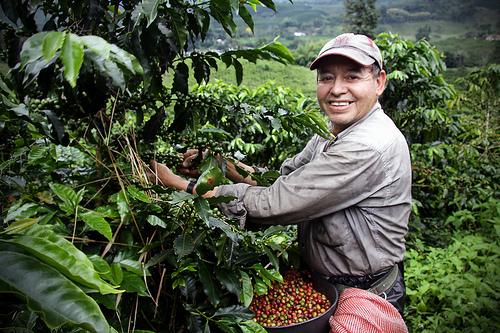
The 2024 Mocha peaberry comes from Colombia’s Hope Estate (Café Granja La Esperanza), a farm complex comprising four properties: Esperanza, Las Margaritas, Cerro Azul, and Potosí. This estate has a storied reputation in specialty coffee: it took Best of Panama champion (2008) and runner-up (2009) titles, and in 2012, three of its coffees claimed spots 2, 3, and 7 in the SCAA Coffee of the Year top ten. Most recently, it became the only non-Ethiopian, non-Kenyan, and non-Panamanian farm to win a Good Food Award (GFA).
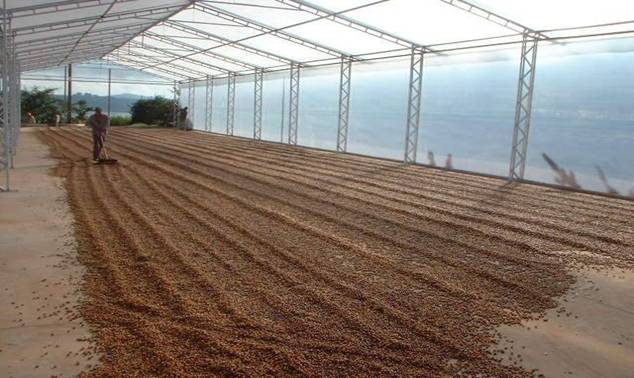
Hope Estate’s commitment to quality and innovation aligns perfectly with the demands of processing a rare peaberry like Mocha. The honey process applied to this lot enhances its intrinsic sweetness and complexity while preserving the delicate qualities of the small, round bean.
Flavor Profile: What Makes This Cup Unique
This honey-processed Mocha peaberry delivers a nuanced, floral-forward cup. Expect delicate notes of jasmine and honeysuckle, bright citrus tones of orange peel and apple, and a tart cherry acidity. The mid-palate reveals nutty undertones—think walnut and caramelized apple—balanced by a hint of minty chocolate. The finish lingers with sweet sugarcane and a smooth, rounded mouthfeel. It’s a coffee that balances brightness and sweetness in a way few beans can.
Frequently Asked Questions
What is a Mocha peaberry?
A Mocha peaberry is a rare, small, round coffee bean that occurs when a single round seed develops inside a coffee cherry instead of the usual two flat beans. It’s a natural mutation of the Mocha (or Mocca) variety, which originates from Ethiopia or Yemen and is known for its small bean size (typically 10–11 mesh, or 0.39–0.43 cm wide).
Why is the Mocha peaberry so expensive?
Mocha peaberries command high prices due to their rarity—only 2% of Mocha cherries produce peaberries, compared to 5–10% in other Arabica varieties—low yields per tree, and the difficulty of processing their small, unique shape. Auction records show prices exceeding $500 per pound in 2012.
What is honey processing and how does it affect Mocha peaberry?
Honey processing removes the coffee cherry skin but leaves most of the sticky fruit mucilage (honey) on the bean during drying. This enhances sweetness and body while preserving the delicate flavors of the Mocha peaberry. The method requires careful monitoring to avoid over-fermentation, especially with small beans that dry differently.
Where does Colombia’s Hope Estate grow its Mocha peaberry?
Hope Estate cultivates its Mocha peaberry across multiple farms in Colombia, including Esperanza and other estates under its management. The estate is renowned for producing award-winning coffees and has won multiple national and international accolades, including a Good Food Award.
How small is a Mocha peaberry compared to regular coffee beans?
A Mocha peaberry typically measures 10–11 mesh (0.39–0.43 cm wide), while standard Central American Arabica beans are around 18 mesh (0.7 cm wide). This smaller, rounder shape contributes to its unique processing challenges and cup characteristics.
Recommended FrontStreet Honey-Processed Coffees
For fans of the Hope Estate Mocha peaberry’s floral sweetness, try FrontStreet’s Blackberry Coffee with its intense blackberry and grape profile from a Colombian-grown, nearly 100% mucilage-retained black honey process. Or explore Strawberry Candy Espresso (Strawberry Candy EspressoGeisha), which blends Panamanian Geisha floral notes with grape and blueberry sweetness from a Costa Rican 100% mucilage honey process. Both highlight the same careful fruit retention and complexity. Freshly roasted within 5 days · Orders placed before 17:00 ship the same day · Next-day delivery across most of Guangdong Province.
FrontStreet Coffee is a long-established specialty coffee roaster in Guangzhou China, selling freshly roasted beans from its own farm in Yunnan as well as dozens of carefully selected single-origin beans from around the world for both pour-over and espresso. The products deliver consistently excellent quality and great value, with shipping within 24 hours. Guangzhou's FrontStreet Coffee shop is recommended by many coffee lovers, and the beans are now available online at the Tmall 。
Important Notice :
前街咖啡 FrontStreet Coffee has moved to new addredd:
FrontStreet Coffee Address: 315,Donghua East Road,GuangZhou
Tel:020 38364473