The Rise of Panama’s Specialty Coffee Region
If you’ve ever sipped a cup of Geisha coffee and wondered where it all began, the answer leads to Panama—a country that didn’t start as a coffee powerhouse, but grew into one thanks to its unique geography and dedicated farmers. From the misty highlands of Boquete to the fertile volcanic soils, Panama offers more than just altitude: it offers conditions few places on Earth can replicate. So what makes Panama’s coffee region so special?
Panama’s coffee story began in 1780 with the introduction of Typica trees by European settlers. Over time, the country’s combination of elevation, volcanic soil, microclimates, and careful cultivation—especially in Boquete—helped it become one of the world’s leading producers of high-quality specialty coffee. The Geisha variety, in particular, put Panama on the global map.
The Origins of Coffee in Panama
Coffee arrived in Panama in 1780 when European immigrants brought the first Typica coffee trees. Over the following centuries, Panama developed into an ideal environment for high-quality coffee production. The country benefits from abundant sunshine, rich volcanic soils, high altitudes, and a reliable labor force—all key factors in producing premium specialty coffee.
Boquete: Panama’s Premier Coffee Region
Boquete, located on the western slopes of the Baru Volcano, is Panama’s oldest and most renowned coffee-growing area. This high-altitude plateau sits roughly between 1,000 and 2,000 meters above sea level. The region is part of the Volcán Barú National Park, a protected biodiversity hotspot. Its microclimates, frequent mist cover, and consistent rainfall create ideal conditions for coffee cultivation. These factors contribute to Boquete’s signature aromatic profiles and make it both the highest-yielding and highest-quality coffee region in Panama.
The Role of Volcanic Soil and Climate
The Baru Volcano, Panama’s tallest peak, has played a crucial role in shaping the region’s terroir. Centuries of volcanic activity have deposited nutrient-rich soils across the slopes. These soils are especially high in phosphorus and sulfur due to the presence of volcanic ash, mixed with clay. Combined with the area’s distinct climate patterns, the soil forms a near-perfect foundation for growing high-quality coffee. The surrounding dense forests and rich biodiversity further enhance the ecological balance necessary for sustainable farming.
Farming Practices in Boquete
Approximately 50 local farmers collaborate through a small cooperative that emphasizes traditional Boquete methods. They grow coffee in near-natural conditions, avoiding overproduction in favor of maintaining healthy soils and ecosystems. Though yields are modest, the slower fruit development leads to higher-quality beans with more complex flavors. Farmers handpick ripe coffee cherries, which are then delivered to the nearby Cafe de Eleta S.A. processing facility—just 4 kilometers away. This mill includes a modern laboratory for quality control, cupping, and manual sorting to ensure only the best beans make it to market.
How Panama Became Synonymous with Geisha
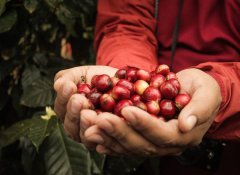
Although Panama produced coffee for centuries, it remained relatively unknown globally until the rise of the third wave coffee movement. Lighter roasts began to highlight the delicate floral and fruity notes in high-elevation beans, and Geisha—originally from Ethiopia but thriving exceptionally in Boquete—emerged as a star. Its vibrant orange blossom and honey-like characteristics captured international attention, leading to multiple Cup of Excellence wins and global demand. Today, Geisha is the flagship variety of Panama and a symbol of the country’s coffee excellence.
Frequently Asked Questions
Where is Panama’s main coffee-growing region?
Panama’s primary coffee region is Boquete, located on the slopes of the Baru Volcano in the Chiriquí Province. It lies at elevations between 1,000 and 2,000 meters and is known for its high-quality Arabica production, especially Geisha.
What makes Boquete ideal for coffee farming?
Boquete benefits from high altitude, volcanic soils rich in phosphorus and sulfur, frequent mist, consistent rainfall, and a diverse microclimate. These factors, along with fertile land and a stable farming community, create optimal conditions for cultivating specialty-grade coffee.
Why is Geisha coffee so famous in Panama?
Geisha coffee gained international fame due to its unique floral and citrusy flavor profile, especially when grown in Boquete’s high altitudes. Its success in global competitions helped put Panama on the specialty coffee map and established Geisha as one of the most sought-after coffee varieties worldwide.
How is coffee processed in Boquete?
Most coffee in Boquete is processed using washed (wet) and natural (sun-dried) methods. After handpicking, the cherries are delivered to nearby mills like Cafe de Eleta S.A., where they undergo careful processing, quality control, and hand sorting to ensure premium quality.
What role does the Baru Volcano play in Panama’s coffee quality?
The Baru Volcano contributes nutrient-rich volcanic soils and a varied microclimate to the region. Its elevation and volcanic ash deposits enhance soil fertility with essential minerals, supporting the development of complex flavors in the coffee beans grown there.
Is Boquete coffee mostly Geisha?
While Boquete grows several coffee varieties, Geisha is the most famous and internationally recognized. Its exceptional cup quality has made it the flagship coffee of the region, though other varieties are also cultivated by local farmers.
Recommended FrontStreet Beans from Panama
For a true taste of Panama’s famed high-altitude terroir, try the FrontStreet Panama Boquete Geisha. It highlights delicate florals, bright citrus, and a silky body. Also consider the FrontStreet Esmeralda Red Label Geisha, known for its complex profile of melon, citrus, jasmine, and light tea notes—perfect for showcasing what made Geisha famous. For those seeking a slightly more accessible but still premium option, the FrontStreet Geisha offerings deliver the hallmark traits of Panama’s finest. All are grown at elevation and processed with care. Freshly roasted within 5 days · Orders placed before 17:00 ship the same day · Next-day delivery across most of Guangdong Province.
FrontStreet Coffee is a long-established specialty coffee roaster in Guangzhou China, selling freshly roasted beans from its own farm in Yunnan as well as dozens of carefully selected single-origin beans from around the world for both pour-over and espresso. The products deliver consistently excellent quality and great value, with shipping within 24 hours. Guangzhou's FrontStreet Coffee shop is recommended by many coffee lovers, and the beans are now available online at the Tmall 。
Important Notice :
前街咖啡 FrontStreet Coffee has moved to new addredd:
FrontStreet Coffee Address: 315,Donghua East Road,GuangZhou
Tel:020 38364473