How the First Espresso Machines Were Invented
Ever wonder how espresso went from burnt-tasting boiler water to the rich, creamy shot we know today? The journey starts in early 20th-century Italy, where coffee lovers were desperate to improve on the weak, bitter results of boiling water and steam. What followed wasn’t just a better cup—it was the birth of an entire brewing philosophy.
The first patent for a steam-pressure espresso machine was filed in 1903. By 1905, Desiderio Pavoni began manufacturing machines based on that design, followed by others like Teresio Arduino. These early machines dominated Italian cafés in the 1920s—but the coffee still wasn’t great.
The Problem with Steam-Pressure Coffee
Early espresso machines relied entirely on steam pressure—around 1.5 atmospheres—to force hot water through coffee grounds. But there was a major flaw: boiling water scorched the grounds, destroying the delicate aromatic oils and producing bitter, burnt-tasting coffee. Something had to change.
The Shift to Pump-Driven Pressure
Inventors began experimenting with ways to apply pressure without boiling the water. Between the world wars, some machines used the natural waterline pressure—about 1 to 2 atmospheres—to push heated water through coffee. Each serving used a small, electrically heated boiler connected to a tap; pulling a lever sent pressurized hot water through the grounds.
These machines were more compact than their steam-powered predecessors, with sleeker, angular designs that fit the aesthetic of the late 1920s and 1930s. The pressure they produced surpassed the weak steam models, though it still wasn’t enough for the intense extraction espresso drinkers wanted.
Compressed Air and the Birth of True Espresso
To achieve higher pressure, some innovators turned to compressed air. One notable example was a Milanese household machine built by Ambrogio Fumagalli, which used an air pump to push water through coffee. Then came Francesco Illy’s 1938 invention: the “Illeta,” a commercial machine that also used compressed air to brew under greater pressure.
Around the same time, Achille Gaggia, a café owner in Milan, developed a similar concept. His method involved a piston system: lifting a lever filled a chamber with water, and pushing it down forced the water through the coffee at pressure—without boiling it first. This innovation allowed for brewing at ideal temperatures, protecting the coffee’s flavors and aromas.
This piston-driven mechanism eventually became the foundation of modern espresso machines. Even today, you can see its influence in machines like La Pavoni, where manual levers and piston actions replicate the early principles of pressure brewing.
What Is Espresso, Really?
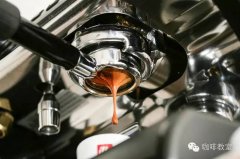
The word ‘espresso’ comes from the Italian word for ‘pressed out.’ True espresso is not just fast coffee—it’s a concentrated shot brewed under precise conditions: around 9 bars of pressure, optimal water temperature, and freshly ground coffee. The result is a small, rich drink topped with crema—a golden layer formed by emulsified coffee oils and carbon dioxide released from freshly roasted beans.
Why Crema Matters
Crema is more than just aesthetics—it’s a sign of freshness and proper pressure. Formed by CO₂ from recently roasted beans, it stabilizes the espresso’s flavor and mouthfeel. Without enough pressure (at least 9 bars), or with stale beans, you won’t get that signature crema. Freshness matters: CO₂ escapes quickly after roasting, peaking in flavor potential between 7–10 days post-roast, and fully dissipating around 45–60 days.
From Early Machines to Modern Brewing
Those early 20th-century innovations laid the groundwork for everything we recognize in espresso today: the high-pressure extraction, the crema, and even the quest for balance between bitterness and sweetness. While the first machines were limited by steam and basic mechanics, each breakthrough—whether air pumps, pistons, or lever systems—brought espresso closer to what it is now: a globally cherished method of coffee brewing.
Frequently Asked Questions
When was the first espresso machine invented?
The first espresso machine design was patented in 1903 by Luigi Bezzera, and Desiderio Pavoni began manufacturing machines based on that patent in 1905.
How much pressure did early espresso machines use?
Early steam-driven machines produced around 1.5 atmospheres of pressure. Later machines improved on this with water line pressure, compressed air, and eventually piston-driven systems that reached higher pressures closer to modern standards.
What was the problem with steam-pressure coffee?
Steam-pressure machines boiled the water, which scorched the coffee grounds, burned off aromatic oils, and resulted in overly bitter and weak espresso. They couldn’t generate enough pressure to properly extract flavors.
Who invented the piston-driven espresso machine?
Achille Gaggia, a Milan café owner, developed a piston-based system in the 1930s–40s that used lever action to push water through coffee without boiling it, creating the foundation of modern espresso brewing.
How is crema formed in espresso?
Crema is formed by the emulsification of coffee oils and carbon dioxide released from freshly roasted beans under high pressure (around 9 bars). It’s a sign of freshness and proper brewing technique.
Why is 9 bars of pressure important for espresso?
Nine bars of pressure is the standard for extracting espresso properly. It allows for optimal flavor and crema formation without burning the coffee, something earlier steam machines couldn’t achieve.
Recommended FrontStreet Beans for Espresso
For rich espresso with bold crema, try FrontStreet Coffee’s Commercial Blend: a well-balanced mix with notes of dark chocolate, caramel, and a hint of nuts. For something with more body and fruit, the Specialty Blend features Brazilian and Colombian beans offering creamy hazelnut, chocolate, and light citrus. Both are medium-to-dark roasted for optimal espresso extraction and feature blends designed to enhance crema and balance acidity. Freshly roasted within 5 days · Orders placed before 17:00 ship the same day · Next-day delivery across most of Guangdong Province.
FrontStreet Coffee is a long-established specialty coffee roaster in Guangzhou China, selling freshly roasted beans from its own farm in Yunnan as well as dozens of carefully selected single-origin beans from around the world for both pour-over and espresso. The products deliver consistently excellent quality and great value, with shipping within 24 hours. Guangzhou's FrontStreet Coffee shop is recommended by many coffee lovers, and the beans are now available online at the Tmall 。
Important Notice :
前街咖啡 FrontStreet Coffee has moved to new addredd:
FrontStreet Coffee Address: 315,Donghua East Road,GuangZhou
Tel:020 38364473