Uganda Coffee Beans: What Makes Them Unique?
If you’ve ever wondered why certain African coffees deliver a distinct flavor profile—less bright acidity than Ethiopian beans, more depth than Kenyan lots—you’re likely thinking about Ugandan origins. Uganda may not be the first name that pops up when you think specialty, but its highland-grown Arabicas have quietly carved out a reputation for themselves among experienced roasters and importers. This article breaks down where Uganda’s best beans come from, how they differ, and what to expect in the cup.
In short: Uganda’s finest specialty-grade Arabica is grown in the Bugisu, Elgon, and Rwenzori mountain regions. The top grade is Bugisu AA, representing just 4% of the country’s production. These beans typically show low-toned fruitiness, hints of wine-like acidity, and thick body—best roasted between City+ and Full City+. Avoid over-dried or pale-looking green beans, but don’t expect Ethiopian-like brightness; Uganda’s profiles are earthier and more akin to Indonesia or Java.
Where Uganda’s Best Coffee Grows
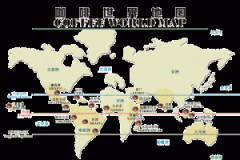
Uganda sits on the equator but benefits from high altitudes, averaging 1,000–1,200 meters above sea level, and a mild climate due to its position on the East African plateau. Though it’s landlocked, the country’s volcanic soils and elevation make it ideal for coffee cultivation. The best Arabica coffee comes from three key regions:
- Bugisu: Located along the slopes of Mount Elgon near the Kenyan border. This region produces the highly regarded Bugisu AA, A, and PB grades.
- Elgon: Also on the Kenya-Uganda border, part of the same Mount Elgon range. Known for structured, lower-toned fruit profiles.
- Rwenzori (Ruwenzi): In western Uganda, near the Democratic Republic of Congo. Another high-potential Arabica zone.
These areas supply the bulk of Uganda’s exportable specialty-grade Arabica, typically harvested between October and February. The coffee is usually ready for export by January or February of the following year.
Uganda’s Coffee Industry: From Decline to Recovery
Historically, Uganda was a major global Robusta producer. In the 1960s, annual output reached 3.5 million 60kg bags. Political turmoil in the 1980s caused a sharp decline, dropping output to just 2.5 million bags. However, production has since rebounded to around 3 million bags per year, ranking Uganda as Africa’s second-largest coffee producer after Ethiopia.
Robusta makes up roughly 90% of Uganda’s total coffee output, but it’s the remaining 10% of Arabica that draws specialty interest. Export income is vital to Uganda’s economy, with coffee representing over 70% of agricultural exports. Major buyers include Germany and Italy. Yet infrastructure remains a hurdle—poor roads delay shipments to Mombasa or Dar es Salaam, affecting bean quality upon arrival.
Coffee Varieties, Processing, and Grades in Uganda
Nearly all Ugandan Arabica is grown by smallholder farmers, with around 500,000 farms involved in production. The harvest season runs from October to February. The key arabica grades recognized officially include:
- Bugisu AA: The highest grade, accounting for only 4% of production. Grown on Mount Elgon’s eastern slopes. Low acidity, thick body, and unique notes like raw papaya or wine-like depth—not unlike Indonesian Java or Mandheling.
- Bugisu A & B: Slightly lower grades with broader cup profiles.
- Bugisu PB: Peaberry lots, often more concentrated in flavor.
- Wugar and Drugar: Washed and natural/dry-processed Robusta or blended lots, with Wugar being the cleaner, washed style.
- Other uncategorized grades also exist, mainly for domestic or bulk trade.
The Bugisu AA, A, and PB grades are the ones that most often yield distinctive, high-quality profiles. Processed via washed methods, these beans can display a distinct fruit tone—often low and round, resembling overripe stone fruit or subtle red wine notes. But due to inland transport challenges, imported lots may arrive drier or less vibrantly green than other East African coffees. That said, they still express strong regional character: thick mouthfeel, muted fruit, and a soil-like softness that sets them apart from brighter Kenyan or Ethiopian offerings.
Roasters often find success with these beans at roast levels between City+ and Full City+, where their body and gentle fruit can shine without being overshadowed by excessive roast tones.
Frequently Asked Questions
What is special about Ugandan coffee?
Ugandan coffee is distinctive for its low-toned fruitiness, wine-like acidity, and full body. While most Ugandan production is Robusta, its specialty Arabica—especially from Bugisu, Elgon, and Rwenzori—is known for profiles similar to Indonesian coffees, with earthy depth and soft fruit rather than bright Kenyan acidity.
Which Ugandan coffee grade is best for specialty?
The Bugisu AA grade is considered the highest and best for specialty. It makes up just 4% of Uganda’s coffee output and is grown on the slopes of Mount Elgon. These beans often show unique notes like raw papaya or light wine tones, with a thick body and mild acidity.
Where in Uganda is the best Arabica coffee grown?
The best Arabica comes from the Bugisu region (Mount Elgon area, near Kenya), the Elgon region (also on Mount Elgon), and the Rwenzori Mountains in western Uganda. These highland areas offer ideal altitude and climate for quality Arabica production.
Why is Ugandan coffee mostly Robusta?
Approximately 90% of Uganda’s coffee production is Robusta, which thrives in the country’s equatorial climate and fertile soils. Arabica makes up just 10%, but it’s the Arabica from highland regions like Bugisu that attract specialty attention.
What does Ugandan coffee taste like?
High-quality Ugandan Arabica typically has a low, rounded fruitiness—sometimes reminiscent of papaya or red wine—along with a thick, substantial body and a gentle earthy or soil-like note. It lacks the sharp acidity of Ethiopian coffees but offers more complexity than many other African origins.
How is Ugandan coffee processed?
Top Ugandan Arabica is mostly washed processed (e.g. Bugisu AA, A, PB), resulting in cleaner profiles. There are also some natural or dry-processed lots (e.g. Drugar), and Wugar refers to washed Robusta. Processing quality varies due to farm-level infrastructure.
FrontStreet Coffee Picks: Uganda-Inspired Profiles
For drinkers curious about Ugandan-style flavor profiles, try FrontStreet’s Ethiopia Huakui (Sidama region) for its deep fruit structure or Kenya Little Tomato for bright complexity that contrasts Uganda’s typically muted acidity. While we don’t list direct Uganda beans, these single origins share a continent’s worth of character: winey, structured, and bold. Freshly roasted within 5 days · Orders placed before 17:00 ship the same day · Next-day delivery across most of Guangdong Province.
FrontStreet Coffee is a long-established specialty coffee roaster in Guangzhou China, selling freshly roasted beans from its own farm in Yunnan as well as dozens of carefully selected single-origin beans from around the world for both pour-over and espresso. The products deliver consistently excellent quality and great value, with shipping within 24 hours. Guangzhou's FrontStreet Coffee shop is recommended by many coffee lovers, and the beans are now available online at the Tmall 。
Important Notice :
前街咖啡 FrontStreet Coffee has moved to new addredd:
FrontStreet Coffee Address: 315,Donghua East Road,GuangZhou
Tel:020 38364473