
Café
Latest articles, industry insights and brewing guides
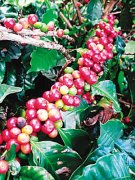
American Columbia Coffee Flavor from Vera Plateau in Huilan, Colombia
Colombia's boutique bean producing areas are mainly in the south, more than 1500 meters above sea level, including San Augustin, Huila in Huilan province, Popayan, Cauca in Cauca province, Nari ñ o province, and Tolima province, all of which have delicate sour and raspberry aromas, caramel aromas and full sweetness. A wave native to the Indian Ocean.
Deep roasting of coffee cooked beans in Costa Rica Saint Roman Water washing Plant in Tarazhu production area
Costa Rica is the country where coffee was first introduced into Central America. It has a long history and has a complete coffee organization from production to marketing system. Because it is located in the Central American Gorge, there are many volcanoes, it has the natural advantages of sunshine and land, and the climate is reconciled by Pacific and Atlantic currents and sea breeze at the same time, the coffee produced has the characteristics of local micro-climate, in terms of quality and quantity.

Costa Rican Diamond Hill Manor washed SHB Kaddura Fine Coffee American Coffee
Costa Rican coffee cultivation was introduced by Cuba in 1779 and exported for the first time in 1820. There are about 32000 coffee farmers, with an average planting area of less than one hectare (10000 hectares) per farmer. Costa Rica has a population of 41 billion (2006), with a coffee planting area of 82500 hectares and an annual production of 1.7 million bags (60kgs per bag). The annual domestic consumption is 380000 bags.

Colombian Santa Rita Coffee Manor Andes Micro-producing area American Coffee
The history of coffee cultivation in Colombia can be traced back to the Spanish colonial era in the 16th century, and there are many theories about the history of coffee in Colombia: one: it is said to come from the island of Haiti in the Caribbean and from El Salvador in Central America. Second: in 1808, a priest introduced coffee beans to Colombia for the first time from the French Antilles via Venezuela. One of them

American boutique coffee La Tisa Manor on the Farahan Plateau of Guatemala
Fraijanes Plateau: Waiqiang Plateau (Fraijanes Plateau) this area is of volcanic soil, high altitude, sufficient rainfall and great humidity variation. Ash from Pacaya, Guatemala's most active volcano, provides important minerals for the soil in the region. There is plenty of sunshine in the dry season, and although the clouds and dew are heavy in the morning, they dissipate quickly. Because of

Coffee small farmers in Lake Titicaca, Bolivia
The advantage of Bolivian coffee lies in its high altitude and excellent varieties of coffee, where the traditional Tibica and a small amount of Kaddura are highly valued in the world market. In the past, coffee trees in Bolivia used to act as hedges and ornaments around the garden. Real commercial production began in the early 1950s. The great frost in 1957 seriously damaged Pakistan.

Traditional Attland Volcano Coffee producing area Guatemalan Coffee beans American Coffee
Traditional Traditional Atitln (Traditional Atitln) is one of the five largest volcanic coffee producing areas in Guatemala, and its soil organic matter is the most abundant among the five major volcanic coffee producing areas. 90% of the traditional Atilan coffee is grown on the violent volcanic slopes of Lake Attila, where the daily breeze stirs the lake and is responsible for the microclimate of the region.

Fresh raw bean single product Indonesia Huangman coffee bean Sumatra Aceh Gaiyoung mountain producing area
The most famous coffee producers in Asia are the islands of Malaysia: Sumatra, Java and Kaliman. Sumatra Manning coffee from the Indonesian island of Sumatra is the most famous. Mantenin coffee is produced in Lake dopa in Sumatra Province and Lake Tawa in Aceh. This is the famous Shuangman of the two lakes. What Shuangman of the two lakes have in common is that they are both very thick.

PNG Coffee Papua New Guinea Chateau Chimeier Fine Coffee Island Coffee
Washed Papua New Guinea coffee always has a brighter, more sour performance, similar to the flavor of Central American coffee. Large estates / farms (plantation) usually have their own washing plants, and smaller individual coffee farmers are more likely to control the quality and flavor of their output. Located in the Wiki Valley of the western plateau of Papua New Guinea, near Qimai in the kimel Valley.

Asian beans, Sumatra, Manning, Indonesia, Lin Dong Manning, coffee pine, caramel, herbs
The most famous coffee producers in Asia are the islands of Malaysia: Sumatra, Java and Kaliman. Sumatra Manning coffee from the Indonesian island of Sumatra is the most famous. Mantenin coffee is produced in Lake dopa in Sumatra Province and Lake Tawa in Aceh. This is the famous Shuangman of the two lakes. What Shuangman of the two lakes have in common is that they are both very thick.

Coffee growing in Sumatra traditional Chinese medicine taste Mantenin coffee traditional wet planing method
The top Mantenin is suitable from city to italian. The taste of light baking is very clean, sour and sweet; deep baking has a very deep flavor and strong taste. For a general grade, it is recommended to bake to full city or a little deeper. Coffee cultivation in Sumatra began in the 18th century, when the planting area was near Aceh in Lake Tawar to the north.

Strong and sour Indian coffee boutique coffee rainy season beans and aged coffee beans
India (India) is suitable for baking: Full city/Espresso full city, if you want to get a thick flavor like dark chocolate, you can even enter the dense area of the second explosion! The taste of Indian coffee is very mild, very low in intensity and acidity, with some spicy flavor, and of course the common local flavor of Asian beans. India is usually used to blend with E.

Flowers and honey sweet Ethiopian coffee Ethiopian flavor sidamo products
At present, there are many native forests of coffee in Ethiopia, which can be said to be a gene pool of coffee, and this gene pool will be the solution to many coffee problems. Ethiopian coffee beans are of high quality and have a wide variety of flavors, and few countries are second to none. As for the treatment of raw beans, some places are insolated, some are washed, and both are used.

Tanzanian boutique coffee Kilimanjaro and Meru mountain barista coffee tree cultivation
From Kenya further south into Tanzania, Tanzanian coffee is a member of the East/Central African coffee family, most of which are washed beans, so it usually tastes bright and has a strong aroma. Tanzanian coffee definitely has the strength to compare with neighboring Kenya. However, the country's coffee quality control is not strict, and many of the sloppy processing processes often destroy the coffee classification into AA and A grades.

Mocha Africa's unique Yemeni coffee bean sun-dried coffee bean boutique coffee
Because the beans are relatively small and there is a big difference in particle size, we should pay attention to the problem of stuck beans when using a drum roaster. Yemen is located in the Arabian Peninsula of the Asian continent, across the Red Sea and Africa, generally classified as African beans. When it comes to Yemen, what most people think of directly is Mocha! In fact, Mocha is a port in Yemen, where almost all the attached coffee used to be.

Gethumbwini Estate AA, Kenya's best coffee, pineapple and blackcurrant aromas.
Gethumbwini Estate [coffee] Gethumbwini Estate AA [farmer]

The sour and caramel aroma of dried lemon grown in Qidon Lulu Cooperative Niya Coffee
The Dunlulu Cooperative, founded in 1999 in Embu, Kenya, has 1200 active growers and the cleanest water treatment centers. It is well known that cooperatives pay producers far higher than government requirements. In Kenya, cooperatives have to pay 80 per cent of the final income to coffee farmers, and Kithungururu ends up paying 95 per cent more to coffee farmers than other cooperatives.

Mount Elgonne Manor African boutique coffee with balanced acidity, sweet and lively taste
Mount Elgon Manor Mount Elgon, the second highest mountain in Kenya, is formed by volcanic eruptions. Mount Elgon, an extinct volcano, is located on the border with Kenya and northeast of Lake Victoria. Coordinates: 18N ·3433E Mount Elgonne, extinct volcano on the Kenya-Uganda border. The crater is about 8 kilometers (5 miles) in diameter and has several peaks, of which Wagagai is the most

Kangema Region Kenya Coffee Kenya IYEGO Cooperative White Wine Tea Sage Flavor
[Taste] Bright and full blueberry taste behind the nose. Grapefruit and citrus acidity; structured, slightly citrus in the front, blueberry in the middle, strawberry in the back, longan sweet, perfect grapefruit and white wine flavor, moderate acidity. [Remarks]: Double fermentation (48-72 hours) Fresh fruit flotation--de-pulp--fermentation tank upper fermentation

Sour taste of SASINI manor grapefruit and citrus Kiambu African coffee beans
KCPTA: Kenya Federation of Coffee producers and traders, Kenya Coffee Producers and Traders Association CRF: Kenya Coffee Research Institute, Coffee Research Foundation KCB: Kenya Coffee Exchange, Kenya Coffee Board KCTA: Kenya Federation of Coffee traders, Kenya Coffee Traders Associatio