Wednesday, September 9, 2026 · Leading English Source for Global Coffee Industry

Coffee Bean

Latest articles, industry insights and brewing guides

What are the characteristics of organic coffee beans

What are the characteristics of organic coffee beans

In many parts of the world, growers use pesticides to control the growth of coffee pests, and moist and foggy coffee at high altitudes are more vulnerable to fungi, so growers often use pesticides to treat them. Many people believe that coffee can be called organic coffee as long as synthetic pesticides, herbicides and chemical fertilizers are not used during coffee growth. in fact, it is only in third parties (except coffee makers and producers).

Sulawesi Superior Honey Bean Jember

Sulawesi Superior Honey Bean Jember

When it comes to Sulawesi coffee, the more common is Toraja coffee grown by Toraja aborigines, which is usually mellow and fragrant, similar to golden manning coffee, while this Jember honey treatment is also from Sulawesi, but it is a more high-end honey bean! Every time the bean is baked, the smell of honey continues to gush out, making people completely unimagined that it is Sura.

Special Highland Coffee with Honduran flavor and taste characteristics

Special Highland Coffee with Honduran flavor and taste characteristics

Honduras: special highland coffee flavor and taste characteristics: good flavor, rich and mellow, suitable for mixed drinking. Honduras is located in the north of Central America, facing the Caribbean Sea to the north, the Gulf of Fonseca in the Pacific Ocean to the south, Nicaragua and El Salvador to the east and south, and Guatemala to the west, mostly mountains and plateaus. It has a tropical climate, mild temperature, abundant rainfall, and is a coffee producer.

High quality Nicaraguan coffee

High quality Nicaraguan coffee

Nicaraguan coffee flavor characteristics: moderate acidity, fragrant and delicious. Nicaraguan coffee of high quality is in the forefront of coffee beans in the world and enjoys a good reputation. Its particles are moderate in size, mild in taste and very aromatic and mellow. Nicaragua is located in central Central America, bordered by the Pacific Ocean to the west and the Caribbean Sea to the east. The highland in the north and the coastal plain in the east, belonging to the Central American volcanic belt.

Sep 15, 2015 173 views #High quality #Nicaragua #coffee
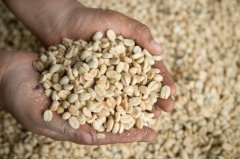
Coffee raw beans: the main components of raw beans between new beans and old beans

Coffee raw beans: the main components of raw beans between new beans and old beans

After dry and wet processing, coffee fruit becomes coffee raw bean (Raw bean/Green bean). The main components of raw beans are: carbohydrates, about 49%; moisture, about 12%; protein. About 11%; chlorogenic acid, about 7.6% alkaloids and trace elements, about 0.4%. According to the length of time, raw beans can be divided into: seasonal beans (Current Cro)

China is the coffee bean produced in Hainan. Liberica coffee beans.

China is the coffee bean produced in Hainan. Liberica coffee beans.

Liberica coffee beans: large shrubs or small trees, 6-15 m tall; dark brown bark; branches spreading, hard and straight. Leaves opposite, leathery, elliptic or Obovate-elliptic, 15-30 cm long, tip mucronate, base broadly cuneate, margin entire, rarely microwave, often with small pores in lower vein axils; petiole 8-20 mm long; stipules broadly triangular, 3-4 mm long, tip obtuse, rarely convex

Coffee variety introduction: Maui Moka (Maui Mokka)

Coffee variety introduction: Maui Moka (Maui Mokka)

There are two sources of Maui Mokka coffee varieties: one is the sudden mutation of the bourbon variety from the old bourbon island, and the other is the mocha variety transplanted in Yemen. The coffee tree is not tall, the leaves are small and slender, and the raw beans are small and orchard; it is easy to get rust spot and the yield is very low. Except for Maui, Hawaii, there is a small amount of cultivation in Brazil, although it is grown at a lower altitude.

Sep 15, 2015 139 views #Coffee #Variety #introduction #Maui #Mokka #Ma
Top Ten Best Coffee in the World inventory of Blue Mountain Coffee Manning Coffee

Top Ten Best Coffee in the World inventory of Blue Mountain Coffee Manning Coffee

1 Super Blue Mountain Coffee Origin: Caribbean Central American roasting method: CityRoast characteristics: mellow and full aftertaste, full selection of Central American high-altitude coffee beans with flavor properties similar to pure Blue Mountain coffee, blending of coffee from Jamaican Blue Mountain coffee producing areas, special roasting design adopts CityRoast, no matter in terms of flavor and taste, it is not similar to pure Jamaican Blue Mountain coffee.

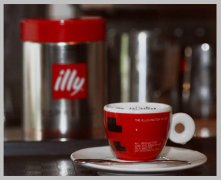
Illy Red taste evaluation coffee bean evaluation

Illy Red taste evaluation coffee bean evaluation

In fact, every time I write a coffee bean evaluation, I always have a little struggle in my heart. Because of the coffee I like, I may not be able to accurately express its flavor; even if I can express it, readers may not be able to feel it for themselves. Today, at least I can solve the second problem, because this time the evaluation is Illy red cans, that is, the moderate baking money of their family. If it is canned with illy inert gas

The concept and principles of coffee grinding 4 very basic principles

The concept and principles of coffee grinding 4 very basic principles

The concept and principle of coffee grinding: The operation of grinding the roasted coffee beans is called grinding. The props for grinding coffee beans are called grinders. The ideal time to grind coffee is before it is cooked. Because ground coffee is easy to oxidize and lose flavor, especially in the absence of proper storage, coffee powder is also easy to change flavor, naturally unable to cook a fragrant coffee. some

Sep 14, 2015 230 views #coffee #grind #concept #principle #4 #even this
Relationship between Grinding degree of Coffee Powder and extraction method

Relationship between Grinding degree of Coffee Powder and extraction method

Suitable for fineness grinding Turkish copper pot (Ibrik, fine powder), mocha pot, espresso machine (very fine grinding). Suitable for medium grinding filter paper dripping method, flannel dripping method, plug air kettle. Suitable for roughness grinding water drop coffee machine (extreme roughness grinding), dripping filter pot (extreme roughness grinding)

There are three ways to grind coffee beans: grinding, grinding and mortar grinding.

There are three ways to grind coffee beans: grinding, grinding and mortar grinding.

There are three kinds of grinding methods for coffee beans: grinding, grinding and grinding. 1. Grinding: two rotating parts are used to squeeze and crush coffee beans. The grinding parts can be disc-shaped or conical. Conical machines are less noisy and less likely to block. The coffee powder produced by the grinding method is more uniform and the taste is more consistent when cooking. Design of conical Grinding Plate

The relationship between oil yield and freshness of coffee the cause of oil production of coffee beans

The relationship between oil yield and freshness of coffee the cause of oil production of coffee beans

Oil yield and freshness: the appearance of freshly baked shallow baked beans should be dry without oil, and the surface of freshly baked deep baked beans should be oily. It is the correct idea that we should understand. When buying coffee beans, the appearance of oil, no oil is a reference index to judge the freshness, but not absolutely. The best policy is to buy reputable freshly roasted coffee beans.

Note: caffeine is higher than shallow roasted beans.

Note: caffeine is higher than shallow roasted beans.

The melting point of caffeine is as high as 237 degrees Celsius, so the roasted caffeine is almost completely retained and dissolved in the cup. People often mistakenly think that the caffeine of deep roasted beans is lower than that of shallow roasted beans, but the fact may be just the opposite. due to the high rate of dehydration and weight loss of deep roasted beans, it is necessary to brew coffee with more coffee beans, resulting in drinking more caffeine, so the caffeine of deep roasted beans is higher than that of shallow roasted beans.

How to select coffee beans with a vibrating screen? What is the skill of picking beans?

How to select coffee beans with a vibrating screen? What is the skill of picking beans?

I saw on the Internet yesterday that someone asked if the vibrating screen could screen peanuts and coffee beans, and the answer was yes. In the following, some problems and solutions of vibrating screen in screening these two materials are discussed. First of all, customers need to know the number of peanuts and coffee beans, and then choose the appropriate sieve, which is like screening peanut and coffee beans.

Analysis of the processing steps of coffee beans how to determine the baking degree of coffee beans?

Analysis of the processing steps of coffee beans how to determine the baking degree of coffee beans?

1. Peeling removes the peel and most of the flesh by mechanical or manual means. two。 Fermentation removes the mucus and film from the core by fermentation. as the length of fermentation time will affect the flavor of coffee, each manufacturer has its own fermentation time. 3. The drying method is mainly divided into natural sun drying and natural air drying. Excessive water content can easily lead to mildew and insect growth of raw coffee beans.

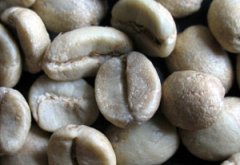
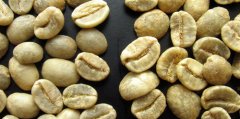
How to judge whether the raw coffee beans are fresh from the appearance? Judgment on the appearance of coffee beans

How to judge whether the raw coffee beans are fresh from the appearance? Judgment on the appearance of coffee beans

From the fruit state of coffee beans when they are picked from the tree to the state of raw beans that can be baked, the moisture content of coffee beans will be controlled between 9% and 13%, and it is not easy to bake if the water content is too high or too low. Generally, we get newly collected raw beans with water washing treatment, the moisture content is usually about 11.5% to 12.5%, half-washed Mantenin may reach 13%, and half-washed Brazil is 11% ~ 12% per day.