
"shrubs"
1801 article(s) found
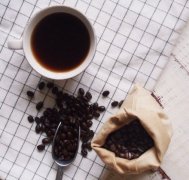
Blue Mountain Coffee, the main coffee bean in Taiwan market.
Coffee trees are small shrubs growing in tropical highlands. Their fruits are red or yellow, and the seeds inside are what we call coffee beans. At present, coffee beans are grown in about 66 countries in the world, among which they can be classified as Arabica, Robusta and Liberica. Arabica is the largest major variety of coffee beans, accounting for about 80% of its aroma and quality. And Rob

Talking about Coffee beans
1. Summary: coffee is a perennial evergreen shrub or small tree of Rubiaceae. It is native to tropical Africa and has been cultivated for more than 2000 years. The Arabs began to grow coffee in 525 BC, and it was popular for Arabs to stir-fry coffee beans. They began to grow coffee beans on a large scale after the 15th century, and were widely distributed in the tropics and subtropics of Europe, Asia, Africa and Latin America after the 18th century.

Phoenix single fir and wuyi rock tea are the same type? Cinnamon tea and single fir tea which is better?
Single fir: the essence of high-end phoenix oolong tea. Phoenix oolong tea is often referred to as single fir tea by many tea lovers around the world, especially those living in the united states and europe. The name single fir refers to a semi-wild shrub. But the meaning of cluster is opposite to garden tea. In tea plantations, tea trees are planted on a single post and pruned regularly
A brief talk on understanding coffee beans
1. Summary: coffee is a perennial evergreen shrub or small tree of Rubiaceae. It is native to tropical Africa and has been cultivated for more than 2000 years. The Arabs began to grow coffee in 525 BC, and it was popular for Arabs to stir-fry coffee beans. They began to grow coffee beans on a large scale after the 15th century, and were widely distributed in the tropics and subtropics of Europe, Asia, Africa and Latin America after the 18th century.
Coffee beans are the main coffee beans in Taiwan market.
Coffee trees are small shrubs growing in tropical highlands. Their fruits are red or yellow, and the seeds inside are what we call coffee beans. At present, coffee beans are grown in about 66 countries in the world, among which they can be classified as Arabica, Robusta and Liberica. Arabica is the largest major variety of coffee beans, accounting for about 80% of its aroma and quality. And Rob

Colombian Coffee, the main coffee bean in Taiwan market
Coffee trees are small shrubs growing in tropical highlands. Their fruits are red or yellow, and the seeds inside are what we call coffee beans. At present, coffee beans are grown in about 66 countries in the world, among which they can be classified as Arabica, Robusta and Liberica. Arabica is the largest major variety of coffee beans, accounting for about 80% of its aroma and quality. And Rob
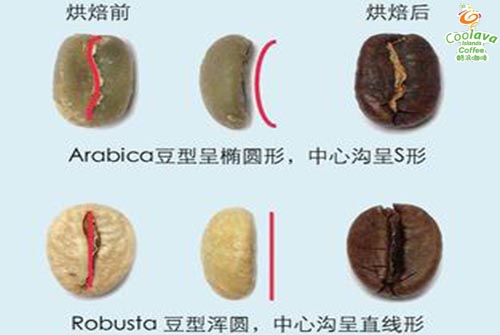
Boutique coffee beans: details of Arabica and the difference between Arabica and Robusta
Arabica Coffee Coffee Arabica many people have seen roasted coffee beans, but unless you have lived or traveled to coffee producing areas, you may not know coffee trees. The saplings are short-trimmed, but when they mature, they are 30 feet tall and covered with waxy leaves that grow symmetrically in dark green. The coffee fruit grows along the branches. After the white flowers are in full bloom and pollinated, the fruit takes a year to ripen.
Planting and harvesting of coffee trees
The first people to drink coffee lived in Ethiopia. A drink called "Buncham" was found in the Arab scientific literature of 900-1000 AD, but it is not certain that it is coffee.
A brief discussion on the knowledge of Coffee beans Encyclopedia
1. Summary: coffee is a perennial evergreen shrub or small tree of Rubiaceae. It is native to tropical Africa and has been cultivated for more than 2000 years. The Arabs began to grow coffee in 525 BC, and it was popular for Arabs to stir-fry coffee beans. They began to grow coffee beans on a large scale after the 15th century, and were widely distributed in the tropics and subtropics of Europe, Asia, Africa and Latin America after the 18th century.

Coffee beans are important raw materials for making beverages
1. Summary: coffee is a perennial evergreen shrub or small tree of Rubiaceae. It is native to tropical Africa and has been cultivated for more than 2000 years. The Arabs began to grow coffee in 525 BC, and it was popular for Arabs to stir-fry coffee beans. They began to grow coffee beans on a large scale after the 15th century, and were widely distributed in the tropics and subtropics of Europe, Asia, Africa and Latin America after the 18th century.
High-quality coffee beans recommend the main coffee beans in Taiwan market.
Coffee trees are small shrubs growing in tropical highlands. Their fruits are red or yellow, and the seeds inside are what we call coffee beans. At present, coffee beans are grown in about 66 countries in the world, among which they can be classified as Arabica, Robusta and Liberica. Arabica is the largest major variety of coffee beans, accounting for about 80% of its aroma and quality. And Rob
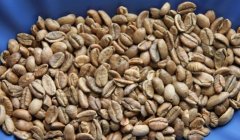
Produced in Hainan: Liberika coffee beans
Liberica coffee beans: large shrubs or small trees, 6-15 m tall; dark brown bark; branches spreading, hard and straight.
What kind of coffee do you know?
Coffee belongs to the genus Coffea. The genus is a member of the Rubiaceae family, which has more than 500 species and more than 6000 varieties, most of which are tropical trees and shrubs.
Liberica coffee beans
Liberica coffee beans: large shrubs or small trees, 6-15 m tall; dark brown bark; branches spreading, hard and straight. Leaves opposite, leathery, elliptic or Obovate-elliptic, 15-30 cm long, tip mucronate, base broadly cuneate, margin entire, rarely microwave, often with small pores in lower vein axils; petiole 8-20 mm long; stipules broadly triangular, 3-4 mm long, tip obtuse, rarely convex
How is coffee recorded in the Compendium of Materia Medica?
How is coffee recorded in the Compendium of Materia Medica? it is recorded in the Compendium of Materia Medica: [coffee] shrubs, fruit kernels can be used as medicine, sex temperature, bitter and sour taste, refreshing and refreshing, stomach digestion. Can treat mental malaise, yang qi block, children accumulated food. Incompatibility: Codonopsis pilosula, Croton, alum, cold noodles. Usage: processed into powder, which is called Tishen Powder. Two dollars a day, one for milk and one for sugar.
French invention of frozen storage of coffee seeds
Recently, the French growth Research Institute has successfully discovered a method of long-term frozen storage of small coffee seeds, which provides a reliable means to set up a small coffee seed bank and protect biodiversity. Coffee belongs to Rubiaceae evergreen shrubs or small trees, mainly produced in tropical areas, there are small coffee, medium coffee and large coffee and so on. Small beautiful coffee original
The record of coffee in Compendium of Materia Medica
How is coffee recorded in the Compendium of Materia Medica? it is recorded in the Compendium of Materia Medica: [coffee] shrubs, fruit kernels can be used as medicine, sex temperature, bitter and sour taste, refreshing and refreshing, stomach digestion. Can treat mental malaise, yang qi block, children accumulated food. Incompatibility: Codonopsis pilosula, Croton, alum, cold noodles. Usage: processed into powder, which is called Tishen Powder. Two dollars a day, one for milk and one for sugar.
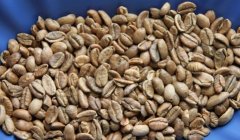
Liberica coffee beans produced in Hainan
Liberica coffee beans: large shrubs or small trees, 6-15 m tall; dark brown bark; branches spreading, hard and straight. Leaves opposite, leathery, elliptic or Obovate-elliptic, 15-30 cm long, tip mucronate, base broadly cuneate, margin entire, rarely microwave, often with small pores in lower vein axils; petiole 8-20 mm long; stipules broadly triangular, 3-4 mm long, tip obtuse, rarely convex
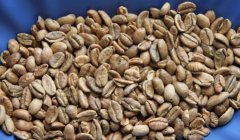
China's boutique coffee beans Hainan produces libirika coffee beans
Liberica coffee beans: large shrubs or small trees, 6-15 m tall; dark brown bark; branches spreading, hard and straight. Leaves opposite, leathery, elliptic or Obovate-elliptic, 15-30 cm long, tip mucronate, base broadly cuneate, margin entire, rarely microwave, often with small pores in lower vein axils; petiole 8-20 mm long; stipules broadly triangular, 3-4 mm long, tip obtuse, rarely convex
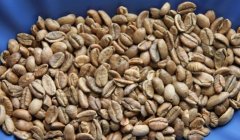
China Hainan Coffee Beans Librika Coffee Beans
Coffee beans: large shrubs or small trees, 6-15 m tall; bark dark brown; branches spreading, hard and straight. Leaves opposite, leathery, elliptic or obovate-elliptic, 15-30 cm long, apex mucronate, base broadly cuneate, margin entire, rarely wavy, often with pits in lower vein axils; petiole 8-20 mm long; stipules broadly triangular, 3-4 mm long, apex obtuse, rarely convex