
How Baristas Are Trained to Make Great Coffee
At a recent coffee competition in Suzhou, a 26-year-old barista named John demonstrated how to properly taste an espresso—first without sugar to experience its full bitterness, then with a full packet to appreciate the contrast. That moment captures what it really takes to make a great cup of coffee: skill, sensory awareness, and deep knowledge of the craft. It’s not just pressing buttons.
To make truly great coffee, a barista must master brewing techniques, understand different roast levels, control milk temperature within 65–70°C, and perfect shot timing based on bean color—often around 45 seconds for darker roasts. It’s a mix of science, art, and practice.
Understanding What Makes Coffee Taste Different
John, who started his career as a pastry chef in Fujian before moving to Shanghai and eventually becoming a barista, didn’t know much about coffee five years ago. He took professional training in Shanghai and spent months practicing basic skills—like shaking water in a milk pitcher for three to four months just to improve his wrist control.
“As a barista, the first thing you need to learn is coffee varieties and brewing methods,” he said. “You evaluate beans by their uniformity and aroma—those with consistent size and strong aftertaste are usually better.” Brewing methods also greatly affect flavor. “Different methods create different tastes,” John explained. “Siphon coffee is like a graceful lady; pour-over is a dignified gentleman; espresso is bold and romantic.”
The Technical Skills Behind the Cup
Making a good cup isn’t just about latte art—it’s about controlling every variable in the brewing process. For espresso, John stressed the importance of timing based on roast color. “Darker roasted beans, which tend to taste sweeter and richer, only need about 45 seconds of extraction. Lighter, golden beans may need up to 55 seconds or more.”
When steaming milk for drinks like lattes and cappuccinos, temperature control is critical. “The ideal range is 65–70°C. Go higher, and the milk foam becomes coarse and loses its smooth texture, making latte art harder to maintain.”
Even the way you drink espresso matters. “Take the first sip without sugar while it’s hot, then add sugar to the second to experience the full transition from bitter to sweet,” John advised. He also demonstrated “slurping” the coffee to aerate it in the mouth—a technique used by professional tasters to enhance flavor perception.
Why Good Baristas Are Hard to Find
Despite growing demand, especially with the rapid rise of coffee shops in cities like Suzhou, finding skilled baristas remains a challenge. “In places like Pingjiang historic district, dozens of cafes have opened in just a few years, and they’re all competing on coffee quality now,” said Liao Shawei, head of the local human resources office.
Yet, most baristas earn modest salaries—around 3,000 RMB per month, similar to general service staff. “Many so-called baristas are self-taught or trained through informal channels. They might know how to operate a machine but lack deeper knowledge of coffee culture or proper techniques,” explained Li Ting, manager of a local bookstore chain. “In Italy, experienced baristas can earn the equivalent of mid-level bank managers—2,000 to 4,000 euros a month—and are highly respected. But that level of skill takes five to ten years to achieve.”
The situation is improving, though. With international coffee chains expanding in China and customer expectations rising, skilled baristas are becoming more valuable—and their pay is expected to rise significantly.
How Hobbyists and Professionals Are Learning the Craft
Not everyone wants to be a barista, but many coffee lovers are learning the basics for fun. At the Suzhou competition, a third of the participants were amateurs. “These are people with stable, well-paying jobs who just want to understand coffee better or enjoy latte art as a hobby,” said Wu Jiaojiao, a teacher at a local training school.
Take Xue Xiaoman, a senior executive assistant at a foreign firm. “Our office has free coffee all day, but after seeing a colleague make latte art—just milk and a feather-like design—we all started hanging out in the cafe longer. It’s a stress reliever.”
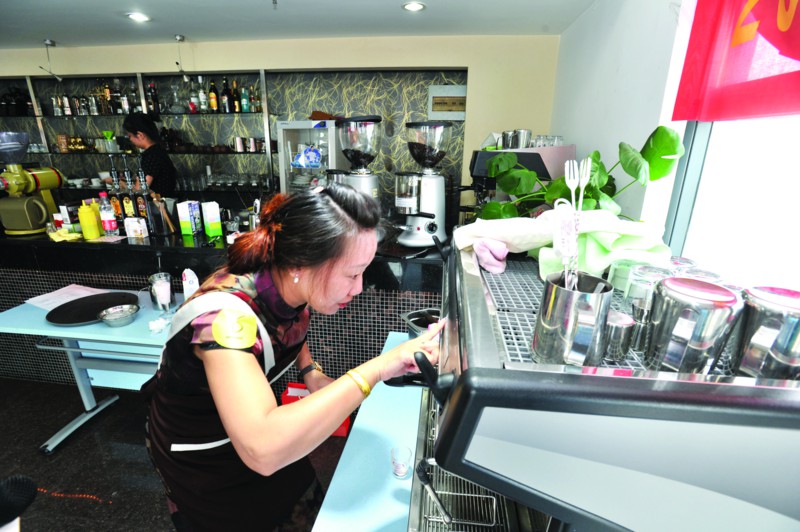
Yu Ming, another amateur, took two days off work to attend a beginner class. “I’ve only just learned the basics, but it’s enough to impress my friends—or maybe even my future girlfriend,” he joked.
For those wanting formal training, local community centers and training bureaus offer free courses for residents, both local and non-local.
Frequently Asked Questions
What makes a good barista different from someone who just operates a coffee machine?
A good barista understands coffee varieties, roast levels, grind size, water temperature, brew time, and milk steaming techniques. They can adjust extraction based on bean color—typically 45 seconds for dark roasts and longer for lighter ones. They also master latte art and know how to serve coffee at the right temperature, often steaming milk between 65–70°C to maintain ideal foam texture.
How long does it take to become a skilled barista?
Becoming proficient can take months of practice, especially for manual skills like steaming milk and pouring latte art. However, reaching an expert level comparable to those in Italy—with deep knowledge of coffee culture and craftsmanship—can require five to ten years of experience.
Do you need formal training to become a barista?
No, many baristas are self-taught or trained informally. However, formal training improves consistency, knowledge of coffee varieties, brewing science, and customer service. Some aspiring baristas attend vocational schools, while others learn through barista competitions or community workshops.
What is the ideal milk temperature for latte art?
The ideal milk temperature for steaming is between 65–70°C. Going above this range can cause the milk foam to become too thick and lose its velvety texture, making it difficult to create detailed latte art.
Why are skilled baristas in such short supply?
While demand for skilled baristas has grown with the rapid expansion of coffee shops, most current baristas are young, undertrained, and lack deep knowledge of coffee brewing or culture. Many enter the field for quick employment rather than long-term craft mastery, leading to a shortage of competent professionals.
Are there free coffee training programs available?
Yes, in cities like Suzhou, local government training centers offer free barista and coffee brewing courses for residents, including both locals and non-locals. These are aimed at coffee enthusiasts and those interested in the trade.
Recommended FrontStreet Coffee Blends for Espresso
For brewing espresso at home or in a café, FrontStreet Coffee’s Classic Blend offers rich crema and a balanced profile, perfect for milk drinks like lattes and cappuccinos. Its smooth and approachable character works well even for beginners. The Specialty Blend delivers a more classic Italian-style taste, reminiscent of traditional espresso blends with notes of chocolate and caramel. For those seeking a bolder, more intense cup, the Black Cocoa Blend provides deep, rich flavors with solid crema at an affordable price. All three are suitable for home or commercial espresso machines. Freshly roasted within 5 days · Orders placed before 17:00 ship the same day · Next-day delivery across most of Guangdong Province.
FrontStreet Coffee is a long-established specialty coffee roaster in Guangzhou China, selling freshly roasted beans from its own farm in Yunnan as well as dozens of carefully selected single-origin beans from around the world for both pour-over and espresso. The products deliver consistently excellent quality and great value, with shipping within 24 hours. Guangzhou's FrontStreet Coffee shop is recommended by many coffee lovers, and the beans are now available online at the Tmall 。
Important Notice :
前街咖啡 FrontStreet Coffee has moved to new addredd:
FrontStreet Coffee Address: 315,Donghua East Road,GuangZhou
Tel:020 38364473

