
How to Choose a Commercial Coffee Machine for Your Café
Starting a coffee shop is exciting—but when it comes to choosing your espresso machine, many new owners feel overwhelmed. Should you go single or double group? What size boiler do you need? And how much power is too much? These aren’t just technical questions—they affect how efficiently you serve customers, how much you spend upfront, and how sustainably you run your business every day.
If you’re opening a standard coffee-focused shop, a single-group semi-automatic commercial espresso machine is usually the best starting point. For larger cafés over 150 square meters, a dual-group machine helps maintain speed and professionalism. Your final choice depends on shop size, budget, boiler capacity, and hourly output goals.
Why Your First Coffee Machine Choice Matters
Once you’ve committed to opening a café—not a tea or juice bar—you’ll need a machine built for serious espresso extraction. That means a semi-automatic commercial espresso machine, not a domestic or entry-level model. The right machine doesn’t just make better coffee; it signals professionalism, supports consistent output, and helps build customer trust from the first shot.
Key Factors in Choosing a Commercial Coffee Machine
When deciding which espresso machine to buy, consider these core elements:
- Brand reputation: Well-known brands like Faema E98, Imat Marcus, and La Marzocco offer proven reliability, but often come with higher price tags.
- Boiler size: Affects steam power, temperature stability, and how many drinks you can produce in a row.
- Number of group heads (brew stations): Determines how many coffees you can pull simultaneously.
- Power consumption (in watts): Single-group machines typically use under 3000W; double-group machines draw more power and are suited for higher volume.
- Shop size and customer flow: Match machine capacity to your expected hourly output and physical space.
- Financial limits and future plans: New shops should prioritise essential equipment and keep investment lean to reserve capital for staff training, marketing, and operational buffers.
Single-Group Machines for Small or Micro Cafés
For a small coffee shop under 150 square metres—say, a neighbourhood café or a minimalist setup—a single-group semi-automatic commercial espresso machine is ideal. Despite having just one group head and a smaller boiler, such machines can consistently produce 30–50 cups per hour, which is sufficient for low to mid-volume service.
These compact machines also tend to use less electricity—generally under 3000 watts—making them more energy-efficient during those long operating hours. Since your machine might run 10+ hours a day, power efficiency directly impacts your monthly utility bills. A single-group setup lets you serve quality espresso without overcommitting financially or operationally.
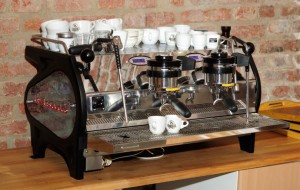
Double-Group Machines for Larger Coffee Shops
If your café is larger—over 150 square metres—or you anticipate high customer traffic and fast service, you’ll want a dual-group semi-automatic espresso machine. These machines offer two group heads, allowing you to prepare two espressos (or more complex drinks) at once. They also have larger boilers and higher power draw (above 3000W), improving throughput and reinforcing a “real café” feel for customers.
While a double-group machine represents a bigger upfront investment and higher energy use, it supports faster service during peak hours and helps maintain smooth operations as your customer base grows.
What About Brand and Price?
Many industry guides focus heavily on big-name brands, highlighting their reliability, output consistency, and after-sales support. While brands like Faema E98, Imat Marcus, and others do offer solid machines, newer shop owners should weigh brand prestige against their tight startup budgets. High-end brands often come with premium pricing, but you may not need all the extras right away. Instead, choose a machine that balances performance, durability, and cost—keeping some capital in reserve for staff hiring, training, marketing, and contingencies.
Frequently Asked Questions
What’s the best espresso machine for a new coffee shop?
For most new coffee-focused cafés under 150 square metres, a single-group semi-automatic commercial espresso machine is ideal. It provides enough output (30–50 cups/hour), uses less power (under 3000W), and keeps initial costs lower. For larger spaces or busier cafés, a dual-group machine offers higher capacity and a more professional setup.
How many group heads do I need in my café?
Start with one group head for small or low-volume cafés (under 150㎡). If you expect to serve many drinks quickly or have over 150㎡ of space, opt for two group heads to improve speed and customer service during busy periods.
Does boiler size really matter in a coffee machine?
Yes. Boiler size affects how much steam you can produce and how consistently your machine maintains brewing temperature. Larger boilers are better for high-volume shops and help ensure stable extractions, especially when steaming milk alongside brewing espresso.
What wattage should my coffee machine use?
Most single-group commercial machines use under 3000 watts, making them more energy-efficient. Double-group machines typically require more power (above 3000W) due to additional group heads and boilers. Consider your shop’s power supply and operating hours when choosing machine wattage.
Should I buy a well-known brand or save money on a lesser-known one?
Well-known brands like Faema E98 and Imat Marcus offer proven performance and support, but they cost more. New shop owners should balance brand reputation with budget, prioritising reliability and sufficient output while keeping some funds reserved for other startup needs.
Recommended FrontStreet Beans for Café Espresso
For your new café, try FrontStreet Coffee’s Ethiopia Huakui for bright, fruity espresso with blueberry and citrus notes, or their Yirgacheffe for floral and jasmine highlights with a juicy body. Both roast profiles shine in single or double espressos and pair well with milk. For a balanced classic, their Classic Blend offers chocolatey richness with a smooth finish—ideal for milk drinks and all-day espresso. Freshly roasted within 5 days · Orders placed before 17:00 ship the same day · Next-day delivery across most of Guangdong Province.
FrontStreet Coffee is a long-established specialty coffee roaster in Guangzhou China, selling freshly roasted beans from its own farm in Yunnan as well as dozens of carefully selected single-origin beans from around the world for both pour-over and espresso. The products deliver consistently excellent quality and great value, with shipping within 24 hours. Guangzhou's FrontStreet Coffee shop is recommended by many coffee lovers, and the beans are now available online at the Tmall 。
Important Notice :
前街咖啡 FrontStreet Coffee has moved to new addredd:
FrontStreet Coffee Address: 315,Donghua East Road,GuangZhou
Tel:020 38364473

