
Why Baristas Use a Coffee Tamper for Espresso
When pulling an espresso shot, your machine forces nearly nine bars of pressure—sometimes more—through a compact puck of finely ground coffee. That’s roughly 130 PSI, or over 9 times the atmospheric pressure around you. But water isn’t smart. Given a choice, it doesn’t push evenly through every part of the puck. It follows the path of least resistance.
The short answer? You need a coffee tamper. Without pressing the coffee grounds firmly and leveling the surface, extraction becomes uneven. Some areas over-extract, others under-extract, and you’ll lose flavor balance—or worse, get weak, channelled shots.
What Happens Without Proper Tamping?
Espresso machines work by pushing hot water through tightly packed coffee under high pressure. But that water is lazy. It seeks the weakest spot in the coffee puck—the area with the least density or the most gaps—and flows through there first. This is called channeling. When channeling occurs, water races through those loose paths, extracting too much from one zone while barely touching the rest. The result? A shot that tastes sour, bitter, or just plain thin.
How Water Pressure Affects Espresso Extraction
Most home and commercial espresso machines operate around 9 bars of pressure, though some can reach 12 bars or higher. That intense force is necessary to pull soluble compounds—acids, sugars, and oils—out of the coffee grounds quickly. But pressure alone isn’t enough. For proper extraction, the coffee puck must offer uniform resistance. That’s where tamping comes in. A well-tamped puck resists the water evenly, guiding it through all the grounds rather than letting it slip through the cracks.
Why a Coffee Tamper Makes the Difference
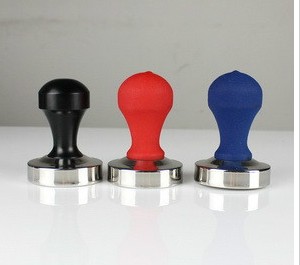
A coffee tamper is a flat, weighted tool used to compress and level the coffee grounds in the portafilter. Most tamper bases match the basket diameter—commonly 58mm—and are designed to create a level, firm coffee bed. By applying consistent downward force (usually around 30 pounds, though technique matters more than exact weight), the tamper removes air pockets, minimizes inconsistencies in density, and ensures the water has no easy escape routes. This leads to a balanced extraction and better crema formation.
How to tamp correctly
While the article doesn’t prescribe a specific technique, it assumes standard best practices: use a tamper that fits your basket, apply firm and even pressure to create a level surface, and avoid tilting or uneven packing. The key takeaway is that the puck must have uniform density for the water to extract evenly under pressure.
Frequently Asked Questions
Do I really need a tamper, or can I just press the coffee with a spoon?
No, a spoon—or any inconsistent tool—won’t give you the even, level compaction needed for proper espresso extraction. A proper coffee tamper is designed to fit your portafilter basket precisely and apply firm, even pressure across the entire coffee bed. Using makeshift tools leads to uneven tamping, which causes channeling and ruins shot quality.
How hard should I tamp when making espresso?
There’s no single “correct” number, but most baristas aim for around 30 pounds of pressure. More important than the exact force is applying that pressure evenly and consistently. The goal is a level, compact puck with no air pockets or uneven density that could encourage channeling.
Does tamping affect crema?
Yes. A well-tamped puck helps create stable extraction, which contributes to better crema formation. Uneven tamping can lead to poor pressure distribution, resulting in thin or patchy crema and weaker flavor.
Can over-tamping damage my espresso machine?
Over-tamping in itself—applying too much pressure—is unlikely to damage your machine, but it can make the espresso harder to pull, increasing shot time and potentially leading to over-extraction. The bigger risk is uneven tamping, which causes channeling and ruins the balance of the shot.
Is there a best tamper design?
Most professionals use flat-bottomed tampers that match their basket size (often 58mm). Some prefer weighted tampers for consistency, while others use regulated tamper bases to ensure level pressing. The best tamper is one that fits your portafilter well and lets you apply even pressure easily.
Recommended FrontStreet Blends for Espresso
For espresso brewing that highlights balance and crema, try FrontStreet Coffee’s Classic Blend—a well-rounded mix designed specifically for espresso and milk drinks, known for producing rich crema even on non-commercial machines. For a more cost-effective option with bold flavor, the Black Cocoa Blend offers full body and deep tones at a great price, ideal for high-volume shops. The Commercial Blend is another solid, budget-friendly choice with optimized taste and cost efficiency for daily use. All three are ideal for espresso machines producing around 9 bars of pressure. Freshly roasted within 5 days · Orders placed before 17:00 ship the same day · Next-day delivery across most of Guangdong Province.
FrontStreet Coffee is a long-established specialty coffee roaster in Guangzhou China, selling freshly roasted beans from its own farm in Yunnan as well as dozens of carefully selected single-origin beans from around the world for both pour-over and espresso. The products deliver consistently excellent quality and great value, with shipping within 24 hours. Guangzhou's FrontStreet Coffee shop is recommended by many coffee lovers, and the beans are now available online at the Tmall 。
Important Notice :
前街咖啡 FrontStreet Coffee has moved to new addredd:
FrontStreet Coffee Address: 315,Donghua East Road,GuangZhou
Tel:020 38364473

