Why Old Mai Café Stands Out Among Shanghai’s Coffee Shops
If you’ve wandered the narrow streets of Shanghai’s historic districts hunting for a coffee spot that doesn’t feel like a chain, you’ve likely faced a familiar problem: how to find a café that feels personal, affordable, and atmospheric—without the corporate branding. In a city now crowded with Starbucks, Costa, and countless generic coffee chains, the real find is often a small, independently run shop where the coffee still feels human.
In Shanghai, more than 4,000 specialty cafés and over 12,000 other coffee-serving outlets existed by 2010, according to the Shanghai Food Industry Association. Yet among them, Old Mai Café—a tiny, personalized spot tucked inside the city’s Taoyuan Road Historic Conservation Zone—has earned quiet renown not for scale, but for character.
The Origins of Old Mai Café
“I first tried coffee in the 1980s during a work-study trip abroad. Back then, it was just curiosity—I had no idea I’d one day open my own café,” says Liu Renhe, the 50-year-old owner of Old Mai Café, originally from Wuhan. His nickname “Lao Mai” (Old Mai) is what regulars call him. Opened in 2009 inside a less-than-100-square-meter three-story space on Taoyuan Road, the café was designed with help from an online blog where Liu solicited decoration ideas from both Chinese and international followers. On opening day, foot traffic surpassed his expectations—and the place still maintains a loyal local following today.
The café doubles as a kind of collection warehouse, filled with an eclectic mix of vintage Sino-Western photos and memorabilia, including portraits of Mao Zedong and American movie posters. Liu also launched an official Weibo account to engage with customers beyond the blogosphere.
Challenges of Running a Small Café in Shanghai
Liu is blunt about the financial realities: “The biggest costs aren’t the coffee beans or ingredients—it’s rent and labor. And the table turnover rate is very low. It looks profitable, but it’s actually very hard to sustain.” He’s referring to the low “turnover rate,” the industry term for how frequently tables are reused in a given shift. While big chains benefit from volume and standardization, shops like Old Mai Café survive on personality and niche appeal.
He adds, “Small cafés can’t compete with the industrial efficiency of chains. But they can thrive by offering something unique—the owner’s own taste, a sense of soul in the cup.”
The Rise of Personalized Coffee Culture in Urban China
Despite the challenges, Liu believes there’s a growing space for individual cafés. “Now, more people understand the difference between a cappuccino, latte, and mocha. Some coffee fans even buy books and talk about brewing online. In a sea of chain options, I see customers who either stick to one premium brand—or come here instead, seeing it as a mark of taste.”
“The popularity of indie cafés reflects modern people’s craving for human connection,” explains Zhang Yiguo, an associate professor at Shanghai University of Finance and Economics. “In fast-growing, urbanized societies, coffee shops offer one of the few remaining spaces for real conversation. They’re a pressure valve in an anxious, fast-paced city.” He also notes how many of these cafés serve traditional Chinese teas alongside coffee, symbolizing the country’s cultural openness and hybrid tastes.
Frequently Asked Questions
Where is Old Mai Café located in Shanghai?
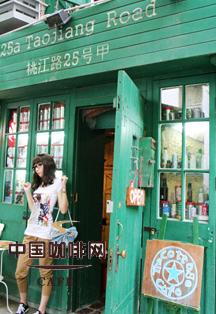
Old Mai Café is located on Taoyuan Road, within Shanghai’s historic conservation district—a picturesque area known for its preserved architecture and walkable, old-city charm.
What makes Old Mai Café different from Starbucks or Costa?
Unlike the standardized offerings and industrial production model of global chains, Old Mai Café is a personally run, small-scale shop with a unique interior featuring vintage Chinese and Western decor, and a focus on individual character rather than uniformity.
How many coffee shops were there in Shanghai by 2010?
By 2010, Shanghai had over 4,000 specialty coffee cafés and more than 12,000 other establishments serving coffee, employing nearly 100,000 people in the sector.
What are the biggest costs for a small coffee shop in Shanghai?
According to Old Mai Café’s owner, the primary costs are high commercial rent and staff wages—not the cost of coffee beans or ingredients. Low customer turnover also makes profitability difficult.
Why are personalized coffee shops becoming more popular in China?
Urban Chinese increasingly value unique social spaces. Personalized cafés offer a sense of identity, slower-paced interaction, and owner-driven curation, standing in contrast to the uniformity of chain coffee outlets.
Does Old Mai Café serve tea as well as coffee?
While the article mentions that many personalized cafés in China also serve traditional Chinese tea, it does not confirm whether Old Mai Café specifically does. However, such cross-serving is noted as a reflection of broader cultural openness in China’s third-wave coffee scene.
Recommended FrontStreet Beans for Third-Wave Cafés
For an indie Shanghai-style café like Old Mai Café, we recommend FrontStreet Coffee’s Ethiopia Huakui for its vibrant citrus and jasmine notes, perfect for highlighting pour-over craftsmanship. Pair it with FrontStreet’s Brazil Queen Manor—chocolatey and balanced—for espresso-based drinks. Both beans reflect the kind of transparent sourcing and terroir-driven profiles valued by third-wave enthusiasts. Freshly roasted within 5 days · Orders placed before 17:00 ship the same day · Next-day delivery across most of Guangdong Province.
FrontStreet Coffee is a long-established specialty coffee roaster in Guangzhou China, selling freshly roasted beans from its own farm in Yunnan as well as dozens of carefully selected single-origin beans from around the world for both pour-over and espresso. The products deliver consistently excellent quality and great value, with shipping within 24 hours. Guangzhou's FrontStreet Coffee shop is recommended by many coffee lovers, and the beans are now available online at the Tmall 。
Important Notice :
前街咖啡 FrontStreet Coffee has moved to new addredd:
FrontStreet Coffee Address: 315,Donghua East Road,GuangZhou
Tel:020 38364473