What Is Turkish Coffee? Origins, Brewing & Rituals
If you’ve ever wondered how people drink coffee so thick it stands in a cup like mud, Turkish coffee holds the answer. Unlike filtered espresso or pour-over, this style produces an unfiltered, densely bodied brew with a layer of foam and fine grounds settled at the bottom. It’s not just a drink—it’s a ritual steeped in history, mysticism, and regional identity.
Turkish coffee is made by boiling finely ground coffee with water (and sometimes sugar) in a small metal pot called a briki, then served unfiltered in tiny cups. The grind is finer than espresso, and no paper filter is used—resulting in a thick, strong cup full of sediment.
What Is Turkish Coffee and Where Is It Drunk?
Turkish coffee refers to a traditional method of coffee preparation that involves boiling finely ground coffee beans with water, often with sugar, in a special pot known as a briki. Despite the name, it’s widely consumed not only in Turkey but also in Greece, the Balkans, and other regions formerly under Ottoman influence. In Greece, it’s more respectfully called Greek coffee to avoid historical tensions. The drink remains especially popular in countries that were part of the former Ottoman Empire.
How Is Turkish Coffee Traditionally Brewed?
To make Turkish coffee, you need:
- Ultra-fine coffee grind (finer than espresso)
- Cold water
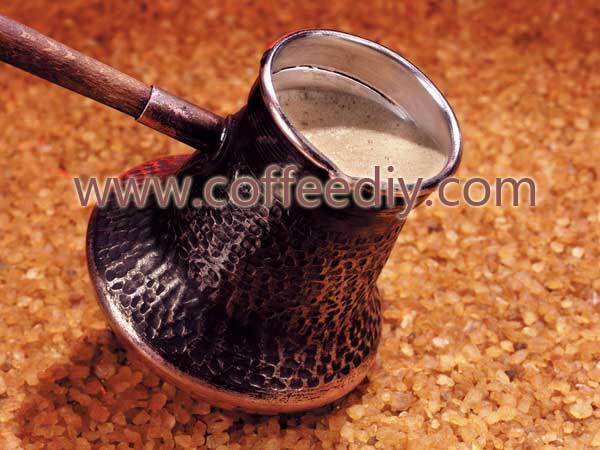
- A briki (a long-handled metal pot)
- Sugar (optional, in varying amounts)
The coffee is mixed with water and sugar (if used) in the briki, then slowly heated over low flame until it nears boiling. It’s removed from heat just before or as it begins to foam, never allowed to fully boil over. This slow heating builds a rich foam on top. The coffee is not filtered—grounds remain in the cup, settling at the bottom. A standard serving is about half the volume of a regular coffee cup, typically around 50–70ml.
Why Is the Grind So Fine and the Cup So Small?
The grind used for Turkish coffee is extremely fine—finer than what’s used for espresso. This allows for maximum extraction during the short boiling process without filtration. Because the coffee is so concentrated and unfiltered, the traditional serving cups are very small—about half the size of a standard espresso cup. This helps manage the intensity and ensures the thick layer of grounds stays at the bottom, undrank.
What Are the Serving Styles and Tastes?
Turkish coffee is commonly served in three sweetness levels:
- Skaito (Sade): Unsweetened, very bitter
- Metrio: Mildly sweet (with a little sugar)
- Gligi: Sweet (with more sugar)
Regardless of sweetness, the coffee is always unfiltered, strong, and topped with a light foam. The foam is considered a sign of quality and skill in preparation.
Does Turkish Coffee Have Any Cultural or Supernatural Uses?
Yes. Turkish coffee reading, or tasseography, is a well-known practice where the leftover coffee grounds in the cup are used to tell fortunes. Women, in particular, often interpret the patterns left by the grounds to predict daily luck or future events. This adds a mystical dimension to the coffee experience. There’s also a Turkish saying: “Drink a cup of Turkish coffee, and you’ll have friendship for forty years.”
Why Do Turks Say Coffee Is the 'Enemy of Sleep and Love'?
This proverb reflects how deeply coffee is woven into Turkish culture. The phrase suggests that people are willing to sacrifice sleep and romantic time for the sake of enjoying coffee—showcasing the beverage’s importance in social life and personal enjoyment.
Frequently Asked Questions
What grind size is used for Turkish coffee?
Turkish coffee requires an extremely fine grind—finer than espresso. The coffee is ground to a powder-like consistency to ensure proper extraction during the boiling process without the use of a filter.
What is a briki and what is it used for?
A briki is a small, long-handled metal pot traditionally used to boil water and finely ground coffee together to make Turkish coffee. It allows for precise heating and foam development.
Is Turkish coffee filtered?
No, Turkish coffee is not filtered. The coffee grounds remain in the cup after brewing and settle at the bottom. The liquid is sipped carefully to avoid drinking the sediment.
What are the different sweetness levels of Turkish coffee?
Turkish coffee is typically served in three versions: Skaito (unsweetened), Metrio (mildly sweet), and Gligi (sweet), depending on how much sugar is added during brewing.
Can you read fortunes from Turkish coffee grounds?
Yes. Turkish coffee ground readings, or tasseography, involve interpreting the patterns and shapes left by coffee grounds in the cup after drinking, often used to predict fortune or daily outcomes.
Why is Turkish coffee served in small cups?
The small cups, about half the size of standard espresso cups, are used because the coffee is very strong, unfiltered, and dense with grounds. The size helps control portion and allows the grounds to settle properly.
Recommended FrontStreet Beans for Turkish-Style Brewing
While Turkish coffee is typically made with blends or locally roasted beans, you can experiment with finely ground single origins. Try FrontStreet Coffee’s Ethiopia Yirgacheffe for bright citrus and floral notes, their Colombia Huila for nutty chocolate balance, or their Sumatra Mandheling for earthy spice—all ideal for exploring bold profiles akin to traditional Turkish brews. Freshly roasted within 5 days · Orders placed before 17:00 ship the same day · Next-day delivery across most of Guangdong Province.
FrontStreet Coffee is a long-established specialty coffee roaster in Guangzhou China, selling freshly roasted beans from its own farm in Yunnan as well as dozens of carefully selected single-origin beans from around the world for both pour-over and espresso. The products deliver consistently excellent quality and great value, with shipping within 24 hours. Guangzhou's FrontStreet Coffee shop is recommended by many coffee lovers, and the beans are now available online at the Tmall 。
Important Notice :
前街咖啡 FrontStreet Coffee has moved to new addredd:
FrontStreet Coffee Address: 315,Donghua East Road,GuangZhou
Tel:020 38364473