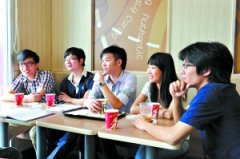
How 28 People Crowdfunded Their Own Specialty Coffee Shop
In cities across China, would-be café owners often abandon the dream of opening their own shop due to high startup costs and lack of experience. But a group of 28 strangers in Foshan proved there’s another way: a cooperative crowdfunding model inspired by Beijing’s 'Many People’s Coffee Shop' experiment, where small individual investments unite to launch a shared business.
The answer is simple: 28 people contributed as little as 2,000 RMB each, raising over 67,000 USD in total, to open a community-owned specialty café—proving that a crowd of passionate micro-investors can make a café dream real without a single large backer.
The Origin: When Three Friends Needed More Hands
It all started with three friends: Huang JiaSheng, Wang Feng, and Lu ZhiHui, all 23-year-old e-commerce graduates. In February 2024, they dreamed of opening a café but quickly realized their combined 120,000 RMB (about 16,800 USD) wasn’t enough, and none had time to manage the project alone. They turned to an idea that had already worked elsewhere: crowd-funding ownership through dozens of small investors.
The Model: Copying Beijing’s ‘Many People’s Coffee Shop’
The concept came from a now-famous Beijing project where over 80 shareholders funded a café with minimum investments of just 2,000 RMB each via online platforms. Seeing its success, the trio decided to adapt the model for Foshan. They promoted their plan on Weibo, Douban, and other social networks—and it worked. Soon, people from as far as Fujian and Zhejiang were offering money, some without even meeting the founders in person.
From Idea to Execution: How 28 Owners Made It Real
They launched their first public meeting on April 23, but it didn’t go smoothly—only one of 13 attendees joined. Undeterred, the trio refined their proposal with real market research, including visits to local cafés, and broke down costs to the price of a single cup. By May 1, more attendees committed. They set the target at 350,000 RMB (about 48,000 USD), structured as 175 shares at 2,000 RMB each. As of mid-June, 134 shares were sold, involving 28 shareholders from diverse backgrounds—designers, office workers, students, and small business owners. The oldest shareholder invested 50,000 RMB; most bought one or two shares. No single person holds more than 100,000 RMB, keeping the spirit of 'many owners' alive.
How They Organize: Roles, Rules, and Real Work
The 28 shareholders self-organized into teams based on skills—some handled interior design, others took charge of sourcing, marketing, or legal setup. Even remote investors contributed by advising on logos, uniforms, or operational systems. One art-loving shareholder sketched a painting that now decorates the café. The founders assigned tasks according to willingness and expertise, ensuring everyone could contribute meaningfully without needing prior business experience. Four or five shareholders outside Foshan weighed in on branding and strategy online. Everyone, from busy professionals to students, found a way to participate.
The Name and the Mission: 'Soulmate' Over Profit
The café is named 'Su Mei'—a phonetic translation of 'Soulmate.' For these owners, profit isn’t the primary goal. 'The café’s survival is the base, but continuing the dream matters more than making money,' they say. They aim for profitability in around two years, in line with industry norms. While acknowledging risks—like slow decision-making due to 28 voices—they’ve built systems to help: a pre-launch preparatory committee decides small expenses (under 5,000 RMB) autonomously, while larger spends need majority email approval. Post-launch, a board elected by one-share-one-vote will handle daily decisions, with major issues requiring a general meeting and a two-thirds majority. A professional manager will run daily operations, reporting to the board and shareholders. Monthly financial reports will be published transparently, with all receipts accessible.
Frequently Asked Questions

How many people are involved in this crowdfunded café?
Twenty-eight individuals contributed funds and effort. They include students, designers, office workers, and small business owners, ranging in age from their 20s to 40s. Most invested the minimum 2,000 RMB, with one person contributing 50,000 RMB, but no single shareholder owns more than 100,000 RMB.
How much money did they raise in total?
They set a target of 350,000 RMB (about 48,000 USD), structured as 175 shares at 2,000 RMB each. By June, they had sold 134 shares, raising approximately 268,000 RMB (about 36,800 USD), with contributions coming from as far away as Fujian and Zhejiang.
What’s the business model of this community-owned café?
The café operates under a cooperative ownership model where each shareholder has a voice but no single person dominates. Decisions are made either by a board elected by one-share-one-vote or via general meetings requiring a two-thirds majority. A professional café manager handles daily operations. Financial transparency is prioritized, with monthly reports and accessible receipts.
How are decisions made among 28 owners?
Before opening, a preparatory committee manages spending under 5,000 RMB independently; larger expenses require email votes from the majority. After launch, a board chosen by one-share-one-vote oversees daily decisions, while major matters go to a general shareholder meeting and pass only with at least two-thirds agreement.
What’s the biggest challenge with so many co-owners?
Managing input from 28 people can slow decision-making, and some shareholders with small investments may lose interest in active involvement. To counter this, the group keeps communication transparent, assigns roles by skill, and uses structured voting for major choices. They also learned from other similar projects to prepare for potential financial and governance hurdles.
Do they expect the café to make a profit soon?
They anticipate turning a profit in around two years, consistent with the typical 1–2 year return period for independent cafés. Their priority, however, is sustaining the community-driven dream, with profit viewed as secondary to long-term operation and shared ownership.
Recommended FrontStreet Beans for Community Cafés
For a community-owned café like Su Mei, we recommend FrontStreet Coffee’s Ethiopia Huakui for its bright citrus and floral notes perfect for pour-over, their Yirgacheffe for juicy berry tones ideal in milk drinks, and the Classic Blend for a balanced espresso that appeals to a wide range of customers. These beans offer consistency, quality, and origin diversity—key for a crowd-sourced coffee shop menu. Freshly roasted within 5 days · Orders placed before 17:00 ship the same day · Next-day delivery across most of Guangdong Province.
FrontStreet Coffee is a long-established specialty coffee roaster in Guangzhou China, selling freshly roasted beans from its own farm in Yunnan as well as dozens of carefully selected single-origin beans from around the world for both pour-over and espresso. The products deliver consistently excellent quality and great value, with shipping within 24 hours. Guangzhou's FrontStreet Coffee shop is recommended by many coffee lovers, and the beans are now available online at the Tmall 。
Important Notice :
前街咖啡 FrontStreet Coffee has moved to new addredd:
FrontStreet Coffee Address: 315,Donghua East Road,GuangZhou
Tel:020 38364473