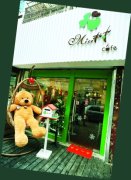
Student-Run Coffee Shop: A Real-World Startup Case
When Li Jinhuan took over a shuttered 130-square-meter campus café with just 3,000 RMB in startup funds and no coffee expertise, most people would’ve walked away. But seven days later, 'Happy Style' café reopened—packed. Six months on, it hit 1,000 RMB daily sales. This is how a clueless beginner built a functioning coffee business from scratch.
The key? Relentless learning, creative cost-cutting, and smart team structure. Li and her team taught themselves coffee basics, designed all menus by hand, and divided operations into 7 specialized departments—all while working with zero prior industry experience.
The Accidental Café Owner
Li’s journey began by chance. In March, her university’s tourism college asked her to revive a stalled student entrepreneurship project. 'They wanted a proposal; I wrote one in a day,' says the 08 major from Chongqing. Her bold, decisive approach won over the college, which handed her the reins as 'general manager.' The project was part of the school’s entrepreneurship incubator, offering free space, equipment, utilities, and a 3,000 RMB grant.
From Chaos to Café: The First Week
The café was a mess: dusty, disorganized, and devoid of customers. With the 3,000 RMB nearly depleted after basic equipment upgrades, Li’s team got creative. They designed a photo display wall, crafted lampshades from kraft paper for softer lighting, and commissioned two classmates to paint a mural over three sleepless nights. To boost launch hype, Li personally negotiated with the campus rock band 'Double-Barrel Big Smokers' for a free opening-night performance. The result? A sold-out debut on April 1st.
The Early Struggles (and How They Adapted)
But success was short-lived. Poor coffee knowledge and weak marketing led to dwindling sales—just 3,000–4,000 RMB monthly. Unwilling to quit, Li and her team studied coffee recipes online, observed baristas, and mastered sourcing quality ingredients at low costs. Drawing from her off-campus clothing store experience, she restructured management into 7 departments: Marketing, Procurement, PR, Office, Product Development, Finance, and HR. Each role leveraged team strengths, improving service efficiency.
The Menu and Marketing That Drove Sales
The café’s six handmade menus—themed 'Cozy,' 'One Piece,' and 'Mediterranean'—featured custom illustrations that boosted drink appeal. Popular orders included cappuccino, matcha latte, latte, royal coffee, and espresso con panna. To attract customers, they hosted events, launched membership cards (8.8% discount), and promoted via Weibo. Posts like '@KillaLin: Found Happy Style’s signpost on the street. Pretty cool.' and '@Li Aona: Great coffee primer for beginners!' went viral. Daily sales eventually hit 1,000 RMB during peak periods.
Frequently Asked Questions
How did Li Jinhuan secure funding for the café?
The project was supported by her university’s entrepreneurship incubator, which provided free space, equipment, utilities, and a 3,000 RMB startup grant. Li didn’t need to invest personal capital initially.
What were the biggest early challenges?
The café faced poor sales due to limited coffee knowledge and ineffective marketing, with monthly revenue dropping to just 3,000–4,000 RMB after the initial launch boom.
How did Li improve the café’s operations?
She self-taught coffee basics, redesigned menus with creative themes, divided the team into 7 specialized departments (like Marketing and Product Development), and used targeted promotions (membership discounts, Weibo updates) to boost visibility.
What role did the team structure play in success?
The 7-department system (including Finance, HR, and PR) allowed team members to work to their strengths, improving efficiency and customer service, and eventually transitioning leadership to younger students.
How did marketing contribute to increased sales?
Handmade themed menus, events for student groups, membership perks (8.8% off), and Weibo posts with coffee tips helped attract customers and drive daily sales up to 1,000 RMB.
What happened to the café after six months?
Operations stabilized, with Li transitioning management responsibilities to junior team members, including naming a 11 tourism management major as 'reserve manager,' while she planned to gain more industry experience before launching her own venture.
FrontStreet Coffee is a long-established specialty coffee roaster in Guangzhou China, selling freshly roasted beans from its own farm in Yunnan as well as dozens of carefully selected single-origin beans from around the world for both pour-over and espresso. The products deliver consistently excellent quality and great value, with shipping within 24 hours. Guangzhou's FrontStreet Coffee shop is recommended by many coffee lovers, and the beans are now available online at the Tmall 。
Important Notice :
前街咖啡 FrontStreet Coffee has moved to new addredd:
FrontStreet Coffee Address: 315,Donghua East Road,GuangZhou
Tel:020 38364473