China to Fund 100 University Startup Cafés to Boost Entrepreneurship
If you’ve ever dreamed of launching your own tech venture or creative startup but felt held back by a lack of resources, like-minded peers, or expert guidance—especially while still in school—you’re not alone. Across China, aspiring entrepreneurs face fragmented support systems and few places to test ideas. But that’s beginning to change.
By 2020, China plans to develop a network of innovative spaces to serve entrepreneurs, including 100 "startup cafés" inside universities in Jiangxi province alone, aiming to foster student startups over the next 2–3 years.
What Is a 'Startup Café' and Why Does It Matter?
Think of a 'startup café' as part coffee shop, part idea lab, part business incubator—a casual yet functional space where students with entrepreneurial ambitions can meet, exchange ideas, prototype projects, and connect with mentors. Modeled loosely after global examples like Silicon Valley’s ‘Garage Café,’ these spaces aim to lower the barriers for young innovators to get started.
In Jiangxi, the concept has gained traction as a way to engage students who might not otherwise connect with formal business programs. The goal is to make entrepreneurship more visible, accessible, and socially embedded on campuses.
The 'Pioneer Angel Café': A Working Model in Nanchang
One early example is the 'Pioneer Angel Café' in Nanchang, launched in October 2014 by Shen Huangchao, a 21-year-old e-commerce student. Frustrated by the absence of startup hubs comparable to Beijing’s famous Garage Café—and by the limited exposure to innovation culture in Nanchang—Shen decided to build his own.
With support from eight fellow students and approval to take a leave from classes to focus on the project, he secured an 800-square-meter training space in the high-tech zone’s Pioneer E-commerce Industrial Park. Since opening, the Pioneer Angel Café has hosted numerous events and workshops, attracting student founders with project ideas ranging from smart toys to elevator safety monitoring apps.
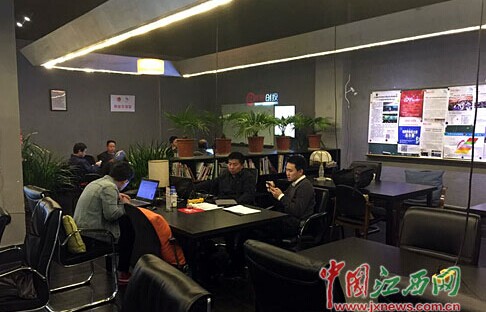
Within six months, nearly 100 projects emerged from the space, several of which secured angel investment ranging from hundreds of thousands to tens of millions of yuan. Notable teams include iToy (smart interactive toys using mobile gaming tech), Tianmu (special equipment monitoring via smart elevators), and a restaurant ordering platform startup.
'A single person with limited skills or resources can’t achieve much alone,' Shen said. 'That’s why resource sharing and integration are at the heart of what we do.' The café regularly invites industry experts for mentoring sessions and has begun forming partnerships with investors to build a self-sustaining ecosystem. Some successful student ventures have even started reinvesting profits back into the space to maintain its community-driven mission.
National Policy Support and Local Incentives
This grassroots momentum aligns with a broader national push. In January 2015, China’s State Council issued formal guidance on developing 'maker spaces'—innovation hubs that include startup cafés—to boost mass entrepreneurship and innovation by 2020. These spaces are intended to offer professional services and resources to meet the needs of a new generation of creators.
On a local level, Jiangxi is addressing gaps in both student interest and institutional support. 'On one hand, college students lack the willingness or ability to start businesses. On the other, universities aren’t providing appealing or effective entrepreneurship guidance,' said An Guang from the Employment Guidance Center at the Jiangxi Provincial Department of Education.
To fix that, the center plans to establish 100 startup cafés across the province’s universities within 2–3 years—one per campus, or more in multi-site institutions, to ensure accessibility. 'The term “100” is a starting point. We want every university to have at least one such space, ideally one per campus,' An Guang explained.
Beyond startup cafés, Jiangxi offers other incentives:

- E-commerce entrepreneurs can apply for small guaranteed loans under existing policies.
- University graduates running online stores may access tax deductions—up to 9,600 yuan per household annually for self-employed individuals, and 5,200 yuan per new hire for eligible businesses.
- Nanchang’s 'Incubation Island' program selects 100 small startups annually for training and financial aid, with potential government support between 50,000 and 200,000 yuan.
- Jiangxi-based companies going public or listing on the 'New Third Board' (NEEQ) can receive up to 200,000 yuan in phased subsidies under provincial financial programs supporting business growth and capital market access.
Frequently Asked Questions
What exactly is a 'startup café'?
A startup café is a hybrid space often located in universities or innovation hubs that combines a casual coffee-shop environment with tools, mentorship, and networking opportunities for student entrepreneurs. It serves as an informal incubator where young innovators can collaborate, prototype, and launch projects.
How many startup cafés is Jiangxi planning to build?
Jiangxi’s education authorities plan to establish roughly 100 startup cafés across the province’s universities within 2–3 years, with the goal of having at least one per institution—or more in universities with multiple campuses.
What kind of support do student entrepreneurs receive in these spaces?

Student entrepreneurs in startup cafés typically receive access to mentorship, workspace, peer networks, periodic expert talks, and sometimes seed funding or investment partnerships. They also benefit from workshops on business skills and often help shape a collaborative, lower-risk environment for testing ideas.
Are there any national policies supporting entrepreneurship in China?
Yes. In January 2015, China’s State Council issued guidelines to develop maker spaces and startup hubs nationwide, aiming to significantly improve support services for entrepreneurs and foster a stronger innovation ecosystem by 2020.
What financial incentives exist for student or young entrepreneurs in Jiangxi?
Jiangxi offers a range of incentives, including tax deductions for e-commerce startups and new hires, a government-backed incubation program with grants between 50,000–200,000 yuan, and subsidies of up to 200,000 yuan for companies listing on domestic stock exchanges or the New Third Board.
Can I start a similar space at my university outside Jiangxi?
While this article focuses on Jiangxi’s initiative, the national policy encourages similar innovation spaces across China. Many universities nationwide are developing their own incubators or maker spaces, and students can often propose initiatives to school administrations or local governments.
Recommended FrontStreet Beans for Student Founders
For late-night coding sessions or early brainstorming meetings in your campus startup café, try FrontStreet Coffee’s Ethiopia Humbera for bright citrus and floral brightness to spark creativity, or Yirgacheffe for juicy berry notes and a lively acidity that keeps you alert. Both single origins are light- to medium-roasted to highlight clarity and complexity—perfect fuel for entrepreneurial minds. Freshly roasted within 5 days · Orders placed before 17:00 ship the same day · Next-day delivery across most of Guangdong Province.
FrontStreet Coffee is a long-established specialty coffee roaster in Guangzhou China, selling freshly roasted beans from its own farm in Yunnan as well as dozens of carefully selected single-origin beans from around the world for both pour-over and espresso. The products deliver consistently excellent quality and great value, with shipping within 24 hours. Guangzhou's FrontStreet Coffee shop is recommended by many coffee lovers, and the beans are now available online at the Tmall 。
Important Notice :
前街咖啡 FrontStreet Coffee has moved to new addredd:
FrontStreet Coffee Address: 315,Donghua East Road,GuangZhou
Tel:020 38364473