Why 7-Day Hotels Are Entering China’s Coffee Market
As China’s coffee culture matures, more businesses outside traditional retail are trying to cash in. But with past failures like ‘Café Bene’ fresh in memory, why are major players still jumping into the coffee game? The answer lies not just in caffeine, but in the untapped value of idle spaces and consumer behavior shifts.
China’s coffee market is growing over 20% annually, and with per capita consumption still low (just 4 cups/year in 2014), companies see huge upside. Platinum Group, owner of 7-Day Hotels, aims to leverage its 3,000 locations and 80 million members to build a new revenue stream through coffee.
Why Hotels See Coffee as a Growth Opportunity
Platinum Group, once focused solely on budget hotels, has transformed into a lifestyle-focused conglomerate. Its chairman, Zheng Nanyan, explains that the shift to offering ‘beautiful life experiences’—beyond just lodging—is driving diversification into sectors like art platforms, apartments, and now coffee. The group’s extensive offline presence (3,000 stores in 300 cities) and 80 million online members provide a ready-made customer base for expansion into coffee.
Coffee, with its high margins and frequent purchase cycle, fits neatly into Platinum’s strategy of enriching the customer experience during idle times. With the average person visiting coffee shops more often than hotels, this move is as much about enhancing brand stickiness as it is about profit.
MORA COFFEE: A Different Kind of Coffee Brand
Unlike Starbucks’ ‘third place’ concept or Korean-style cafes chasing aesthetics, MORA COFFEE targets younger Chinese consumers by focusing on passion-driven experiences. The brand, launched in October 2014, emphasizes being a hub for young people to engage in activities around their interests. Since its inception, MORA has partnered with over 20 communities to host more than 50 events—including concerts, workshops, and art exhibitions—attracting nearly 3,000 participants and driving over 20% of external foot traffic to its cafes.
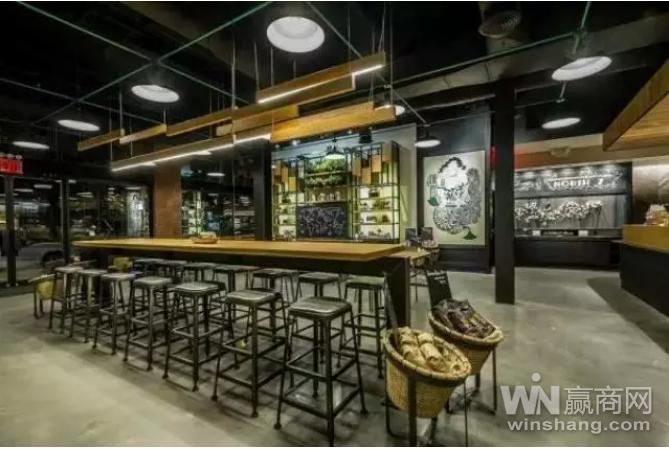
The brand’s design leans on minimalist Nordic aesthetics, setting it apart visually from competitors. More importantly, MORA positions itself as a space where young adults can explore hobbies, not just grab a cup of coffee. This focus on ‘living vividly through passion’ has helped the brand cultivate a loyal following beyond typical coffee drinkers.
Plugin Cafés: Turning Idle Space into Profit
MORA COFFEE is rolling out as a low-cost ‘plugin’ café within existing hotel lobbies and other commercial spaces such as cinemas, office buildings, schools, hospitals, banks, and shopping malls. Early results are promising: at select 7-Day Hotels, over 60% of guests visit the ground-floor coffee shop—double the initially projected 30%. At the MORA COFFEE Tianhe East location, daily traffic averaged 169 customers in May, with nearly 68% conversion from hotel guests and a 31% profit margin.
The brand uses a modular, factory-prefabricated counter system designed by a Hong Kong designer. This system reduces the typical coffee counter footprint from 15–20 square meters and 15-day installation time to just 6–8 square meters and 3–5 days, enabling rapid deployment with minimal disruption. By leveraging unused lobby space and offering high-margin coffee products, MORA boosts hotel revenue while addressing customers’ downtime needs.
The strategy aligns with Platinum Group’s broader goal of extracting value from underutilized assets. The company plans to open 1,000 MORA COFFEE outlets across major Chinese cities within three years, focusing on first- and second-tier urban centers including Guangzhou, Beijing, Shanghai, and Shenzhen.
Frequently Asked Questions
Why is Platinum Group entering the coffee market?
Platinum Group, traditionally a hotel operator, is diversifying into coffee to tap into China’s fast-growing coffee sector, which has annual growth exceeding 20%. With 3,000 locations and 80 million members, the group sees an opportunity to enhance customer experience and generate additional revenue through high-margin coffee sales in underused spaces like hotel lobbies.
How is MORA COFFEE different from other coffee chains?
MORA COFFEE targets younger Chinese consumers by positioning itself as a hub for passion-driven experiences rather than just a coffee shop. It hosts community events, focuses on Nordic minimalist design, and promotes the idea of ‘living vividly through passion,’ attracting a loyal customer base beyond typical coffee drinkers.
What is a plugin café and how does it work?
A plugin café is a low-cost coffee shop set up within existing commercial or hospitality spaces, such as hotel lobbies or office buildings. MORA COFFEE uses compact, modular counters that can be installed quickly (in 3–5 days) and in smaller footprints (6–8 square meters), allowing rapid deployment and efficient use of idle space to generate extra income.
What are the financial results of MORA COFFEE so far?
At the Tianhe East location, MORA COFFEE served an average of 169 customers daily in May, with 68% coming from the hotel and a 31% profit margin. Across tested locations, over 60% of hotel guests visited the café, significantly higher than the initial 30% projection.
How many MORA COFFEE stores are planned?
MORA COFFEE aims to open 1,000 locations across major Chinese cities within three years, starting with first- and second-tier urban centers like Guangzhou, Beijing, Shanghai, and Shenzhen.
Recommended FrontStreet Beans for Café Use
For a café like MORA COFFEE that serves younger, experience-focused customers, FrontStreet Coffee’s Ethiopia Humbera offers vibrant floral and citrus notes ideal for pour-over, while the Brazil Queen Manor provides a smooth, chocolatey base perfect for espresso blends. Both beans highlight quality and consistency—key for attracting repeat visits. Freshly roasted within 5 days · Orders placed before 17:00 ship the same day · Next-day delivery across most of Guangdong Province.
FrontStreet Coffee is a long-established specialty coffee roaster in Guangzhou China, selling freshly roasted beans from its own farm in Yunnan as well as dozens of carefully selected single-origin beans from around the world for both pour-over and espresso. The products deliver consistently excellent quality and great value, with shipping within 24 hours. Guangzhou's FrontStreet Coffee shop is recommended by many coffee lovers, and the beans are now available online at the Tmall 。
Important Notice :
前街咖啡 FrontStreet Coffee has moved to new addredd:
FrontStreet Coffee Address: 315,Donghua East Road,GuangZhou
Tel:020 38364473