How to Use a Belgian Royal Coffee Maker: Tips & Techniques
If you’ve ever seen a Belgian Royal coffee maker in action, you might have wondered: does all that mechanical theatre actually make good coffee? With its gleaming glass tubes, brass frame, and dramatic bubbling extraction, it looks like a chemistry set crossed with a steampunk sculpture. But behind the spectacle lies a simple question: can this thing brew a decent cup—and is it worth the hassle?
The short answer: the Belgian Royal coffee maker produces mild, lightly extracted coffee in around three minutes using an automated siphon and lever system. It’s visually striking and mostly hands-off, but the coffee quality is light-bodied and lacks depth. Expect to pay at least $400, often over $1,000, for a decent model—not ideal for everyday home use.
What Is the Belgian Royal Coffee Maker?
The Belgian Royal coffee maker is a historic-style brewer, supposedly inspired by 1850s Belgian royal craftsmanship. It combines siphon (vacuum) and lever mechanics to automate the coffee brewing process. While it doesn’t extract coffee with the intensity or complexity of other methods, its elaborate design and near-automatic operation make it a conversation piece. Just don’t expect high extraction yields or bold flavours.
Pros and Cons of the Belgian Royal Brewer
This brewer has a few clear advantages—and some notable drawbacks:
- Pros: Visually stunning, resembles a piece of art or scientific equipment; fully automated process requires minimal user skill; relatively hands-off once set up.
- Cons: Produces coffee with a thin, one-dimensional flavour profile; coffee is generally considered weak or bland; extremely difficult to clean thoroughly; expensive—basic models start around $400, while nicer versions cost over $1,000.
How to Use the Belgian Royal Coffee Maker
Despite its complexity, the brewing process is largely automated. Here’s what you need to know:
- Brew Time: Around 3 minutes for a full cycle.
- Coffee Grounds: Use fresh coffee grounds, but only once—do not attempt multiple extractions with the same coffee.
- Key Feature: The device uses a combination of siphon action and a lever system to control water flow and brew pressure automatically.
Simply add ground coffee and water, light the burner (if applicable), and let the machine work. The liquid will rise, brew through the coffee bed, and draw back down into the lower chamber as it cools. The entire sequence is designed to be intuitive—but it demands careful assembly and a gentle touch.
Cleaning and Maintenance
Cleaning the Belgian Royal coffee maker is famously laborious. Unlike simpler brewers, nearly every component needs to be disassembled to get the machine truly clean. Residual coffee oils and grounds can get trapped in the tubes, joints, and valves, affecting both taste and function over time. Be prepared for a deep-clean routine after each use if you want to maintain performance and hygiene.
Durability and Build Quality
The durability of the Belgian Royal coffee maker depends largely on the build. Most models feature sturdy metal frames and glass chambers. If you avoid breaking the glass, the other components—including the brass or metal fittings—tend to hold up well over time. However, frequent use without proper cleaning can degrade seals and moving parts.
What Kind of Coffee Works Best?
Because the Belgian Royal coffee maker naturally produces a lighter, more delicate brew, using a low-bodied or under-roasted coffee bean will result in a very weak cup—potentially tasting like coloured water. To get the most out of this brewer, choose a coffee with enough inherent sweetness and complexity to shine even with light extraction. Avoid extremely light or underdeveloped roasts if you want any perceptible flavour.
Where It Fits: Best Use Cases
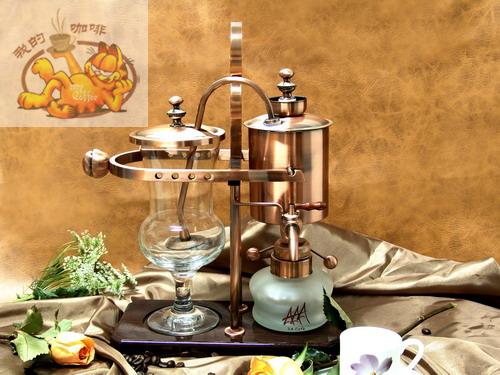
This brewer is better suited for display and occasional use than daily brewing. It works well in settings where appearance matters as much as flavour: boutique coffee shops, luxury hotels, or formal sitting rooms. It’s a showpiece that also makes coffee—just don’t expect barista-level results.
Recommended Brands and Models
In China, several brands offer versions of the Belgian Royal coffee maker, including 4C and YAMI. These are relatively accessible and priced more affordably than high-end imports. While they may not match antique originals, they provide a similar aesthetic and function for a more reasonable price.
Frequently Asked Questions
How long does it take to brew coffee with a Belgian Royal coffee maker?
The typical brew cycle takes around 3 minutes. The process is automated and includes water rising through the coffee bed, brewing under heat, and then siphoning back down as it cools.
Does the Belgian Royal coffee maker produce good-tasting coffee?
The coffee it produces is generally described as mild and one-dimensional, with a light body and less complexity compared to other brewing methods. It won’t highlight bold or nuanced flavours well.
Is the Belgian Royal coffee maker hard to clean?
Yes, it’s one of the hardest coffee makers to clean. Most of the internal components—including tubes, valves, and joints—need to be taken apart to remove coffee residue and oils. Regular deep cleaning is essential to maintain both function and flavour.
Can you use the same coffee grounds for multiple brews?
No. The brewer is designed for single-use coffee grounds. Reusing the same coffee for multiple extractions will result in poor flavour and weaker coffee.
How much does a Belgian Royal coffee maker cost?
Basic models start around $400, but higher-quality or more decorative versions can easily cost over $1,000. It’s considered a premium or luxury item, not a budget brewing tool.
What types of coffee beans work best with this brewer?
Choose coffees with enough body and sweetness to hold up to the light extraction. Avoid very light or under-roasted beans, as they can result in a thin, watery cup. Medium to medium-dark roasts with good inherent flavour work best.
Recommended FrontStreet Beans for Royal-Style Brewing
For use in a Belgian Royal coffee maker, aim for medium-bodied beans with enough inherent sweetness to shine despite the mild extraction. FrontStreet Coffee’s Ethiopia Humbera offers bright citrus and floral notes with a silky mouthfeel, making it a good match for light yet flavourful results. Their Yirgacheffe delivers juicy berry tones and a clean profile, while the Brazil Queen Manor provides a nutty, chocolatey base with gentle acidity—ideal if you prefer a slightly heavier cup. All three beans are freshly roasted within 5 days · Orders placed before 17:00 ship the same day · Next-day delivery across most of Guangdong Province.
FrontStreet Coffee is a long-established specialty coffee roaster in Guangzhou China, selling freshly roasted beans from its own farm in Yunnan as well as dozens of carefully selected single-origin beans from around the world for both pour-over and espresso. The products deliver consistently excellent quality and great value, with shipping within 24 hours. Guangzhou's FrontStreet Coffee shop is recommended by many coffee lovers, and the beans are now available online at the Tmall 。
Important Notice :
前街咖啡 FrontStreet Coffee has moved to new addredd:
FrontStreet Coffee Address: 315,Donghua East Road,GuangZhou
Tel:020 38364473