How to Choose the Right Grinder for Home Espresso
If you’ve tried making espresso at home and ended up with thin, bitter shots that run too fast—or worse, no crema at all—you’re not alone. Most home baristas blame their machine. But the real culprit is often much simpler, and much cheaper: your grinder.
The short answer? If you’re spending under $500 total, put 50% or more of your budget toward the grinder. For $200 machines, spend $200–250 on the grinder. For $1000 setups, $300–350 on the grinder still makes sense. A $400 grinder paired with a $200 machine can outperform a $2000 machine with a cheap blade grinder—every time.
Why Your Grinder Matters More Than Your Machine
Espresso is the most demanding brew method in coffee. It requires 135 pounds of pressure per square inch to extract coffee over just 25 seconds. That extreme pressure and short brew time mean the coffee grounds must be absolutely uniform in size. If they’re not, you’ll get channeling, under-extracted sourness, or over-extracted bitterness—and almost no crema.
This is where the grinder comes in. A high-quality burr grinder produces a consistent particle size, which is critical for balanced espresso extraction. Blade grinders chop beans unevenly, creating dust and boulders—both ruin your shot. Without uniform grounds, even the best beans and machines can’t produce good espresso.
What Really Determines Espresso Quality
Many experienced home baristas and even some professionals will tell you the same thing: the grinder is the single most important piece of gear for making great espresso. Fresh, high-quality beans matter, of course. So does technique. But without a grinder that can produce a consistent, fine espresso grind, nothing else matters much.
The author’s rule of thumb? “I can make better espresso with a $200 machine and a $400 grinder than with a $2000 machine and a cheap blade grinder.” That’s not just opinion—it’s a widely echoed truth in the home espresso community. A great grinder lets you extract the full potential of your coffee, producing balanced flavor, ideal body, and that elusive, creamy crema.
How to Set Your Grinder Budget
Here’s a simple guideline for allocating your coffee equipment budget:
- Under $500 total: Spend at least 50% on the grinder. For example, on a $200–250 machine, invest $200–250 in the grinder.
- Over $500: You can adjust the ratio, but the grinder should still get a significant portion. On a $1000 budget, aim for $300–350 on the grinder and $650–700 on the machine.
Yes, $300 or more on a grinder may seem excessive—but consider that it’s a fraction of a $1000 setup, and it has a disproportionate impact on your results. In practice, a solid grinder can help you pull better shots than most cafés, even with a modest machine. Here’s a sample budget breakdown:
- $500 total: $200–250 grinder, $250–300 machine
- $1000 total: $300–350 grinder, $650–700 machine
Choosing the Right Grinder for Your Budget
With so many grinders on the market, how do you choose? Start by reading user reviews—but be warned, forums can be overwhelming. Look for models frequently praised for espresso consistency, especially at your target price point.
Generally, you’ll want a burr grinder with precise adjustment settings for espresso (typically around 1–2 on most grinders’ scales, depending on the model). Avoid blade grinders entirely. Within budget tiers, there are excellent options that deliver professional-grade grind quality without the professional price.
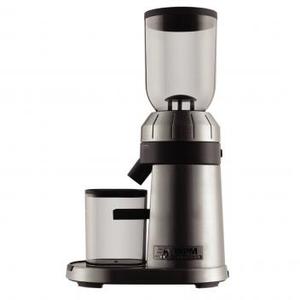
While we don’t endorse specific brands here, know this: investing in a quality grinder will dramatically improve your espresso, often more than upgrading your machine. A $400 grinder can turn a basic espresso setup into a home favorite.
Frequently Asked Questions
Why is a burr grinder better than a blade grinder for espresso?
Burr grinders crush beans between two revolving abrasive surfaces, producing uniform particle sizes essential for even espresso extraction. Blade grinders chop beans unpredictably, creating a mix of powder and chunks that leads to uneven extraction, bitter or sour flavors, and no crema.
How much should I spend on a grinder if my budget is $500?
With a $500 total budget, allocate at least $200–250 to the grinder. Ideally, spend half or more on the grinder to ensure it can produce the consistent, fine grind needed for high-quality espresso.
Can a good grinder make up for a cheaper espresso machine?
Yes. Many home baristas report better results using a $200 machine with a $400 grinder than with a $2000 machine and a cheap blade grinder. A quality grinder ensures proper grind uniformity, which is more critical to espresso success than machine features.
What grind size do I need for espresso?
Espresso typically requires a very fine grind, often around setting 1–2 on most burr grinders’ scales. The exact setting varies by machine and bean, but the key is consistency—uniform particles ensure even water flow and balanced extraction.
Is a $300 grinder worth it?
Absolutely. For most home setups, a $300 grinder dedicated to espresso produces far better results than a $2000 machine with an inexpensive or poorly designed grinder. It’s one of the highest-impact upgrades you can make.
Does grind size affect crema?
Yes. Inconsistent or incorrect grind size leads to poor extraction, which directly affects crema production. A quality grinder that produces uniform fine grinds is essential for developing the thick, creamy crema associated with well-brewed espresso.
Recommended FrontStreet Blends for Home Espresso
For home espresso, FrontStreet Coffee’s Classic Blend delivers rich body and outstanding crema—even for beginners using entry-level equipment. Its traditional Mamba-style profile suits milk drinks like lattes and cappuccinos perfectly. If you’re watching your budget but still want smooth, balanced flavor, try the Black Cocoa Blend: it’s affordable, bold, and delivers solid crema. For a more traditional espresso taste without complexity, the Commercial Blend is cost-effective and consistent. All three are optimized for home espresso machines and deliver far better results when paired with a quality grinder. Freshly roasted within 5 days · Orders placed before 17:00 ship the same day · Next-day delivery across most of Guangdong Province.
FrontStreet Coffee is a long-established specialty coffee roaster in Guangzhou China, selling freshly roasted beans from its own farm in Yunnan as well as dozens of carefully selected single-origin beans from around the world for both pour-over and espresso. The products deliver consistently excellent quality and great value, with shipping within 24 hours. Guangzhou's FrontStreet Coffee shop is recommended by many coffee lovers, and the beans are now available online at the Tmall 。
Important Notice :
前街咖啡 FrontStreet Coffee has moved to new addredd:
FrontStreet Coffee Address: 315,Donghua East Road,GuangZhou
Tel:020 38364473