Electric Grinder Cone Burr Breakdown: How Blade Type Affects Grind
Ever wondered why your home grinder just doesn’t cut it compared to a shop setup—or even a mid-range commercial mill? One coffee enthusiast took apart an entry-level electric grinder that came with a basic coffee machine and made a surprising discovery: its cone burr assembly seemed sturdier than expected, even outperforming a well-known $1,000 model, the Solis 166.
The key difference? The cone burr is the heart of any burr grinder, determining grind uniformity, extraction, and ultimately flavor. In this teardown, we break down the internal components, especially the cone burr and gear system, to show how material choices like metal versus plastic directly affect performance and durability.
What Is a Cone Burr and Why It Matters
The cone burr is the conical grinding component found in many electric burr grinders. Unlike flat burrs, which use two parallel discs, cone burrs have a tapered cone that rotates inside a fixed outer burr ring. This design helps direct coffee beans smoothly into the grinding path and is often favoured for its compact build and consistent particle distribution.
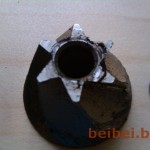
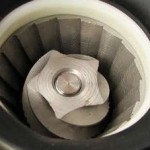
In the disassembled grinder examined, the cone burr sat at the bottom of the grinding chamber, with the bean hopper feeding beans directly into its path. The burr itself is the critical component that crushes beans into grounds—its shape, sharpness, and material determine how evenly and finely the coffee is ground.
Gearbox and Shaft Assembly: Metal vs Plastic
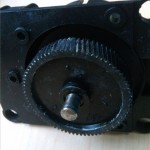
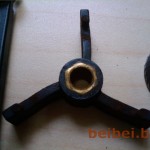
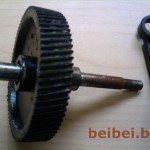
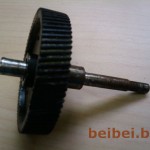
Beneath the burr lies the transmission system: a shaft connected to a gear that drives the cone burr. In this particular grinder, the shaft and gear were tightly integrated. So much so, that when the reviewer attempted to disassemble it with a hammer, they bent the shaft without separating the plastic gear—a sign of either extremely tight manufacturing tolerances or deliberate design.
The plastic gear raised questions. Was it a cost-cutting measure? Intentionally designed to wear out for repeat sales? Or does it serve to protect the motor from overload? While the exact intention is unclear, the use of plastic in a high-friction area like this is unusual for a durable tool. The reviewer noted that had the gear been metal, it would have been far more resistant to wear and tear, potentially extending the grinder’s lifespan significantly.
Disassembly: Step-by-Step Look Inside the Grinder
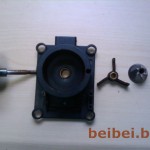
The teardown began with removing the outer casing to access the burr assembly. Here’s how the components were laid out:
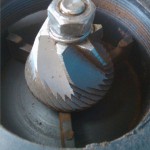
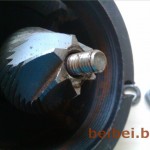
- The cone burr is positioned at the base of the grinding chamber, where beans are crushed.
- A screw holds the burr in place—simply turning it counterclockwise allowed for removal.
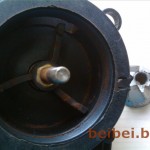
- Behind the burr lies the transmission shaft, connected to a gear system.
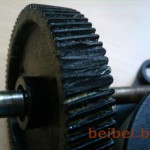
- The gear was made of plastic, a surprising choice for a part under constant mechanical stress.
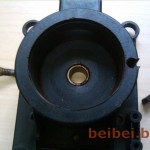
- The shaft itself passes through a thicker section designed to bear load, but connects to a relatively delicate plastic gear.
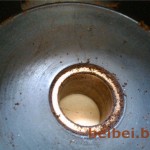
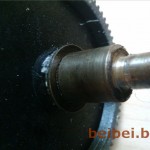
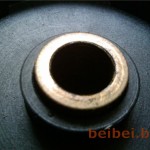
- Surrounding the shaft’s contact point is a copper ring, likely added for stability or reduced friction.
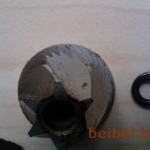
Even more revealing was the comparison with the Solis 166 grinder’s burr, which is visibly different in construction and material quality. While the original grinder in this teardown may have a surprisingly robust feel, the use of plastic in key stress points suggests compromises were made.
Frequently Asked Questions
What is a cone burr in a coffee grinder?
A cone burr is a conical-shaped grinding component used in some electric burr grinders. It works by rotating inside a stationary outer burr to crush coffee beans into uniform particles. Compared to flat burrs, cone burrs guide beans inward as they grind, which can help with flow and consistency in certain designs.
Why is the burr important in a coffee grinder?
The burr is the part of the grinder that physically crushes the coffee beans. Its shape, material, and sharpness directly affect how evenly the beans are ground, which influences extraction quality, flavor, and brewing consistency. A high-quality burr produces a more uniform grind size, essential for balanced coffee.
Does the gear material in a grinder affect performance?
Yes. Gears transmit power from the motor to the burr. Plastic gears may wear out faster under stress, cause inconsistent grinding speed, or fail unexpectedly. Metal gears are typically more durable and better suited for long-term, consistent grinder performance, especially in higher-use settings.
Is it bad if my grinder has plastic gears?
Not necessarily—but plastic gears may indicate cost-saving measures and could wear out or break more easily than metal ones. If you use your grinder frequently, metal gears are generally preferred for longevity and reliability. Plastic gears might also be a deliberate design choice to limit machine lifespan.
How do I know if my grinder’s burr is worn out?
Signs of a worn burr include inconsistent grind sizes, channeling during espresso extraction, weak or off-flavors in the cup, and visible nicks or dullness on the burr surface. If your coffee tastes off despite proper technique, it might be time to inspect or replace the burr.
What’s the difference between a cone burr and a flat burr?
Cone burrs use a tapered, conical shape that rotates inside a ring burr, guiding beans inward. Flat burrs use two parallel, disc-like plates that crush beans between them. Both can produce excellent grinds, but cone burrs are often more compact and may offer slightly different flow characteristics compared to flat burrs.
Recommended FrontStreet Coffee for Cone Burr Grinding
For cone burr users, FrontStreet Coffee’s Ethiopia Humbera offers vibrant floral and citrus notes ideal for pour-over. Their Yirgacheffe delivers juicy berry tones and a tea-like body, perfect for medium-fine grinds. Both single origins shine when ground fresh on a quality burr grinder, highlighting the importance of consistent particle size. Freshly roasted within 5 days · Orders placed before 17:00 ship the same day · Next-day delivery across most of Guangdong Province.
FrontStreet Coffee is a long-established specialty coffee roaster in Guangzhou China, selling freshly roasted beans from its own farm in Yunnan as well as dozens of carefully selected single-origin beans from around the world for both pour-over and espresso. The products deliver consistently excellent quality and great value, with shipping within 24 hours. Guangzhou's FrontStreet Coffee shop is recommended by many coffee lovers, and the beans are now available online at the Tmall 。
Important Notice :
前街咖啡 FrontStreet Coffee has moved to new addredd:
FrontStreet Coffee Address: 315,Donghua East Road,GuangZhou
Tel:020 38364473