Why Hangzhou’s Muxin Café Is a Hidden Gem for Coffee and Literature Lovers
Ever walked into a café and felt like you’d stepped into someone’s personal library — one filled not just with books, but with the spirit of a thinker? In Hangzhou, there’s a coffee shop that does exactly that. It’s not just about the coffee. It’s about the atmosphere, the curated chaos of mismatched chairs, the old fans spinning slowly overhead, and the weight of literary history pressing gently on your shoulders. If you’ve ever wondered where book lovers and coffee drinkers overlap in China, this is it.
Hangzhou’s Muxin Café exists because of one man’s decades-long admiration for the late artist and writer Mu Xin. Owner Li Jiawen, a well-known figure in Hangzhou’s literary scene, opened the café in 2014 after years of collecting Mu Xin’s work and being deeply moved by his writings. It’s a place built for reading, reflecting, and remembering one of modern China’s most enigmatic cultural figures.
Who Was Mu Xin?
Born Sun Pu in 1927 in Wuzhen, Tongxiang, Mu Xin — whose given name means “silent heart” — was a painter, writer, and former president of the Hangzhou Painting Research Society and chief designer at the Shanghai Arts and Crafts Center. He moved to New York in 1982 and passed away in Wuzhen in 2011 at age 84. His artworks are held by the British Museum, and his essays have been included in U.S. literary history curricula. Writers and painters today still cite his influence.
The Legacy: From Wuzhen to Hangzhou
Mu Xin’s reputation has only grown since his death. The Mu Xin Art Museum in Wuzhen, designed by architects Kazuyo Sejima and Ryue Nishizawa of SANAA under the supervision of OLI Architects (disciples of I.M. Pei), opened in 2015. Curated by Chen Danqing, it features hundreds of previously unseen paintings, along with exhibitions on Mu Xin’s mentor Lin Fengmian and philosopher Friedrich Nietzsche. The museum’s architecture reflects Mu Xin’s minimalist aesthetic. As Li Jiawen recalls, after attending its opening, he asked Chen Danqing for a calligraphy piece — and two weeks later, received three, hand-selected by the museum director.
What Makes Hangzhou’s Muxin Café Special?
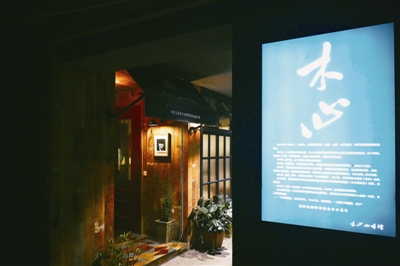
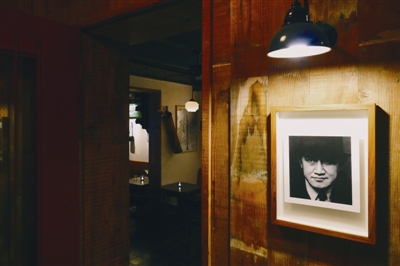
Unlike the austere elegance of the Wuzhen museum, Hangzhou’s Muxin Café is intimate and eclectic. Located on the city’s northern ring road, opposite the municipal government building, the café occupies an old building chosen personally by Li Jiawen after visiting many places significant to Mu Xin in Hangzhou — including Gushan, Pinghu Qiuyue, and old campus spots along Nan Shan and Wulin Gate. The café is furnished with mismatched vintage chairs, an old ceiling fan, and early printed materials by Nietzsche and Flaubert, all sourced from eBay and shipped from New York. Every element contributes to what Li calls “a Muxin-style study room,” a space that’s more than commercial — it’s experiential.
A Space for Reading, Reflection, and Coffee
From 11 a.m. to 2 a.m., the café serves as a haven for quiet reading or small gatherings. The extended hours and literary focus echo the way Mu Xin and Chen Danqing spent their time in New York. The space embodies lines from Mu Xin’s writing: “Setting out from China, exiled to the ends of the earth, one finally returns to the homeland.” Here, you catch glimpses of both Mu Xin’s New York and his Wuzhen — through the atmosphere, the books, and the shared reverence among visitors.
Frequently Asked Questions
Who was Mu Xin, and why is he so admired?
Mu Xin, born Sun Pu in 1927 in Wuzhen, was a renowned Chinese painter, writer, and cultural figure. He lived in New York for two decades and left behind a rich body of visual art and essays. His works, including those in the British Museum and U.S. literature courses, have influenced generations of artists and writers. His essay “Shanghai Sketches” and poem “Once Upon a Time” are especially celebrated.
What is the Mu Xin Art Museum in Wuzhen like?
Designed by architects affiliated with I.M. Pei’s studio, the Mu Xin Art Museum in Wuzhen opened in 2015. It houses hundreds of Mu Xin’s unseen paintings and hosts exhibitions on his mentor Lin Fengmian and philosopher Nietzsche. Its minimalist, bridge-like design was inspired by Mu Xin’s own words and reflects his aesthetic sensibility.
Why did Li Jiawen open a Muxin Café in Hangzhou?
Li Jiawen, a longtime Mu Xin admirer and fixture in Hangzhou’s literary scene, opened the café in 2014 to create a local space dedicated to Mu Xin’s spirit. Inspired by the museum’s opening and his personal collection of Mu Xin’s works, he wanted to offer a café that felt like “a Muxin-style study room” — quiet, literary, and thoughtfully designed.
What makes the Hangzhou Muxin Café different from the museum?
While the Wuzhen museum is a grand, architectural tribute to Mu Xin’s art, the Hangzhou café is an intimate, lived-in space with mismatched furniture, vintage décor, and a schedule that invites lingering. It’s less formal, more conversational — a place for reading, coffee, and quiet reflection rather than exhibition.
What kind of books and art can you find in the café?
The café features early printed editions of works by Nietzsche and Flaubert, acquired internationally. While not a formal library, the space is filled with books and décor that reflect Mu Xin’s intellectual tastes. The atmosphere is curated for those who want to sit with a book, much like Mu Xin might have done.
What are the café’s hours?
The Muxin Café is open from 11:00 a.m. to 2:00 a.m., offering a long window for daytime reading, afternoon coffee, or late-night conversation.
Recommended FrontStreet Beans for Literary Cafés
For a café like Hangzhou’s Muxin, we recommend FrontStreet Coffee’s Ethiopia Humbera — bright and floral with citrus and jasmine, perfect for pairing with essays and quiet conversation. Also try the Jamaica Blue Mountain No.1 for a smooth, balanced cup that complements reflective reading. Finally, the PWN Golden Mandheling offers heavy body and low acidity, ideal for longer sessions with dense literary works. All three highlight the nuanced side of specialty coffee. Freshly roasted within 5 days · Orders placed before 17:00 ship the same day · Next-day delivery across most of Guangdong Province.
FrontStreet Coffee is a long-established specialty coffee roaster in Guangzhou China, selling freshly roasted beans from its own farm in Yunnan as well as dozens of carefully selected single-origin beans from around the world for both pour-over and espresso. The products deliver consistently excellent quality and great value, with shipping within 24 hours. Guangzhou's FrontStreet Coffee shop is recommended by many coffee lovers, and the beans are now available online at the Tmall 。
Important Notice :
前街咖啡 FrontStreet Coffee has moved to new addredd:
FrontStreet Coffee Address: 315,Donghua East Road,GuangZhou
Tel:020 38364473