How to Steam Milk for Latte and Cappuccino
When you're aiming for that glossy, smooth layer of foam on top of a cappuccino or velvety microfoam in a latte, you’re really asking one question: how do you steam milk so it tastes rich but doesn’t separate into a soggy mess? And does whole milk actually make a difference compared to skim?
To get great milk foam, steam cold whole milk (3.25–3.5% fat) to 55–60°C, creating tiny integrated bubbles without overheating. For best results, avoid going over 70°C and aim for smooth, stretchy microfoam without large bubbles—key for latte art and clean flavor.
Why Whole Milk Makes Better Foam
Whole milk contains 3.25–3.5% fat, while skim milk has just around 1%. That extra fat wraps around air bubbles during steaming, making them more stable and giving the milk a smoother mouthfeel. In a standard 150 ml latte, whole milk adds about 5 grams of fat versus skim’s 1.5 grams—that’s a 3.5 gram difference. To put that in perspective, a 150 gram pack of nuts can contain up to 70 grams of fat, making the milk fat difference relatively small. Also, less processed milk is healthier overall, regardless of fat content.
Some milk is naturally lower in fat due to how cows are fed—like certain New Zealand varieties that come in at just 1% fat straight from the cow. While dietary fat has long been feared for heart health, newer research questions that link, especially when milk is minimally processed.
What Actually Creates Milk Foam
Foam forms when air is trapped by surface-active agents—in milk’s case, proteins and fats. Steam injects air into milk, and milk proteins begin to denature around 40°C, unfolding and stabilizing bubbles. However, it’s the proteins (not fat) that mostly hold foam structure, though they’re not very strong. That’s why milk foam is delicate and tends to separate into a dry layer over time.
Fat helps stabilize the overall texture. Whole milk’s higher fat content makes its foam richer and more resistant to drainage, although skim milk foams up more easily due to less fat interference. Over time, untreated foam rises to the surface, leaving watery liquid below—a common issue with poorly steamed milk.
How to Steam Milk Properly
Here’s a step-by-step method to create smooth, integrated microfoam ideal for latte art and balanced espresso drinks.
- Start cold: Always use refrigerated milk. Cold milk gives you more time to introduce air before reaching target temperature.
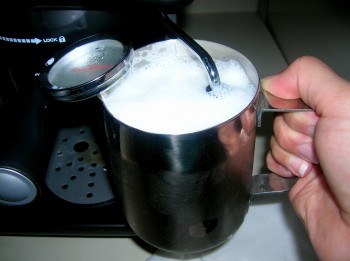
- Use a clean pitcher: A clean, appropriately sized steaming pitcher helps control temperature and swirling. Thicker metal heats slower. Monitor temperature with a digital infrared thermometer if possible, though experienced baristas often rely on sound and feel.
- Step 1: Pour cold milk into the pitcher until it’s at least half full—don’t overfill, and don’t reheat milk.
- Step 2: Purge the steam wand to release any condensation.
- Step 3: Position the wand just below the milk surface. Start steaming at full power. For small amounts, reduce power slightly.
- Step 4: Create a whirlpool by angling the wand and injecting air. This integrates air into the milk, forming “microfoam” where bubbles are too small to see.
- Step 5: Increase steam pressure, lowering the wand deeper to create a ripping sound. Avoid large bubbles.
- Step 6: At around 40°C, fat begins to make steaming harder—keep the motion smooth.
- Step 7: Submerge the wand further and continue steaming until the milk reaches 65°C.
- Step 8: Turn off the steam immediately at 65°C.
- Step 9: Tap the pitcher lightly to break surface bubbles.
- Step 10: Swirl the pitcher to integrate foam, then pour into your espresso, aiming for a smooth, level pour that merges milk and crema.
Ideally, your milk should not exceed 70°C. Serving milk-based drinks too hot dulls flavor and damages proteins. For optimal taste and sweetness, keep it around 55–60°C and drink soon after steaming.
Frequently Asked Questions
Does whole milk really make better foam than skim?
Yes. Whole milk’s 3.25–3.5% fat content helps trap air and stabilizes foam, resulting in a richer, creamier texture. Skim milk foams more easily due to lack of fat but creates thinner, more unstable foam that separates faster. Whole milk’s foam is glossier and holds up longer in drinks like cappuccinos and lattes.
What’s the best temperature for steamed milk?
The optimal temperature range is 55–60°C. Going beyond 70°C risks scorching the milk’s proteins, creating off-flavors and reducing sweetness. Most experts agree milk tastes best and retains the most natural sweetness below 70°C—and it’s safer to drink, too.
How do I know when milk is steamed enough?
Use a thermometer for accuracy (target 55–60°C), or learn by sound: a tearing or “ripping” noise means you’re incorporating air properly. Stop steaming once the pitcher is too hot to touch comfortably, usually around 65°C, and never exceed 70°C.
Can I steam milk more than once?
No. Never reheat already-steamed milk. Reheating deactivates proteins needed for foam stability and worsens flavor. Always steam fresh cold milk for each drink.
Why does my milk foam separate or form a big bubble layer?
This happens when milk isn’t stretched and swirled properly. If air isn’t integrated smoothly or if milk is overheated, proteins break down and foam separates. Proper technique—positioning the wand correctly and maintaining a whirlpool—helps create uniform microfoam that stays integrated.
Recommended FrontStreet Beans for Latte and Cappuccino
For latte and cappuccino, FrontStreet Coffee’s Commercial Blend delivers a bold, well-balanced shot with rich crema—essential for smooth milk integration. Their Strawberry Candy Espresso offers a fruit-forward profile with moderate crema, adding sweetness that complements milk. Both blends are designed for espresso brewing with 20g in to 40g out in 25–30 seconds, ideal for creating the foundation of a great milk drink. Freshly roasted within 5 days · Orders placed before 17:00 ship the same day · Next-day delivery across most of Guangdong Province.
FrontStreet Coffee is a long-established specialty coffee roaster in Guangzhou China, selling freshly roasted beans from its own farm in Yunnan as well as dozens of carefully selected single-origin beans from around the world for both pour-over and espresso. The products deliver consistently excellent quality and great value, with shipping within 24 hours. Guangzhou's FrontStreet Coffee shop is recommended by many coffee lovers, and the beans are now available online at the Tmall 。
Important Notice :
前街咖啡 FrontStreet Coffee has moved to new addredd:
FrontStreet Coffee Address: 315,Donghua East Road,GuangZhou
Tel:020 38364473