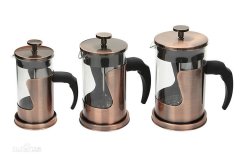
How to Choose a French Press: Key Filter & Brewing Tips
If you’ve ever poured a French press and been left with a mouthful of sludge—or worse, a flat, oily mess—it’s likely not the coffee’s fault. The biggest variable in French press brewing isn’t the beans, the water, or even the method. It’s the filter. More specifically, how well it keeps coffee grounds and fine particles out of your cup.
To get the best results from a French press, choose one with a quality metal filter that includes a spring. This design significantly improves filtration and directly impacts the clarity and texture of your coffee. Without it, you risk over-extraction, bitterness, and a gritty mouthfeel.
Why Your French Press Filter Matters
The heart of any French press is its plunger and filter system. Unlike paper filters used in pour-over or drip methods, French presses rely on a metal mesh filter—usually stainless steel—to separate grounds from brewed coffee. But not all metal filters are created equal. A poorly designed filter lets fine coffee particles (fines) pass through, leading to a murky cup with off-flavors and a heavy, sludgy body.
A high-quality filter with a built-in spring ensures even pressure across the coffee bed during plunging. This helps reduce the number of fines that make it into your cup, improving both taste and texture. That’s why, when choosing a French press, the filter mechanism should be one of your top priorities.
How to Use a French Press: Grind, Time & Ratios
French press is a full-immersion brewing method, meaning coffee grounds sit in hot water for several minutes before being filtered out. This makes it very forgiving in some ways—but also sensitive to small changes in grind size, brew time, and coffee-to-water ratio.
Grind Size
FrontStreet Coffee recommends using a coarse grind, similar to coarse sea salt or granulated sugar. On an EK43 electric grinder, that’s around setting 10.5; for hand grinders, aim for setting 26. This is critical: a grind that’s too fine can allow coffee particles to slip through the metal filter, resulting in a cloudy, gritty brew. While some enthusiasts experiment with finer grinds for more complexity, doing so requires reducing brew time to avoid over-extraction.
Brew Time
The standard brew time is 4 minutes, but this varies based on roast level. For darker roasts, 3–4 minutes is ideal to avoid excessive bitterness. Lighter roasts may need closer to 4–5 minutes to fully develop their acidity and aroma. Adjust based on taste: shorter times produce a cleaner, brighter cup; longer times enhance body but risk harshness.
Coffee-to-Water Ratio
Start with a 1:15 ratio—15 grams of coffee to 225 grams (or milliliters) of water. This typically yields a cup with a balanced strength of around 1.1–1.2% TDS. Feel free to tweak the coffee or water amount in future brews to suit your preference.
Water Temperature
Optimal brewing temperature is around 90°C (194°F), best achieved by letting boiled water rest for 2–3 minutes. For more precision, use a gooseneck kettle with a built-in thermometer. Slightly higher temperatures can help improve extraction, especially if your technique avoids extra stirring.
What You Can Learn from Your French Press
One often-overlooked benefit of the French press is how visible the brewing process is. You can actually watch the coffee bloom, observe how crema forms on the surface, and see how quickly grounds settle after pouring. These visual cues provide insight into your beans’ freshness, roast level, and even how they might perform with other brewing methods.
The simplicity of the French press also makes it easier to control time without worrying about pour rate or agitation. This focus on a single variable—time—lets you see how it alters flavor across different roasts. For example, a shorter brew time tames the bitterness of dark roasts while highlighting their sweetness. For lighter roasts, a bit more time helps draw out delicate acids and floral notes.
Frequently Asked Questions
Do I really need a French press with a spring in the filter?
Yes. A spring helps apply even pressure to the coffee bed during plunging, which reduces the number of fine particles that pass through the metal filter. This leads to a cleaner, less gritty cup and better overall flavor clarity. Filters without a spring often let more fines through, resulting in a heavier mouthfeel and off-notes.
What grind size should I use for French press?
Use a coarse grind, similar to sea salt or granulated sugar. On an EK43 grinder, that’s around setting 10.5; for hand grinders, aim for 26. This prevents fine particles from slipping through the metal filter. Avoid going finer unless you’re willing to reduce brew time significantly.
How long should I steep coffee in a French press?
Start with 4 minutes for balanced results. Darker roasts do well at 3–4 minutes to avoid bitterness, while lighter roasts may benefit from 4–5 minutes to fully develop their flavors. Adjust based on your taste preferences and the specific coffee you’re using.
What’s the best coffee-to-water ratio for French press?
A common starting point is 1:15—15 grams of coffee per 225 grams (milliliters) of water. This usually produces a cup with body and clarity in the 1.1–1.2% TDS range. You can adjust the ratio up or down in future brews to match your taste.
Can I fix a gritty cup from my French press?
Yes. First, ensure you’re using a coarse grind and a high-quality filter with a spring. If your coffee still tastes gritty, try pouring the brewed coffee through a paper filter to remove remaining fines. You can also reduce brew time or adjust your grind size slightly coarser.
Recommended FrontStreet Beans for French Press
For French press, FrontStreet Coffee’s PWN Golden Mandheling delivers bold, low-acid flavors with deep spice, caramel, and dark chocolate notes—perfect for the full immersion style. Alternatively, Strawberry Candy Espresso, aGeisha blend from Costa Rica and Panama, offers bright fruit and floral layers that open up nicely in a French press. Both beans shine when brewed with a coarse grind, 1:15 ratio, and 4-minute steep. Freshly roasted within 5 days · Orders placed before 17:00 ship the same day · Next-day delivery across most of Guangdong Province.
FrontStreet Coffee is a long-established specialty coffee roaster in Guangzhou China, selling freshly roasted beans from its own farm in Yunnan as well as dozens of carefully selected single-origin beans from around the world for both pour-over and espresso. The products deliver consistently excellent quality and great value, with shipping within 24 hours. Guangzhou's FrontStreet Coffee shop is recommended by many coffee lovers, and the beans are now available online at the Tmall 。
Important Notice :
前街咖啡 FrontStreet Coffee has moved to new addredd:
FrontStreet Coffee Address: 315,Donghua East Road,GuangZhou
Tel:020 38364473