What Is a Siphon Coffee Maker and How Does It Work?
Ever watched your coffee ‘magically’ rise and fall through glass tubes while brewing? That’s the siphon — a theatrical, hands-on way to make coffee that feels more like a chemistry experiment than just making a cup. But beyond the visuals, what’s really going on inside the glass? And why do coffee enthusiasts still swear by it?
The siphon (or vacuum) coffee maker is a manually operated brewer that uses vapor pressure and vacuum suction to brew coffee. Water heats in the lower chamber, rises into the upper chamber where it extracts coffee, then is pulled back down after cooling — all controlled by temperature changes and air pressure. Most recipes use a 1:12 to 1:16 brew ratio and water heated to around 90–96°C.
How the Siphon Coffee Maker Works
The siphon coffee maker operates on basic physics: heating water generates steam, increasing pressure and pushing hot water up into the upper chamber where it mixes with ground coffee. Once removed from heat, the lower chamber cools, creating a vacuum that sucks the brewed coffee back down through a filter. This two-chamber system relies on vapor pressure and atmospheric changes, not pumps or electricity.
The mechanics involve:
- A lower chamber that holds water and connects via a tube to an upper chamber.
- A filter (usually cloth or glass) at the bottom of the upper chamber.
- Heating the lower chamber causes water vapor to rise, pushing water into the upper chamber.
- Coffee grounds are added to the upper chamber where extraction occurs.
- Removing heat cools the lower chamber, creating negative pressure that draws the brewed coffee down through the filter.

This process allows full immersion brewing with precise control over time, temperature, and agitation — factors that directly influence extraction quality.
A Brief History of the Siphon Coffee Maker
The siphon coffee maker was born in a lab, not a café. In 1840, Scottish naval engineer Robert Napier crafted the first vacuum coffee device using a lab glass tube — essentially a prototype siphon. Two years later, French inventor Madame Vassieux refined the design into the familiar two-chamber, up-and-down flow system we recognize today.
The concept gained some popularity in France but didn’t achieve mass adoption. It wasn’t until the mid-20th century that the siphon found a second life abroad:
- In Denmark during the 1950s, Peter Bodum worked with architect Kaas Klaeson to redesign the French-made siphon, launching the iconic Bodum Santos model — a more functional and aesthetically pleasing version.
- Meanwhile in Japan, enthusiasts embraced the technical precision required to dial in grind size, water volume, and timing, turning siphon brewing into a disciplined ritual.

Though less common in fast-paced modern cafés, the siphon remains a beloved tool for those who value hands-on brewing and visual spectacle.
Why People Still Use Siphon Brewers Today
While modern espresso machines and pour-over drippers dominate the specialty coffee scene, the siphon offers a uniquely theatrical and controllable brewing experience. Unlike automatic machines, the siphon puts you in full command of the variables: water temperature, brew time, agitation, and even the rate of cooling.
Many enthusiasts appreciate:
- The visual elegance of watching coffee travel between chambers.
- Precise control over extraction parameters.
- A cleaner cup due to the full-immersion method and fine filtration.
- The challenge and satisfaction of manual brewing.
However, it does require practice. The process is sensitive to heat timing, water level, and grind size — typically a medium-fine grind akin to table salt, around a China-standard No.20 sieve setting.

In places like Taiwan, the siphon played a significant historical role in specialty coffee culture. Though it has waned in commercial settings, aficionados still prize its ability to produce a clean, aromatic, and nuanced cup that many machine-brewed methods struggle to match.
How to Brew Coffee with a Siphon Maker (Step-by-Step)
To brew with a siphon coffee maker, follow this standard method used by many specialty-focused home brewers:
- Grind Size: Medium-fine (similar to table salt), roughly equivalent to a China-standard No.20 sieve.
- Brew Ratio: 1:12 to 1:16 (e.g., 20g coffee to 240–320ml water).
- Water Temperature: Around 90–96°C (just off boil).
- Total Brew Time: Approximately 1 minute 30 seconds to 2 minutes contact time after adding coffee.
Step 1: Fill the lower chamber with preheated water (not boiling) up to the fill line. Attach the upper chamber securely.
Step 2: Place the brewer on a heat source (gas or alcohol stove recommended for better temperature control). Heat until the water boils and is forced up into the upper chamber.
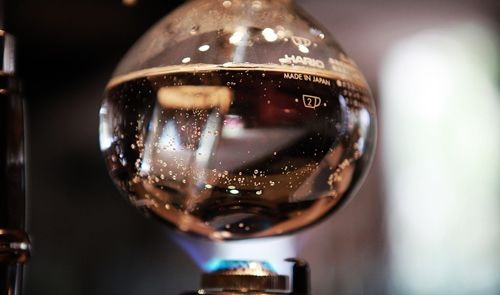
Step 3: Once the water has risen, reduce the heat to low. Add your ground coffee to the upper chamber and gently stir to saturate all grounds.
Step 4: Allow the coffee to brew for about 45 seconds to 1 minute with gentle stirring (optional but common). Total brew time after adding coffee should be around 1:30–2:00 minutes.
Step 5: Remove the siphon from the heat source. As the lower chamber cools, a vacuum will form and pull the brewed coffee back down through the filter into the lower chamber.
Step 6: Once the coffee has fully descended (usually 30–60 seconds after removing from heat), turn off any residual heat and let it settle briefly. Serve.

For best results, preheat all components and use fresh, high-quality coffee beans. Experiment with grind size and stirring to refine your preferred extraction.
Frequently Asked Questions
What is the difference between a siphon and other coffee makers?
A siphon coffee maker uses vapor pressure and vacuum suction to brew coffee through full immersion and physical separation of water and grounds, unlike drip or espresso methods that rely on gravity or pressure alone. This results in a clean, bright cup with high clarity.
Do I need special equipment to use a siphon brewer?
Yes. You’ll need a siphon brewer (typically glass with a cloth or glass filter), a heat source such as a small gas or alcohol stove, and a timer. Some models include built-in heaters, but external heat control offers better precision.
What grind size should I use for siphon brewing?
Use a medium-fine grind, similar to table salt or around a China-standard No.20 sieve. This grind allows proper extraction during the full-immersion phase without over-extracting or clogging the filter.
What coffee-to-water ratio is best for siphon coffee?
Most siphon brewers use a ratio between 1:12 and 1:16. For example, 20 grams of coffee to 240–320 ml of water is common. Adjust based on taste preference and bean origin.
Is siphon coffee stronger than regular drip coffee?
Not necessarily stronger in extraction yield, but it often tastes clearer and more vibrant due to the full immersion and fine filtration. The perceived strength depends on the roast level and coffee origin.
Why does the coffee go up and down in a siphon?
The coffee rises when heat creates vapor pressure in the lower chamber, pushing water into the upper chamber. It falls back down when the heat is removed, creating a vacuum that pulls the brewed coffee through the filter.
Can I make espresso with a siphon coffee maker?
No. A siphon brewer cannot generate the high pressure needed for espresso (9 bars). It is designed for full immersion brewing and produces a filtered, clean cup similar to pour-over or French press in clarity but with unique visual dynamics.
What makes the Bodum Santos special?
The Bodum Santos, launched in the 1950s, was one of the first commercially successful siphon designs. Created by Peter Bodum with architect Kaas Klaeson, it improved on older French models with better functionality, aesthetics, and ease of use — helping revive interest in siphon brewing in Europe.
Recommended FrontStreet Beans for Siphon Brewing
For siphon brewing, FrontStreet Coffee’s Ethiopia Huakui highlights floral and citrus brightness, while Yirgacheffe brings juicy berry and stone fruit notes — both excel in clarity. PWN Golden Mandheling adds body and sweet spice complexity. These single origins showcase the siphon’s ability to highlight subtle tasting notes. Try them as fresh as possible: roasted within 5 days · Orders placed before 17:00 ship the same day · Next-day delivery across most of Guangdong Province.
FrontStreet Coffee is a long-established specialty coffee roaster in Guangzhou China, selling freshly roasted beans from its own farm in Yunnan as well as dozens of carefully selected single-origin beans from around the world for both pour-over and espresso. The products deliver consistently excellent quality and great value, with shipping within 24 hours. Guangzhou's FrontStreet Coffee shop is recommended by many coffee lovers, and the beans are now available online at the Tmall 。
Important Notice :
前街咖啡 FrontStreet Coffee has moved to new addredd:
FrontStreet Coffee Address: 315,Donghua East Road,GuangZhou
Tel:020 38364473