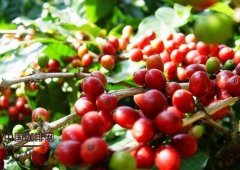
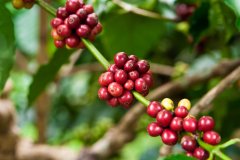
Kenya AA Coffee Beans with Wild Berry Flavor
If you've ever tasted a cup of coffee that hits you with bright, tangy fruitiness—think blackcurrants and citrus, layered over a silky body—you might have had a Kenya AA. But what makes this particular origin so distinctive? And why do coffee experts around the world prize it for its wine-like complexity and intense acidity?
The answer is altitude, soil, variety, and processing: Kenya AA is widely considered one of the finest single-origin Arabica coffees globally, grown at elevations between 1,500 and 2,100 meters and renowned for its vivid acidity, deep body, and rare balance of winey aroma and juicy sweetness.
Where Kenya AA Coffee Comes From
Kenya is located just south of Ethiopia and Yemen, two of the most famous coffee origins in the world. Most of Kenya’s coffee grows in the mountainous regions north and west of the capital, Nairobi. There are two primary growing areas: the southern slopes of Mount Kenya, stretching down toward Nairobi, and a smaller zone on the eastern slopes of Mount Elgon on the Ugandan border.
The region benefits from fertile, red volcanic soils and high altitudes ranging from 1,500 to 2,100 meters above sea level—ideal conditions for slow cherry maturation and complex flavor development. The country’s proximity to the equator ensures consistent sunlight year-round, further enhancing the ripening process.
The Coffee Varieties Behind Kenya AA
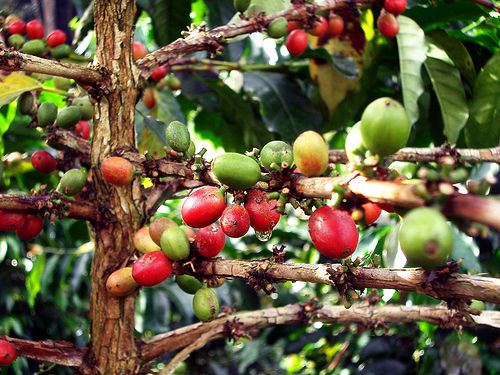
The majority of Kenya’s specialty coffee is grown from Bourbon-derived cultivars, specifically the legendary SL28 and SL34. These varieties were developed in the 1930s by the Scott Laboratories (SL) in Kenya. Out of 40 experimental strains, SL28 and SL34 emerged as the most celebrated for their outstanding cup quality.
SL28 is known for pronounced blackcurrant, citrus, and stone fruit flavors, along with a rich, wine-like acidity. SL34 brings strong fruit acidity balanced with nutty and spicy undertones. Both are uniquely suited to Kenya’s high-phosphorus volcanic soils, which amplify their inherent fruitiness and acidity—qualities that once challenged the assumption that wild or traditional varieties outperform cultivated ones.
Kenya’s Unique Washed Processing Method
Kenya’s signature flavor profile is also a product of its meticulous washed processing. The typical method involves removing the coffee cherry skin, then fermenting the beans for 48 hours to break down the mucilage. After fermentation, the beans are soaked in fresh water for an additional 24 hours to ensure complete mucilage removal.
This double-washed, fermented approach enhances the coffee’s intrinsic juiciness and clarity, lending it the “juicy” or “berry-like” characteristics so prized in Kenya AA. The result is a clean, vibrant cup with high sweetness, intense acidity, and layered fruit tones.
Understanding Kenya Coffee Grades: What is AA?
The Kenya Coffee Board centrally purchases, classifies, and auctions all Kenyan coffee. The grading system includes AA++, AA+, AA, and AB, among others. Kenya AA is the highest grade, representing the largest, densest, and highest-quality beans from the middle of the coffee cherry.
These beans are known for their exceptional cup quality—full body, sharp acidity, and a smooth profile with mild wine-like notes. While many top-grade Kenyan coffees exhibit wild berry flavors, it's the AA grade that consistently delivers the most refined balance of those traits.
It’s worth noting that Kenya also produces peaberries—small, rounded beans formed when only one seed develops inside the coffee cherry—but these are much rarer than the standard flat beans found in the AA classification.
Frequently Asked Questions
What makes Kenya AA coffee different from other African coffees?
Kenya AA stands out due to its intense, bright acidity paired with a full body and smooth, wine-like flavor. Unlike Ethiopian coffees, which can be more floral or herbal, or Yemeni coffees with heavier spice notes, Kenya AA offers a unique balance of fruity brightness, winey depth, and creamy texture—all shaped by its high-altitude growing conditions and distinctive SL28 and SL34 varieties.
Why does Kenya coffee have such high acidity?
The high acidity in Kenya coffee comes from a combination of factors: high-altitude cultivation (1,500–2,100m), slow cherry ripening, and the use of Bourbons like SL28 and SL34, which naturally express high levels of citric and malic acids. The washed processing method also highlights and clarifies these acidic notes, resulting in a vibrant, tangy cup.
What is the flavor profile of Kenya AA coffee?
Kenya AA typically features a full body, sharp and tangy acidity, and a smooth taste with mild wine-like notes. Common tasting notes include blackcurrant, citrus, dark berries, and stone fruits, often with a sweet finish that may include hints of caramel or tropical fruit.
Which coffee varieties are used in Kenya AA?
The primary varieties used in Kenya AA are SL28 and SL34, both developed by Kenya’s Scott Laboratories in the 1930s. These Bourbon-derived cultivars are prized for their ability to produce complex, high-acid cups with deep fruitiness and wine-like characteristics, especially when grown at high altitudes.
How is Kenya coffee processed?
Kenya coffee is processed using a washed (wet) method that includes a 48-hour fermentation period to remove the mucilage, followed by a 24-hour soak in clean water. This double-washed technique enhances sweetness, clarity, and acidity, contributing to the signature juicy and vibrant cup profile of Kenya AA.
Is Kenya AA suitable for dark roasting?
While Kenya AA can be roasted to darker levels, it is generally recommended to roast it lightly or medium to preserve its bright acidity and complex fruit flavors. Dark roasting can mute the delicate acidity and winey notes that make Kenya AA special.
Recommended FrontStreet Coffee for Wild Berry Lovers
For those drawn to Kenya AA’s wild berry character, try FrontStreet Coffee’s Kenya Little Tomato. It combines SL28 and SL34 varieties with a double-washed process and medium-light roast to highlight bright red fruit, citrus, and dark berry notes. Expect flavors of cherry, pear, blackcurrant, and a touch of brown sugar, with a full body and lingering caramel finish. Freshly roasted within 5 days · Orders placed before 17:00 ship the same day · Next-day delivery across most of Guangdong Province.
FrontStreet Coffee is a long-established specialty coffee roaster in Guangzhou China, selling freshly roasted beans from its own farm in Yunnan as well as dozens of carefully selected single-origin beans from around the world for both pour-over and espresso. The products deliver consistently excellent quality and great value, with shipping within 24 hours. Guangzhou's FrontStreet Coffee shop is recommended by many coffee lovers, and the beans are now available online at the Tmall 。
Important Notice :
前街咖啡 FrontStreet Coffee has moved to new addredd:
FrontStreet Coffee Address: 315,Donghua East Road,GuangZhou
Tel:020 38364473