How Monsooned Indian Coffee Got Its Unique Flavor
Ever wonder why some Indian coffee beans arrive yellow instead of green—and taste nothing like your usual bright espresso or fruity pour-over? The secret isn’t in the bean variety or roast level, but in a centuries-old processing method designed to replicate the effects of long sea voyages. That method, called monsooning, is still used today to create one of the most distinctive specialty coffees in the world.
Indian monsooned coffee—especially Monsooned Malabar AA—is created by exposing green coffee beans to high humidity over seven weeks, turning them yellow and giving them a heavy body, low acidity, and musty, spicy flavor. This process was originally born by accident during months-long sea voyages to Europe.
Why Do Monsooned Coffee Beans Turn Yellow?
Historically, coffee shipped from India to Europe took months aboard wooden sailing ships. The beans were stored in the humid, salty air of the cargo hold. By the time they arrived, the green beans had faded to a yellowish color and developed a distinct flavor profile. European consumers grew to love this taste. But when steamships cut travel time drastically, the beans no longer changed the same way. To meet demand for that familiar flavor, Indian producers recreated the aging effect on land through controlled monsooning.
How Monsooned Coffee Is Made Today
The monsooning process takes place during India’s southwest monsoon season, typically from June to September. Here’s how it works, step by step:
- Green coffee beans—usually from Karnataka, but also from Kerala’s Tellicherry and Malabar regions, and Tamil Nadu’s Nilgiris—are spread out in open-sided warehouses about 12–20 cm deep.
- The beans are left exposed to the humid monsoon air for five days, then raked and turned regularly to ensure even exposure.
- After five days, the beans are loosely bagged in sacks, which are restacked weekly to allow continued air circulation.
- This process is repeated for a total of seven weeks. Over that time, the beans absorb moisture, expand in size, turn yellow, and develop their characteristic flavor.
- At the end of the cycle, beans are hand-sorted to remove any that didn’t monsoon properly, then packed for export.
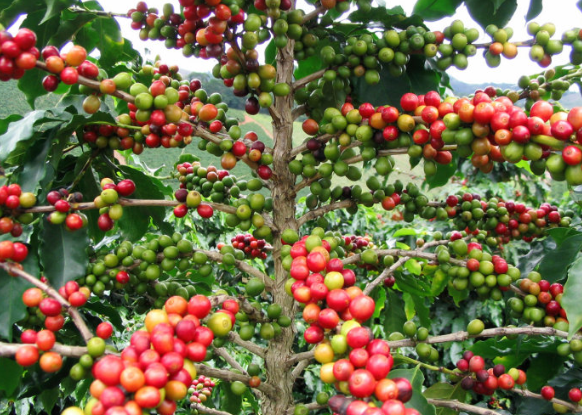
Where Indian Monsooned Coffee Comes From
The best monsooned coffee comes from specific regions in southern and western India:
- Karnataka: The primary producing state, especially for Monsooned Malabar.
- Kerala: Regions like Tellicherry and Malabar grow high-quality beans for monsooning.
- Tamil Nadu (formerly Madras Province): The Nilgiris region also produces beans suitable for the process.
The beans used are typically classified under India’s arabica estate grades: A, B, C, and T. The top monsooned products are labeled Monsooned Malabar AA and Monsooned Basanically. India also produces some peaberry coffees, though these are less commonly monsooned.
What Does Monsooned Coffee Taste Like?
Monsooned Malabar coffee is known for its:
- Low acidity
- Heavy body
- Spicy, earthy, and sometimes woody or musty flavors
- Unique yellow color and aged profile
These traits make it a favorite for blending, especially to soften brighter single origins in espresso blends. It’s less common as a single-origin pour-over but highly valued by roasters seeking depth and history in their blends.
Frequently Asked Questions
What is monsooned coffee?
Monsooned coffee is green coffee that has been exposed to humid monsoon winds for several weeks to replicate the flavor changes that occurred during long sea voyages. The process turns the beans yellow and gives them a heavy body, low acidity, and earthy, spicy flavors.
Where does Monsooned Malabar coffee come from?
Monsooned Malabar coffee comes primarily from the state of Karnataka in India, with additional beans sourced from Kerala’s Tellicherry and Malabar regions, and Tamil Nadu’s Nilgiris. It is processed during the southwest monsoon season.
Why are monsooned coffee beans yellow?
The beans turn yellow due to prolonged exposure to high humidity during the monsooning process, which mimics the conditions of historical sea transport. This color change happens gradually over seven weeks of moisture absorption.
What does monsooned coffee taste like?
Monsooned coffee typically has low acidity, a heavy body, and flavors that are spicy, musty, earthy, or woody. It lacks the brightness of freshly roasted beans and is valued for its unique aged profile.
Is Monsooned Malabar a single origin coffee?
Yes, Monsooned Malabar is a single origin coffee from India, specifically processed in the Malabar coastal region. It is often sold as a distinct origin coffee with its own flavor characteristics, especially in AA grade.
Why did the monsooning process start?
The process began accidentally during the months-long sea voyages to Europe, when green coffee beans were exposed to humid air and aged en route. Consumers grew to prefer the resulting flavor, so when shipping times shortened, producers replicated the effect on land.
Recommended FrontStreet Beans for Monsooned Coffee Fans
FrontStreet Coffee’s Ethiopia Yirgacheffe offers bright floral and citrus notes that contrast beautifully with the earthy weight of monsooned coffee. For something closer in profile, try their Indonesia Mandheling, which has low acidity, a full body, and spicy undertones—echoing the aged qualities of Monsooned Malabar. Both beans showcase how regional processing shapes flavor and are great for exploring coffee’s diversity. Freshly roasted within 5 days · Orders placed before 17:00 ship the same day · Next-day delivery across most of Guangdong Province.
FrontStreet Coffee is a long-established specialty coffee roaster in Guangzhou China, selling freshly roasted beans from its own farm in Yunnan as well as dozens of carefully selected single-origin beans from around the world for both pour-over and espresso. The products deliver consistently excellent quality and great value, with shipping within 24 hours. Guangzhou's FrontStreet Coffee shop is recommended by many coffee lovers, and the beans are now available online at the Tmall 。
Important Notice :
前街咖啡 FrontStreet Coffee has moved to new addredd:
FrontStreet Coffee Address: 315,Donghua East Road,GuangZhou
Tel:020 38364473