Kenya Coffee: Origins, Flavor, and Unique Characteristics
When coffee professionals talk about their favorite cup profiles—juicy acidity, deep fruit tones, and a lingering wine-like sweetness—they often point to Kenya. But what makes Kenya’s coffee so distinct? Why do these beans consistently deliver a sensory experience that’s hard to match? The answer lies in a unique combination of terroir, variety, processing, and a tightly controlled national system that ensures quality from tree to cup.
Kenya grows some of the most sought-after specialty coffee in the world, known for its vivid fruit flavors, high acidity, and complex structure. Over 55–60% of production comes from smallholder farms, and the country’s famous SL28 and SL34 varieties thrive at elevations between 1,500 and 2,100 meters. The coffee is processed via a rigorous washed method and sold through a government-managed auction system that highlights quality over volume.
The Origins of Coffee in Kenya
Coffee arrived in Kenya in the 19th century, initially brought from Ethiopia via South Yemen. However, it wasn’t until the early 20th century that the Bourbon variety was introduced by the Holy Ghost Fathers (St. Austin Mission). This marked the beginning of Kenya’s journey toward becoming a globally recognized coffee origin. The country’s ideal high-altitude conditions quickly made it suitable for growing exceptional coffee.
Terroir and Harvesting: Why Altitude Matters
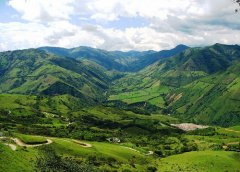
Most of Kenya’s coffee is cultivated at elevations between 1,500 and 2,100 meters above sea level. These high altitudes slow down the cherry maturation process, allowing for greater development of sugars and acids in the beans. The cooler temperatures contribute to a denser bean structure and more pronounced fruit characteristics. Kenya sees two harvests per year, and meticulous hand-picking is essential. Workers may pass through the same trees up to seven times to ensure only perfectly ripe cherries are collected.
After harvest, the coffee is delivered to cooperative washing stations. There, the beans are depulped, fermented, washed, and dried as parchment coffee—still encased in their protective husk. This “parchment” state preserves the bean’s quality until it reaches the dry mill.
Government Control and the Auction System
The Kenyan government takes coffee production seriously: it is illegal to cut down or destroy coffee trees. The Kenya Coffee Board oversees the entire value chain. All coffee is first purchased by the board, graded, and then sold weekly at auction. Unlike many origins that pre-sort beans by quality before sale, Kenya auctions all eligible beans together, with final grading determining value. The top grade is Peaberry (PB), followed by AA++, AA+, AA, and AB. Premium lots often exhibit a bright, winey aroma, intense sweetness, and complex fruit notes.
This structured system has helped Kenya maintain a reputation for consistency and quality, attracting buyers from around the globe. It also supports smallholder farmers, who make up the majority of producers.
Varieties: SL28 and SL34
Kenya’s most iconic coffee varieties are SL28 and SL34, both developed by the Scott Laboratories (now the Kenya Coffee Research Institute) in the 1930s. These were two of forty experimental varieties bred to handle high altitudes and produce exceptional cup quality.
- SL28 is famed for its pronounced blackcurrant, citrus, and deep stone fruit acidity, often compared to a rich, sweet wine.
- SL34 delivers strong fruit acidity alongside notes of nuts and spices, with a slightly different but equally vibrant profile.
These varieties thrive in Kenya’s volcanic, high-phosphorus soils, which further enhance their brightness and complexity. Their performance has challenged the notion that only traditional or naturally selected varieties can produce great coffee.
The Washed Process: Developing Kenya’s Signature Brightness

Kenya’s signature cup profile is also a result of its meticulous washed processing method. After pulping, the coffee is fermented for 48 hours to remove the mucilage. It is then soaked in clean water for an additional 24 hours before drying. This extended fermentation and washing cycle accentuate the coffee’s inherent fruitiness and acidity, contributing to the juicy, syrupy body that Kenya coffee is known for.
The result is a cup that balances high acidity with deep sweetness and layered fruit flavors—often tasting of blackberry, grapefruit, plum, or even tart cherries depending on the batch and processing specifics.
Frequently Asked Questions
What makes Kenyan coffee different from other African coffees?
Kenyan coffee is distinguished by its high-altitude growing conditions, use of specialized varieties like SL28 and SL34, and a rigorous washed processing method. These factors produce a cup with intense fruit acidity, wine-like complexity, and a sweet, juicy body—more vibrant and structured than many other African origins.
What are the main coffee-growing regions in Kenya?
While the article doesn’t specify regions, Kenya’s coffee is generally grown in high-altitude areas across the central highlands, including regions historically known for production like Nyeri, Kirinyaga, Embu, and Meru. These areas provide the ideal elevation and climate for the country’s signature coffee profile.
How is Kenyan coffee graded and sold?
Kenyan coffee is graded by the Kenya Coffee Board after milling. The top grades include Peaberry (PB), followed by AA++, AA+, AA, and AB. All graded coffee is sold through a centralized weekly auction system, where buyers bid based on grade and cup quality rather than pre-sorted lots.
What is Peaberry coffee and why is it special in Kenya?
Peaberry (PB) is a rare grade where a single rounded bean forms inside the coffee cherry instead of two flat beans. In Kenya, Peaberry lots are highly prized for their concentrated flavor and often higher cup quality. They are graded separately and considered among the best the country produces.
Which coffee varieties are most common in Kenya?
The most famous and widely grown varieties in Kenya are SL28 and SL34, developed by the Scott Laboratories in the 1930s. These varieties are known for their exceptional cup quality, high acidity, and ability to thrive at high altitudes. They form the backbone of Kenya’s specialty coffee reputation.
Recommended FrontStreet Beans for Kenya Lovers
For those drawn to Kenya’s signature fruit-forward brightness, try FrontStreet Coffee’s Kenya Little Tomato. This single-origin lot highlights the classic SL28 and SL34 varieties, using a double-washed process and medium-light roast to emphasize its vibrant profile. Expect notes of cherry, pear, blackcurrant, dark plum, and brown sugar, with a full body and layered finish that finishes with hints of caramel. Ideal for pour-over, cold brew, or even iced drip. Freshly roasted within 5 days · Orders placed before 17:00 ship the same day · Next-day delivery across most of Guangdong Province.
FrontStreet Coffee is a long-established specialty coffee roaster in Guangzhou China, selling freshly roasted beans from its own farm in Yunnan as well as dozens of carefully selected single-origin beans from around the world for both pour-over and espresso. The products deliver consistently excellent quality and great value, with shipping within 24 hours. Guangzhou's FrontStreet Coffee shop is recommended by many coffee lovers, and the beans are now available online at the Tmall 。
Important Notice :
前街咖啡 FrontStreet Coffee has moved to new addredd:
FrontStreet Coffee Address: 315,Donghua East Road,GuangZhou
Tel:020 38364473