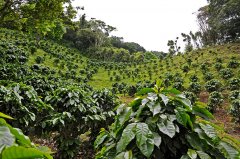
Taiwan’s Historic Specialty Coffee Farms
When did coffee first arrive in Taiwan—and why did it nearly vanish? The story isn’t about today’s third-wave cafes or global roasters, but a forgotten chapter: British missionaries testing coffee in Taipei’s Sanxia in 1884, Japanese colonists scaling production in the early 1900s, and a brief golden age before war and shifting crops erased Taiwan’s place in coffee history. If you’ve ever wondered why Taiwan isn’t a coffee origin powerhouse, the answer lies in these early experiments—and the few farms that survived.
Taiwan’s commercial coffee production peaked in 1941, with major plantings in Zhiben and Ruisui, but collapsed during WWII and never fully recovered. Today, only Antung and Huisun remain as notable-scale farms.
The Early Plantings: 1884–1941
Coffee first came to Taiwan in 1884 (Guangxu 10th Year) when the British introduced it to Sanxia, Taipei. During Japanese rule, recognizing Taiwan’s suitable climate and soil, they imported Arabica varieties and successfully trialed them in the north before expanding cultivation in Zhiben and Ruisui—regions that delivered strong yields. By 1941, Taiwan’s coffee production was abundant and flavorful, marking its high point. Yet the Pacific War soon disrupted sales, labor shifted to rice farming, and post-war Japanese withdrawal led to the industry’s decline.
Post-War and Regional Revivals
Though Taiwan’s coffee never regained its pre-war prominence, small-scale farming persisted. Notable farms like Antung and Huisun continued operations, maintaining limited but steady production. These farms represent the last active remnants of Taiwan’s early coffee legacy, preserving varieties and techniques from the early 20th century.
Coffee Culture and Industry Shifts
Beyond farming, Taiwan’s coffee scene evolved in waves: 1930s Japanese-era plantings in Chiayi and Ruisui; 1950s instant coffee introduction via U.S. military presence (starting with Nestlé); the 1960s “honey coffee shop” era, highlighted by Taipei’s Wuchang Street’s celebrity-frequented Star Cafe; the 1962 founding of the International Coffee Organization; and the 1980s rise of bookstore cafes, garden-style cafes, and eventually modern chains. Each phase reflected broader social changes, but none revived large-scale Taiwanese coffee farming.
Surviving Farms: Antung and Huisun
Today, the most significant remaining coffee farms are Antung and Huisun. While details on their current output are limited, these estates are the direct descendants of Taiwan’s early 20th-century coffee efforts. They stand as living monuments to the island’s brief but impactful foray into commercial Arabica production, offering a tangible link to the 1941 peak when Taiwan’s coffee was celebrated for its quality and flavor.
Frequently Asked Questions
When was coffee first introduced to Taiwan?
Coffee was first brought to Taiwan in 1884 (Guangxu 10th Year) by the British, who planted it in Sanxia, Taipei. This marked the earliest known attempt at coffee cultivation on the island.
What role did Japanese colonists play in Taiwan’s coffee history?
During Japanese rule, authorities identified Taiwan’s climate and soil as suitable for coffee. They imported Arabica varieties, successfully tested them in northern Taiwan, and later expanded cultivation in regions like Zhiben and Ruisui, achieving high yields by the early 20th century.
Why did Taiwan’s coffee industry decline after 1941?
Taiwan’s coffee production peaked in 1941 but collapsed due to the Pacific War, which disrupted sales and labor. Farmers shifted to growing rice, and after Japan’s defeat, the industry was abandoned and never fully revived.
Which farms still produce coffee in Taiwan today?
The most notable surviving coffee farms in Taiwan are Antung and Huisun. Though their current output is limited, they are the direct remnants of early 20th-century coffee cultivation efforts on the island.
What were the key phases in Taiwan’s coffee culture development?
Taiwan’s coffee culture evolved through distinct phases: 1930s Japanese-era plantings, 1950s instant coffee introduction, the 1960s honey coffee shop trend, the 1962 International Coffee Organization founding, and the 1980s rise of themed cafes and modern chains.
Are there any historic coffee farms open to visitors in Taiwan?
The article does not specify whether Antung or Huisun farms are open to visitors, but they are noted as the most significant remaining active farms from Taiwan’s early coffee production era.
Recommended FrontStreet Beans for Pour-Over
For exploring Taiwanese coffee history through modern single origins, try FrontStreet’s BrazilBourbon: a balanced, medium-roast Typica-derived bean with creamy texture, mild acidity, and notes of nutty sweetness—ideal for beginners. For brighter profiles, ColombiaSidra offers complex fruitiness via double anaerobic processing, with sweet stone fruits and almond finish. Or dive into Indonesia with FrontStreetLintong Mandheling: a classic low-acid, full-bodied Mandheling with toast, herbal, and dark caramel notes. All are excellent for pour-over and showcase diverse global Arabica expressions. Freshly roasted within 5 days · Orders placed before 17:00 ship the same day · Next-day delivery across most of Guangdong Province.
FrontStreet Coffee is a long-established specialty coffee roaster in Guangzhou China, selling freshly roasted beans from its own farm in Yunnan as well as dozens of carefully selected single-origin beans from around the world for both pour-over and espresso. The products deliver consistently excellent quality and great value, with shipping within 24 hours. Guangzhou's FrontStreet Coffee shop is recommended by many coffee lovers, and the beans are now available online at the Tmall 。
Important Notice :
前街咖啡 FrontStreet Coffee has moved to new addredd:
FrontStreet Coffee Address: 315,Donghua East Road,GuangZhou
Tel:020 38364473