The World’s Oldest Coffeehouses Still Open Today
When did coffeehouses begin—and which ones have survived centuries of war, revolution, and changing tastes? Many assume Starbucks invented the modern café experience, but public coffee drinking traces back over 450 years to the Ottoman Empire. Some of the earliest coffeehouses still stand, serving customers in the same cities where coffee culture first took root.
Over 20 historic coffeehouses opened between 1554 and 1939 remain open today—including Istanbul’s original 1554 shop, Paris’s 1686 Procope, and Vienna’s 1860 Central Café. These cafes aren’t just relics; they’ve hosted everyone from Voltaire to Trotsky and helped shape global finance, literature, and politics.
The First Coffeehouses: 1554–1700
The world’s first coffeehouse opened in 1554 in Constantinople (modern Istanbul), founded by Shemsi of Damascus and Hekem of Aleppo. By 1645, Venice had its first café, sparking a wave across Italy—from Turin to Naples. In 1652, two pivotal locations launched: Jacob, a Turkish Jew, opened Oxford’s first coffeehouse (dubbed the “penny university” for its one-penny coffee and scholarly crowds), while Pasqua Rosée debuted London’s first café on St. Michael’s Alley in Cornhill. That same year, Edward Lloyd’s coffeehouse opened in London, eventually becoming the birthplace of global insurance giant Lloyd’s of London.
Across Europe, coffeehouses spread rapidly: Marseille (1668), Paris (1672), Hamburg (1679), and Vienna (1683, thanks to Kolschitzky). Paris’s Procope, opened in 1686 by Francesco Procopio (a Sicilian from Florence), remains the oldest continuously operating café in the world. Germany’s first cafés appeared in Regensburg (1686) and Leipzig (1694), while Boston (1690) and New York (1696) launched early American counterparts.
18th Century: Cafés as Intellectual Hubs
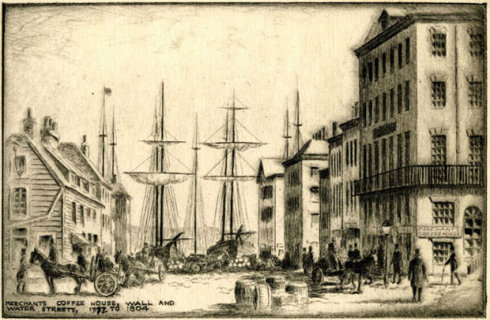
By the 1700s, London reportedly had more coffeehouses than today. Key openings included Pennsylvania’s YE Coffee House (1700, founded by colonial deputy governor Samuel Carpenter) and “London” coffeehouses in Philadelphia (1702). Europe saw Stuttgart’s first café (1712), Augsburg’s (1713), and Paris’s iconic Café de la Régence (by 1720). That year, Venice alone had 218 cafés, including Florian (opened 1720), now one of the most famous and expensive. Berlin’s first café arrived in 1721, and New York’s Merchants’ Coffee House (1774) became a cradle of American independence—hosting discussions that led to the “American Union.”
Rome’s Café Greco (1763) and Budapest’s New York Café (1894, rebuilt 2006) became artistic havens. Vienna’s Central Café (1860) attracted intellectuals like Hugo von Hofmannsthal and revolutionary Leon Trotsky (dubbed the “chess school” until 1938). Prague’s Café Slavia (1884) and New Obecní Dum Café (1912) hosted artists and politicians. These spaces weren’t just for coffee—they were where ideas, alliances, and movements were born.
Modern Era: Machines, Chains, and Legacy
The 20th century introduced espresso machines and global chains. In 1927, New York’s Regio’s café installed the first U.S. espresso machine (a La Pavoni, still displayed today). Vienna’s Hawelka Café (1939) retained its traditional, artsy vibe. Meanwhile, coffee chains emerged: Tchibo (Germany, 1949), Doutor (Japan, 1962), Starbucks (U.S., 1971), and Costa (UK, 1971, expanding to China in 2006).
Starbucks, which entered China in 1999 (Beijing’s Guomao store), now operates over 800 stores across the Greater China region. Costa, the UK’s top coffee chain, had 1800+ global stores by 2024, with plans to double its network to 3500. Yet amid these chains, the world’s oldest cafés endure—proof that a great coffeehouse isn’t about scale, but history, community, and a perfectly brewed cup.
Frequently Asked Questions
What was the first coffeehouse in the world?
The first coffeehouse opened in 1554 in Constantinople (modern Istanbul), founded by Shemsi of Damascus and Hekem of Aleppo. It marked the beginning of public coffee drinking outside the Arabian Peninsula.
Which coffeehouse is the oldest still operating?
Paris’s Café Procope, opened in 1686 by Francesco Procopio, is the oldest continuously operating coffeehouse in the world. It’s located in the Latin Quarter and has hosted figures like Voltaire and Rousseau.
What famous historical figures visited old coffeehouses?
Vienna’s Hawelka Café hosted artists like Leon Trotsky (pre-revolution), while Paris’s Café de Flore attracted 20th-century intellectuals. London’s Lloyd’s Coffeehouse evolved into the global insurance giant Lloyd’s of London. New York’s Merchants’ Coffee House was a hub for American independence discussions.
Are any 18th-century coffeehouses still open?
Yes—examples include Vienna’s Central Café (opened 1860), Prague’s Café Slavia (1884), and Budapest’s New York Café (reopened 2006 after WWII destruction). These venues maintained their cultural significance through centuries of change.
How did coffeehouses influence modern society?
Coffeehouses served as early hubs for intellectual exchange, business, and political debate. Lloyd’s Coffeehouse birthed global insurance markets, while New York’s Merchants’ Coffee House helped shape American union discussions. They were precursors to modern cafes as spaces for community and ideas.
When did coffeehouses spread to the Americas?
The first American coffeehouses opened in Boston (1690) and New York (1696). By the 18th century, New York’s Merchants’ Coffee House (1774) became a key site for discussions that led to the American Union, predating the Revolution.
Recommended FrontStreet Beans for Historic Cafés
Pair your historic café visit with FrontStreet Coffee’s Ethiopia Humbera—a bright, juicy Ethiopian single origin with notes of blueberry and citrus—or the Classic Blend, a balanced mix of Brazilian and African beans offering chocolate and nutty tones. For a darker roast, try the Black Cocoa Blend, featuring deep caramel and cocoa notes. All beans are roasted in small batches for optimal freshness. Freshly roasted within 5 days · Orders placed before 17:00 ship the same day · Next-day delivery across most of Guangdong Province.
FrontStreet Coffee is a long-established specialty coffee roaster in Guangzhou China, selling freshly roasted beans from its own farm in Yunnan as well as dozens of carefully selected single-origin beans from around the world for both pour-over and espresso. The products deliver consistently excellent quality and great value, with shipping within 24 hours. Guangzhou's FrontStreet Coffee shop is recommended by many coffee lovers, and the beans are now available online at the Tmall 。
Important Notice :
前街咖啡 FrontStreet Coffee has moved to new addredd:
FrontStreet Coffee Address: 315,Donghua East Road,GuangZhou
Tel:020 38364473