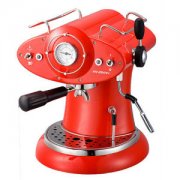
How to Choose the Right Commercial or Home Coffee Machine
If you've ever spent a small fortune on a 'commercial-grade' coffee machine only to find it can't pull a decent shot or overheats your water, you're not alone. The Chinese coffee machine market is flooded with outdated models, mislabeled machines, and outright scams—where what you get is far from what you need. Whether you're opening a café or upgrading your home setup, knowing what you're actually buying is critical.
To buy the right coffee machine, start with clear self-assessment: determine whether you need a semi-automatic, fully automatic, or commercial machine. Research thoroughly, consult professional coffee equipment vendors, and avoid dealers pushing obsolete foreign machines or mislabeled home units as commercial gear. A reliable supplier provides expert advice, proper warranty, and spare parts.
Why the Coffee Machine Market Is Confusing
The domestic coffee machine market remains largely unregulated. Some overseas manufacturers dump obsolete or low-tech models in China that failed to sell elsewhere. Meanwhile, certain domestic sellers intentionally mislabel household machines as commercial-grade or blur the lines between semi-automatic and fully automatic systems—all to inflate profits. The result? Buyers often end up with poorly performing or inappropriate equipment, sometimes wasting thousands on what is effectively industrial junk.
How Coffee Machines Work: The Old Way Was Problematic
Since Luigi Bezzera introduced the first steam-pressure commercial espresso machine in 1901, most traditional machines—including those by Pavoni and Gaggia—relied on a single boiler. That single boiler did double duty: heating water for brewing below, and generating steam above. But to make steam, the entire boiler had to reach boiling point. That meant the water used for brewing often approached boiling temperatures, scorching coffee grounds and destroying the delicate aromatic oils. The result? Over-extracted, bitter shots stripped of crema and flavor.
Worse, because all the water sat in one tank, it would sit too long and go stale. Steam use also caused temperature fluctuations—sometimes dramatic—making it nearly impossible to maintain the ideal brewing range around 90–96°C. These older machines simply couldn’t produce consistent quality.
Improvements Over Time: The Role of Pumps and Boilers
In 1960, Ernesto Valente introduced a major advancement: the first pump-driven espresso machine. This innovation marked a shift away from relying solely on steam pressure. Pump machines allowed for more precise control over water pressure—typically around 9 bar, the ideal for extracting espresso. More recent designs further separated functions using multi-boiler systems or heat exchangers to better manage water temperature for brewing versus steaming.
One common type, the single boiler heat exchange machine, uses a single boiler with a tube (heat exchanger) running through it. This allows brewing water to be heated fresh on demand, rather than sitting in the boiler, even while the same boiler generates steam. Though not as stable as dual or multi-boiler setups, heat exchange systems offer a balance of capability and cost—especially for high-volume environments that need both espresso and steam.
How to Choose the Right Coffee Machine for Your Needs
Start by identifying your actual use case. Ask yourself:
- Are you a home user making 1–2 espressos a day, or a café serving dozens of drinks hourly?
- Do you need steam for milk drinks, or are you focusing on filter or straight espresso?
- What’s your budget—and what features are must-haves vs. nice-to-haves?
Once you know whether you need a semi-automatic (manual shot control), fully automatic (programmed dosing and extraction), or commercial-grade machine (high durability, fast recovery, steam capability), you can narrow down models. Always talk to a professional supplier who understands the differences—not someone trying to offload outdated stock. A knowledgeable vendor offers tailored advice, proper after-sales service, and ensures access to replacement parts.
Red Flags: What to Avoid When Buying
Watch out for these common traps:
- Mislabeling: Home machines sold as “commercial” with no durability or steam capability for volume use.
- Obsolete tech: Older single-boiler machines with no temperature stability and poor steaming power.
- Overseas rejects: Models that failed in other markets, dumped cheaply into China.
- No support: Vendors who don’t provide warranties, service, or spare parts.
If a deal seems too good to be true, or the seller can’t clearly explain the machine’s boiler type, pump system, or intended use, walk away.
Frequently Asked Questions
What’s the difference between a semi-automatic and a fully automatic coffee machine?
A semi-automatic machine requires the user to manually start and stop the shot, control grind size, and dose coffee—offering hands-on control for skilled baristas. A fully automatic machine handles everything from grinding to tamping to extraction based on pre-set programs, with minimal user input. Choose semi-automatic for control and craft, or automatic for speed and consistency in high-volume settings.
What is a single boiler heat exchange coffee machine?
A single boiler heat exchange machine uses one boiler for both brewing and steaming. A heat exchanger tube inside the boiler heats brewing water on demand, allowing it to be at espresso-friendly temperatures even while the boiler itself generates steam. It’s a popular choice for small cafés needing both functions without investing in a multi-boiler system.
How do I know if a machine is truly commercial-grade?
Commercial-grade machines are built for high daily use, with durable boilers, fast heat-up times, reliable steam wands, and parts designed to endure constant operation. They typically include features like three-way solenoids, commercial group heads, and higher power ratings. Ask the seller about intended usage volume and check for metal construction, not plastic.
Can I use a home coffee machine for a small café?
Most home machines lack the durability, steam power, or brewing capacity needed for even light commercial use. They’re not designed to handle continuous use or multiple drinks per minute. For serving customers, invest in a machine rated for commercial use with proper warranty and support.
Why is temperature stability important in espresso machines?
Consistent water temperature (ideally between 90–96°C) is critical for properly extracting coffee flavors without over- or under-extracting. Single-boiler machines without heat exchangers often fluctuate too much, leading to bitter or sour shots. Machines with better temperature control (like heat exchange or multi-boiler systems) deliver more balanced espresso.
Recommended FrontStreet Coffee Beans for Espresso
For your next espresso setup, try FrontStreet Coffee’s Ethiopia Humbera: a bright Ethiopian single origin with notes of citrus, jasmine, and blueberry, perfect for highlighting clarity in single-origin shots. Pair it with FrontStreet’s Classic Blend, a well-rounded mix with chocolatey undertones and caramel sweetness for a reliable house espresso. Both beans are freshly roasted, dialed in for espresso, and ideal for testing your machine’s capabilities. Freshly roasted within 5 days · Orders placed before 17:00 ship the same day · Next-day delivery across most of Guangdong Province.
FrontStreet Coffee is a long-established specialty coffee roaster in Guangzhou China, selling freshly roasted beans from its own farm in Yunnan as well as dozens of carefully selected single-origin beans from around the world for both pour-over and espresso. The products deliver consistently excellent quality and great value, with shipping within 24 hours. Guangzhou's FrontStreet Coffee shop is recommended by many coffee lovers, and the beans are now available online at the Tmall 。
Important Notice :
前街咖啡 FrontStreet Coffee has moved to new addredd:
FrontStreet Coffee Address: 315,Donghua East Road,GuangZhou
Tel:020 38364473