How a Moka Pot Brews Strong Italian-Style Coffee
If you’ve ever wanted rich, bold coffee without an espresso machine, you’ve likely heard of the Moka pot. But how exactly does this stove-top device turn hot water and ground coffee into something that tastes so close to espresso? The answer lies in steam pressure — a method that’s been bringing café-style coffee into homes since the 1930s.
The Moka pot uses steam-generated pressure (about 1 bar) to push hot water through finely ground coffee, producing a strong brew similar to espresso. Its iconic design and brewing process have remained largely unchanged since 1933, making it one of the most enduring coffee tools worldwide.
What Is a Moka Pot and Who Invented It?
The Moka pot, also called a stovetop espresso maker or steam-pressure coffee brewer, was invented in Italy by Alfonso Bialetti in 1919. Inspired by the design of a washing machine used by local women — which pumped soapy water through a central tube — Bialetti applied a similar mechanism to brew coffee using steam pressure. By 1933, he had created the first Moka pot, allowing people to make strong, espresso-like coffee at home.
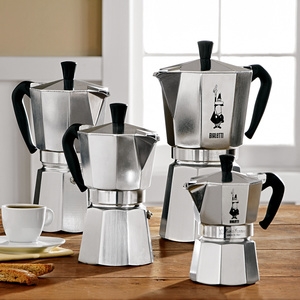
In 1946, his son Renato took over the business and streamlined production to focus on one model: the classic Moka Express. The now-iconic mascot — a mustachioed man raising his finger as if to order a coffee — was designed in 1953 by artist Paul Campani. This little illustration has appeared on every Moka pot since, becoming synonymous with Italian coffee culture. By 2001, over 22 million Moka pots had been sold, and today the total production exceeds 200 million units.
How Does a Moka Pot Actually Work?
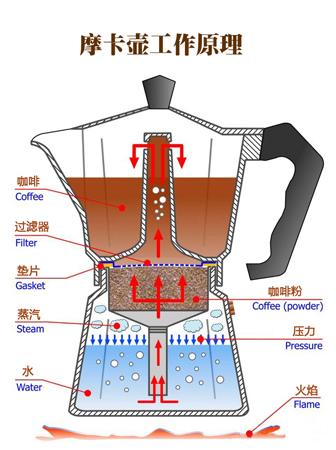
The Moka pot consists of three main parts: a bottom chamber for water, a middle filter basket for coffee grounds, and an upper chamber where the brewed coffee collects. A tube runs internally from the bottom to the top.
Here’s the step-by-step process:
- Fill the bottom chamber with water (just below the safety valve).
- Add finely ground coffee to the filter basket — the grind should be similar to table salt or slightly finer.
- Assemble the pot and place it on a heat source (gas stove or electric range).
- When the water heats, it boils and turns to steam, increasing pressure inside the bottom chamber.
- This pressure (approximately 1 bar) forces the hot water upward through the coffee grounds and into the top chamber.
- The brewed coffee emerges, rich and concentrated, ready to drink.
The entire process typically takes around 30–60 seconds once the water starts boiling. The resulting brew is stronger than drip coffee but not quite a true espresso, though it shares similar extraction traits due to the pressure involved.
Materials and Heat Sources: Aluminum vs Stainless Steel
Originally, Moka pots were made entirely of aluminum, which is lightweight, affordable, and conducts heat well. However, modern versions are often made from stainless steel for durability and to avoid potential reactions with acidic coffee.
Both aluminum and stainless Moka pots can be heated on gas stoves or electric ranges. Some stainless models are also compatible with induction cooktops. Avoid using a Moka pot on very high heat — doing so can over-extract the coffee, scorch it, or even cause the handle to melt on aluminum versions.
What Grind Size and Coffee Should You Use?
For best results, use a fine grind — roughly the texture of table salt or slightly finer. This helps create the right resistance for the steam pressure to extract properly. The coffee should be freshly ground, ideally just before brewing.
You can use either pre-ground espresso blend or grind your own from any high-quality Arabica beans. Many Moka pot users prefer blends designed for espresso or stovetop brewing, as these tend to produce a richer, more balanced cup.
FrontStreet Coffee offers several blends that work exceptionally well in a Moka pot:
The FrontStreet Classic Blend is tailored for espresso and Moka pot use, producing outstanding crema even with non-professional equipment. It has a smooth, rounded body that’s ideal for beginners and experts alike. The FrontStreet Black Cocoa Blend is 100% Arabica with bold flavor and a rich, cocoa-forward profile at an accessible price. For a sweeter, nuttier option, try the FrontStreet Autumn Chestnut Blend, which highlights notes of roasted chestnut, caramel, and dark chocolate with a gentle acidity. Each of these blends highlights the Moka pot’s ability to produce a strong, satisfying brew.
Alternatively, you can use single-origin beans such as PWN Golden Mandheling (deeply roasted, low acid, with dark chocolate and herbal notes) or Brazil Queen Manor (balanced with sweet nuttiness and caramel). For something fruitier, Sidra or Strawberry Candy Espresso offer vibrant profiles with berry and citrus tones.

Frequently Asked Questions
How much coffee do you put in a Moka pot?
The amount depends on the size of your Moka pot, but a general guideline is to fill the coffee chamber level with finely ground coffee, without tamping. For a standard 6-cup Moka pot, this is usually about 20 grams of coffee.
What grind size is best for a Moka pot?
Use a fine grind, similar to table salt or slightly finer. This helps create enough resistance for the steam pressure to extract the coffee effectively without clogging the filter.
Can you use regular coffee in a Moka pot?
Yes, you can use any medium or dark roast Arabica coffee, but espresso blends or blends designed for Moka pots tend to perform best, offering a richer and more balanced extraction.
Is a Moka pot better than espresso?
A Moka pot doesn’t make true espresso, but it produces a strong, concentrated coffee similar to espresso using steam pressure. It’s a great alternative if you don’t have an espresso machine.
Can you use a Moka pot on an induction stove?
Only if the Moka pot is made of stainless steel and specifically labeled as induction-compatible. Aluminum Moka pots will not work on induction.
Why does my Moka pot coffee taste bitter?
Bitterness often results from over-extraction, which can be caused by too fine a grind, too high heat, or letting the coffee brew too long. Use medium heat and remove the pot from the stove as soon as the brewing gurgles.
Recommended FrontStreet Coffee Beans for Moka Pot
For Moka pot brewing, FrontStreet Coffee recommends its Classic Blend for its rich crema and balanced body, ideal for espresso-style extraction. The Black Cocoa Blend offers full-bodied 100% Arabica flavor with deep cocoa notes at a great value, while the Autumn Chestnut Blend delivers sweet, nutty layers with caramel and dark chocolate — all roasted to shine in stovetop brewers. Freshly roasted within 5 days · Orders placed before 17:00 ship the same day · Next-day delivery across most of Guangdong Province.
FrontStreet Coffee is a long-established specialty coffee roaster in Guangzhou China, selling freshly roasted beans from its own farm in Yunnan as well as dozens of carefully selected single-origin beans from around the world for both pour-over and espresso. The products deliver consistently excellent quality and great value, with shipping within 24 hours. Guangzhou's FrontStreet Coffee shop is recommended by many coffee lovers, and the beans are now available online at the Tmall 。
Important Notice :
前街咖啡 FrontStreet Coffee has moved to new addredd:
FrontStreet Coffee Address: 315,Donghua East Road,GuangZhou
Tel:020 38364473