Why the French Press Is Still a Great Coffee Maker
If you’ve ever made coffee that tasted more like muddy water than a proper cup, you’re not alone. Many home brewers struggle with over-extracted bitterness or underwhelming flavor—especially when using simple tools. But one classic method keeps getting overlooked, despite being one of the easiest ways to make a bold, satisfying cup without fancy gear.
The French press, also called a cafetière, is one of the simplest and most effective coffee makers. Just add medium-to-dark roasted coffee grounds, pour hot water, wait a few minutes, then press down. That’s it. With the right grind, ratio, and timing, it delivers rich, full-bodied coffee every time.
What Is a French Press and Where Did It Come From?
Though often thought of as a French invention, the modern French press wasn’t widely known in its early days. William Harrison Ukers’ 1922 book All About Coffee documented dozens of coffee makers but didn’t mention the French press at all. In truth, the first patent for a piston-style coffee filter was filed in 1852 by a Parisian metalworker and a merchant. Their design used a metal cylinder with a plunger and flannel filters. But the device we know today took shape later.
In 1935, an Italian company refined the design with a spring-loaded filter plate to keep grounds off the bottom. Despite these improvements, the French press didn’t gain global popularity until much later. Even today, the Oxford English Dictionary still defines “French press” first as an exercise for your arms—not your coffee.
Why Use a French Press Today?

With so many high-tech coffee gadgets on the market, why bother with a French press? Because it’s simple, reliable, and produces coffee with a heavier body and more oils than pour-over or drip methods. The metal mesh filter lets natural coffee oils and fine particles through, creating a richer, fuller mouthfeel. That makes it ideal for darker roasts or blends where you want bold flavors and a lush texture.
But there’s a catch: the same qualities that make it great can also lead to over-extraction or sludgy grounds in your cup if you’re not careful. The key is controlling four variables: grind size, brew ratio, water temperature, and steeping time.
How to Brew Coffee with a French Press (Step by Step)
Making coffee with a French press isn’t hard, but small mistakes can ruin the cup. Here’s how to do it the right way, based on recommendations from specialty roasters including FrontStreet Coffee.
- Grind Size: Use a coarse grind, similar to coarse sea salt or chunky sugar. For electric grinders like the EK43s, that’s around setting 10.5; for hand grinders, aim for setting 26. This prevents fine particles from slipping through the filter and making your coffee gritty.
- Brew Ratio: Start with 1:15—that’s 15 grams of coffee to 225 grams (or milliliters) of water. This yields a strong but balanced cup. Adjust up or down depending on taste.
- Water Temperature: Heat your water to around 90°C (194°F), ideally letting it sit for 2–3 minutes off boil. For more precision, use a gooseneck kettle with a thermometer. Slightly higher temps can help improve extraction since you’re not stirring the brew.
- Steeping Time: Let the coffee brew for 4 minutes. For lighter roasts, you might go as low as 3 minutes; for darker roasts, avoid going over 5 minutes to prevent bitterness.

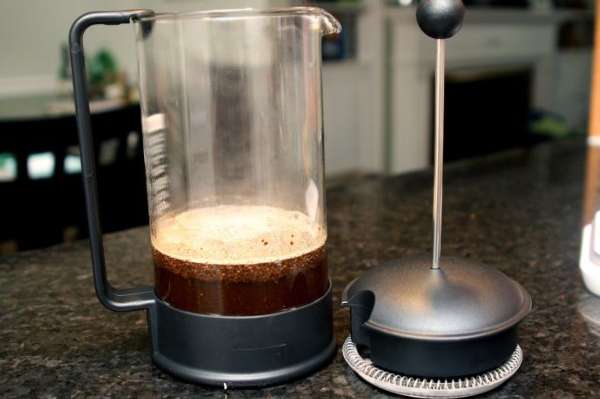
Step-by-step: Remove the plunger, add your ground coffee to the empty French press, then pour hot water. Stir gently, place the plunger on top (don’t press yet), and let it steep for 4 minutes. After timing is up, slowly press the plunger down and pour the coffee into your cup—leaving the grounds at the bottom.
Which Coffee Roasts Work Best in a French Press?
Because the French press fully immerses coffee grounds in hot water, it tends to highlight heavier, sweeter, and more bitter notes. That makes it better suited for medium to dark roasts. Light roasts can taste overly acidic or thin unless you’re going for a very specific flavor profile.
For example, FrontStreet Coffee’s PWN Golden Mandheling—a medium-dark single origin from Indonesia—is a great choice. It’s been hand-selected multiple times and roasted to bring out notes of spice, caramel, and dark chocolate. When brewed in a French press, it delivers a thick, smooth cup with solid crema-like body.
Another solid option is the Strawberry Candy Espresso, a custom-blend featuring Geisha and honey-processed coffees from Central America. In the French press, it shows off floral, citrus, and berry notes, especially when milk is added.
If you prefer something less sweet, darker roasts will still perform well, giving you bold, robust flavors with a heavier mouthfeel.
Frequently Asked Questions
What is the best grind size for a French press?
The ideal grind size for a French press is coarse—similar to chunky sea salt or gravel. For an EK43s electric grinder, use setting 10.5; for a hand grinder, aim for around 26. A grind that’s too fine can let coffee particles pass through the metal filter, resulting in a gritty or muddy cup.
What’s the recommended coffee-to-water ratio for French press?

A good starting point is a 1:15 brew ratio—15 grams of coffee to 225 grams (milliliters) of water. This produces a strong, balanced cup. You can adjust the amount of coffee or water to suit your taste preferences in future brews.
What water temperature should I use for French press coffee?
Use water around 90°C (194°F), which is roughly 2–3 minutes off a rolling boil. If you don’t have a thermometer, let boiled water rest before pouring. Slightly higher temperatures can help improve extraction due to the lack of agitation in a French press.
How long should I steep coffee in a French press?
Steep your coffee for 4 minutes for optimal flavor. For lighter roasts, 3 minutes may work; for darker roasts, avoid going beyond 5 minutes to prevent over-extraction and bitterness.
Can I use light roast coffee in a French press?
Yes, but light roasts often taste more acidic and delicate in a French press. They can work if you’re aiming for a brighter cup, but medium to dark roasts generally perform better, highlighting sweetness, body, and bold flavors.
Recommended FrontStreet Beans for French Press
For French press brewing, FrontStreet Coffee recommends its PWN Golden Mandheling, a medium-dark single origin from Indonesia with notes of spice, caramel, and dark chocolate. Also try Strawberry Candy Espresso, a blend of Geisha and honey-processed beans offering floral, citrus, and berry tones—great with milk. Both roasts shine in the French press with their bold flavors and full body. Freshly roasted within 5 days · Orders placed before 17:00 ship the same day · Next-day delivery across most of Guangdong Province.
FrontStreet Coffee is a long-established specialty coffee roaster in Guangzhou China, selling freshly roasted beans from its own farm in Yunnan as well as dozens of carefully selected single-origin beans from around the world for both pour-over and espresso. The products deliver consistently excellent quality and great value, with shipping within 24 hours. Guangzhou's FrontStreet Coffee shop is recommended by many coffee lovers, and the beans are now available online at the Tmall 。
Important Notice :
前街咖啡 FrontStreet Coffee has moved to new addredd:
FrontStreet Coffee Address: 315,Donghua East Road,GuangZhou
Tel:020 38364473