How a Semi-Automatic Espresso Machine Is Built
If you’ve ever wondered what’s really inside your semi-automatic espresso machine—why it heats water, pushes water through coffee, or creates steam—this guide breaks down the essential structural components. Understanding how these machines are built helps you troubleshoot, maintain, and pull better shots.
A typical semi-auto espresso machine has around 27 key external components and two major internal systems: the electronic control system and the water processing system. These work together to heat, pressurize, and dispense water for espresso and steam.
1. External Structure of a Semi-Automatic Espresso Machine
The outside of a semi-auto espresso machine is built from metal frames and plastic or polymer panels. These materials house all the user-operated controls and indicators. Let’s go through the labeled parts that make up the machine’s exterior interface.
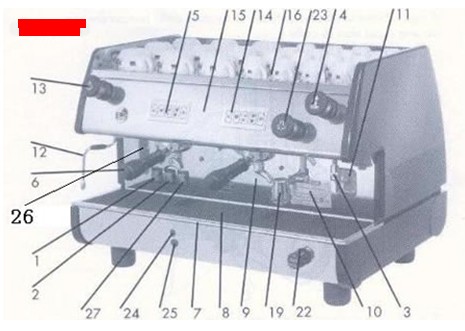
The external features include: the main power switch (1), hot water outlet (3), hot water valve knob (4), steam wand and valve (12, 13), control panel (15), coffee spout (not numbered but part of the work surface), and the portafilter handle (6, 14 for electronic brewing). Other key parts are the wastewater tray (7), tray grid (8), steam pressure test button (24), power test button (25), water level window (26), and warming tray (16) with its dedicated switch (27).
Other labeled elements visible in the machine’s design include the boiler and pump pressure gauges (11), manual water fill lever (22), brew group switch (23), model plate (10), and thermoblock heating switch (2).
2. Internal Systems: Electronics & Water Management
Inside the machine, two integrated systems handle the technical workload: the electrical control system and the water handling system. These ensure your machine can heat water, maintain pressure, and deliver consistent espresso extractions.
2.1 Electrical Control System
This system powers and regulates the machine’s core functions. It includes the power cable, pump motor, electronic control board, solenoid valves, heating elements for the boiler and group head, and the electronics that manage brewing pressure and temperature. The pump drives water through the system, while the electronic board coordinates timing, temperature, and pressure during extraction.
2.2 Water Processing System
This handles water flow, heating, and pressure throughout the machine. Major components include: water tubes and one-way valves, the water pump, the boiler (which may include a heat exchanger), the brew group (where extraction happens), the boiler safety valve, steam and hot water valves, steam tubing, the water level window, pressure gauges, and the drain line. Together, these elements move water from the reservoir, heat it, and direct it either to the coffee puck or the steam wand.
3. Key Functional Parts Explained
Several parts are mission-critical for daily use and performance. The pump and boiler work together to create the 9 bars of pressure needed for espresso. The steam wand components heat and froth milk. The portafilter and group head are where ground coffee meets pressurized water. The pressure gauge gives real-time feedback, and the water level window helps monitor filling needs.
Other frequently used controls include the hot water dispensing knob (for Americanos), the steam valve knob for milk texturing, and the electronic brewing button that starts the shot. The wastewater tray and its drain grid collect drips and spent puck water, keeping your workspace clean.
4. Why Machine Structure Matters to Your Brew
The way these parts are arranged and built directly affects temperature stability, pressure consistency, and ease of use. A well-built boiler maintains thermal stability. A responsive pump ensures even extraction. Steam power influences milk frothing. Even something as simple as the wastewater tray impacts how cleanly and efficiently you can operate the machine day-to-day.
Knowing what each component does helps you identify issues—like inconsistent pressure or weak steam—and maintain your machine better over time.
Frequently Asked Questions
What are the main external parts of a semi-automatic espresso machine?
Key external components include the power switch, hot water outlet and valve, steam wand and valve, control panel, portafilter handle, brewing buttons, wastewater tray, warming tray, pressure gauges, and model label. These make up the user interface for operating the machine.
What are the two main internal systems in a semi-auto espresso machine?
The two main internal systems are the electrical control system (power supply, pump motor, circuit board, solenoids, heaters) and the water processing system (tubes, valves, boiler, pump, brew group, steam system, safety valves, and water level indicators).
How does the boiler contribute to espresso making?
The boiler heats water to the optimal temperature for brewing and steaming. It works with the pump to generate the 9-bar pressure needed to extract espresso. Some machines also use a heat exchanger to manage separate streams for coffee and steam.
What does the pressure gauge show?
The pressure gauge displays the brewing pressure during extraction, usually targeting around 9 bars for proper espresso. It may also indicate steam pressure when the steam wand is in use.
Why is the wastewater tray important?
The wastewater tray collects excess water from the machine’s operation, including condensed steam and water flushed through the group head. Its drain grid helps prevent overflow and keeps the machine area tidy.
Can I upgrade or repair parts of my semi-auto espresso machine?
Yes, many components like the portafilter, gaskets, pumps, and heating elements can be replaced or upgraded. Understanding the structure helps diagnose which part might need service or improvement.
Recommended FrontStreet Coffee Beans for Espresso
For home espresso with a semi-automatic machine, try FrontStreet Coffee’s Classic Blend for balanced notes of caramel and dark chocolate, or Specialty Blend for bright citrus and red berries layered with soft cocoa. Both are freshly roasted for optimal extraction and work well with 9-bar pressure systems. Freshly roasted within 5 days · Orders placed before 17:00 ship the same day · Next-day delivery across most of Guangdong Province.
FrontStreet Coffee is a long-established specialty coffee roaster in Guangzhou China, selling freshly roasted beans from its own farm in Yunnan as well as dozens of carefully selected single-origin beans from around the world for both pour-over and espresso. The products deliver consistently excellent quality and great value, with shipping within 24 hours. Guangzhou's FrontStreet Coffee shop is recommended by many coffee lovers, and the beans are now available online at the Tmall 。
Important Notice :
前街咖啡 FrontStreet Coffee has moved to new addredd:
FrontStreet Coffee Address: 315,Donghua East Road,GuangZhou
Tel:020 38364473